

Beginner’s guide to safe and effective peptide use


TL;DR:
- Peptides are short amino acid chains that mimic natural signaling molecules and can promote muscle growth, recovery, fat loss, and overall wellness.
- However, their safety depends heavily on sourcing from regulated providers and working with healthcare professionals to avoid risks associated with unverified products.
- Beginners should prioritize education, medical oversight, and a foundation of consistent training and nutrition to achieve realistic results safely.
You’ve seen the posts, heard the gym talk, and maybe even read a few articles about peptides for muscle growth and faster recovery. The interest is real, and so is the confusion. Peptides sit in a gray zone between cutting-edge science and unregulated risk, and for a beginner, figuring out where to start without making a costly or dangerous mistake can feel overwhelming. This guide cuts through the noise with clear, evidence-based steps that help you understand what peptides actually are, how to use them safely, and what realistic results look like.
Table of Contents
- What are peptides and why do beginners use them?
- Safety first: What you must know before using peptides
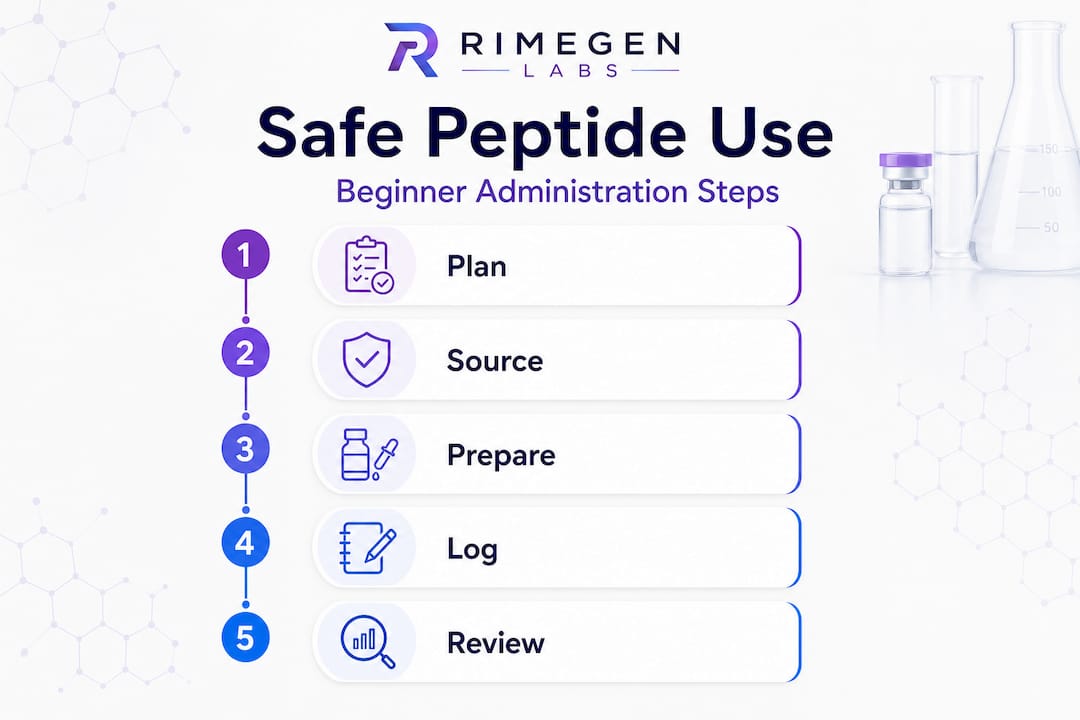
- Step-by-step: How to start peptide administration
- Verifying progress and troubleshooting common mistakes
- A reality check on peptides for beginners: What most guides won’t tell you
- Next steps: Where beginners can learn and source peptides safely
- Frequently asked questions
Key Takeaways
| Point | Details |
|---|---|
| Understand peptide basics | Peptides can help beginners with muscle growth, but benefits depend on safe, informed use. |
| Prioritize safety | Choosing FDA-approved peptides and medical guidance is crucial to avoid serious risks. |
| Follow careful steps | Consult a professional and use regulated sources for every step in peptide administration. |
| Track your results | Monitoring your progress and noticing side effects increases success and safety. |
What are peptides and why do beginners use them?
Peptides are short chains of amino acids, essentially smaller versions of proteins. Your body already produces them naturally, and they act as signaling molecules that tell cells what to do, whether that’s building muscle tissue, releasing hormones, or speeding up repair after a tough workout. When used as supplements or injections, synthetic peptides mimic or amplify those natural signals.
For fitness beginners, the appeal is straightforward. Peptides promise to help you build muscle faster, recover more quickly between sessions, burn fat more efficiently, and even support better sleep and immune function. Those are compelling claims for anyone who just started lifting or is trying to break through a plateau.
Here are the main reasons beginners explore peptides:
- Muscle growth: Certain peptides stimulate the release of growth hormone, which supports lean muscle development.
- Faster recovery: Some peptides reduce inflammation and accelerate tissue repair after intense training.
- Fat loss: Growth hormone-releasing peptides can shift the body toward burning fat for fuel.
- General wellness: Peptides like BPC-157 are popular for joint health and gut repair.
- Sleep quality: Some growth hormone secretagogues improve deep sleep, which is when most muscle repair happens.
The evidence behind these claims is promising but not definitive. GHS peptides may increase muscle strength and mass after 8 to 12 weeks with resistance training, though results are limited and less consistent for well-trained athletes. In other words, beginners with untrained muscles may see more noticeable gains than someone who has been lifting for years.
| Peptide type | Primary benefit | Evidence strength |
|---|---|---|
| Growth hormone secretagogues (GHS) | Muscle growth, fat loss | Moderate |
| BPC-157 | Recovery, joint repair | Early stage |
| TB-500 | Tissue healing | Preliminary |
| GLP-1 agonists | Metabolic health, fat loss | Strong (FDA-approved uses) |
The honest takeaway: peptides are not magic. They work best as a complement to solid training and nutrition, not a replacement. Check out our peptide muscle growth guide and learn more about bioactive peptides for muscle to separate real science from marketing hype.
Safety first: What you must know before using peptides
Now that you understand the appeal and basics, it’s time to address the single most important aspect for beginners: safety. This is where most people skip ahead too fast, and it’s where the real risks live.

The regulatory landscape for peptides is complicated. Most bodybuilding peptides are not FDA-approved for fitness uses. They are sold as research chemicals, which means they bypass the rigorous testing required for human-use medications. That creates serious risks including contamination, inaccurate dosing, and impurities that can cause real harm.
Gray-market peptide products lack safety data and have caused serious adverse events, according to doctors and FDA warnings. This is not a theoretical risk. People have experienced infections, hormonal disruption, and other complications from DIY peptide protocols sourced from unverified suppliers.
| Factor | FDA-regulated peptides | Gray-market peptides |
|---|---|---|
| Safety testing | Rigorous, documented | None or minimal |
| Dosing accuracy | Verified | Often inaccurate |
| Contamination risk | Low | High |
| Legal status | Legal with prescription | Legally ambiguous |
| Medical oversight | Required | Typically absent |
| Adverse event tracking | Monitored | Not tracked |
Red flags to watch for when evaluating a peptide source:
- No third-party lab testing or certificates of analysis (COA)
- Prices that seem too good to be true
- No requirement for a prescription or medical consultation
- Vague labeling or “for research use only” disclaimers with no transparency
- No physical address or customer service contact
“The safest path for any beginner is to work with a qualified healthcare provider who can prescribe FDA-approved options, monitor your response, and adjust your protocol based on real data, not guesswork.”
Pro Tip: Before purchasing any peptide product, request a certificate of analysis from an independent lab. Any legitimate supplier will provide this without hesitation. If they can’t or won’t, walk away.
For a deeper look at staying protected, our peptide safety tips resource covers everything from sourcing to storage.
Step-by-step: How to start peptide administration
With safety guardrails in place, here’s exactly how a beginner should approach their first peptide administration for optimal safety and results. This is not something you improvise. Every step matters.
What you’ll need before you start:
- Insulin syringes (typically 29 to 31 gauge, 0.5 mL)
- Bacteriostatic water for reconstitution
- Alcohol swabs
- Sharps disposal container
- Your prescribed peptide vial
- A clean, flat surface and good lighting
- A dosing log or journal
Step-by-step administration guide:
- Consult a healthcare professional. This is not optional. A doctor or licensed practitioner evaluates your health history, goals, and any contraindications before recommending a peptide protocol.
- Obtain a legitimate prescription. For FDA-approved peptides, a prescription is required. This step also gives you legal protection and access to pharmacy-grade products.
- Source from a regulated provider. Use only compounding pharmacies or licensed suppliers that your healthcare provider recommends. Avoid online marketplaces with no medical oversight.
- Review your protocol carefully. Understand your peptide type, dose in micrograms, injection frequency, and timing (morning, pre-workout, or before bed depending on the peptide).
- Reconstitute the peptide correctly. Most peptides come as lyophilized (freeze-dried) powder. Follow precise peptide reconstitution instructions to mix with bacteriostatic water without degrading the compound.
- Prepare the injection site. Common sites include the abdomen, outer thigh, or upper arm. Clean with an alcohol swab and let it dry completely before injecting.
- Draw and administer the dose. Pull back the plunger to your measured dose, pinch the skin lightly, insert the needle at a 45 to 90 degree angle, and inject slowly. Remove the needle and apply gentle pressure.
- Dispose of sharps safely. Never recap a used needle. Place it directly into your sharps container.
Pro Tip: Keep a written log of every dose, including the time, amount, injection site, and any physical or mood changes you notice. This record becomes invaluable when troubleshooting or discussing progress with your doctor. Consistent peptide dosing protocols make all the difference in outcomes.
| Step | Common mistake | How to avoid it |
|---|---|---|
| Reconstitution | Using tap water or saline | Always use bacteriostatic water |
| Dosing | Eyeballing the amount | Use a calibrated insulin syringe |
| Injection site | Reusing the same spot | Rotate sites to prevent lipodystrophy |
| Storage | Leaving peptide at room temperature | Refrigerate reconstituted peptides |
| Timing | Inconsistent schedule | Set a daily reminder for administration |
Note that most bodybuilding peptides are not FDA-approved for fitness purposes, which is exactly why following a medically supervised protocol protects you from the risks that come with unguided use.
Verifying progress and troubleshooting common mistakes
Once you’ve gotten started, the next phase is learning to monitor your peptide journey and sidestep preventable errors. Many beginners either expect too much too soon or ignore early warning signs that something needs to change.
Signs of genuine progress to look for:
- Gradual increases in lean muscle mass over 8 to 12 weeks
- Noticeably faster recovery between training sessions
- Improved sleep quality and morning energy levels
- Reduced joint soreness or inflammation
- Slow but steady reduction in body fat when combined with proper nutrition
The keyword here is gradual. GHS peptides may support muscle gains over 8 to 12 weeks with consistent resistance training, but you are not going to wake up transformed after two weeks. Patience is part of the protocol.
Common beginner mistakes and how to fix them:
- Skipping the medical consultation: This leads to mismatched protocols and missed contraindications. Always start with a professional evaluation.
- Expecting results without training: Peptides amplify the stimulus from exercise. No training means no signal to amplify.
- Inconsistent dosing: Missing doses or changing timing randomly disrupts the hormonal signaling these compounds rely on.
- Ignoring side effects: Water retention, tingling, or fatigue can be early signs that your dose needs adjustment. Don’t push through without checking in with your provider.
- Sourcing from unverified suppliers: This is the most dangerous mistake and the one with the most serious consequences.
- Not tracking anything: Without a log, you can’t tell what’s working or what’s causing a problem.
Pro Tip: Use a simple fitness journal to record your workouts, body measurements, sleep quality, and any peptide-related symptoms weekly. After 30 days, review the data with your healthcare provider. This approach turns guesswork into a real feedback loop. For more structured guidance, explore tips on improving peptide results and researching peptide efficacy before you start.
Never adjust your dose on your own based on what you read in a forum or see someone else doing. Individual responses to peptides vary significantly based on age, body composition, hormonal baseline, and training history. What works for someone else may be completely wrong for you.
A reality check on peptides for beginners: What most guides won’t tell you
Here’s something most peptide content won’t say directly: the majority of beginners who start a peptide protocol are chasing a shortcut that doesn’t exist in the way they imagine. That’s not cynicism. It’s the pattern we see repeatedly, and understanding it early will save you money, health risks, and frustration.
Muscle growth is fundamentally slow. Even with optimal training, nutrition, sleep, and recovery, a beginner might gain 1 to 2 pounds of actual lean muscle per month under ideal conditions. Peptides can support and slightly accelerate that process, but they cannot override the biology. If your diet is inconsistent, your sleep is poor, or your training is sporadic, no peptide protocol will compensate for those gaps.
The other uncomfortable truth is about risk tolerance. Every fitness supplement carries some level of risk, and peptides carry more than most because the regulatory framework is thin. Gray-market products have caused serious adverse events in real people, not just in theoretical FDA warnings. The people who come out ahead are the ones who treat peptides like the medical tools they are, not like protein powder.
What actually works long term is a health-first approach. That means getting bloodwork done before you start, working with a provider who understands your goals, sourcing only from legitimate channels, and building your protocol around your training and nutrition rather than the other way around. Peptides are a tool in a larger system, not the system itself.
“The fitness beginners who see the best long-term results from peptides are not the ones who dose the highest or cycle the most aggressively. They are the ones who build strong fundamentals first and use peptides as a precise, medically guided addition to an already solid program.”
For a grounded look at what the science actually supports, our evidence-based peptide insights resource is worth bookmarking before you make any purchasing decisions.
Next steps: Where beginners can learn and source peptides safely
Real results start with education, not experimentation. If you’ve read this far, you already have a stronger foundation than most people who jump into peptide use without doing any research.

At Primegen Labs, we’ve built a library of science-backed resources specifically for fitness beginners and enthusiasts who want to use peptides responsibly. Whether you’re still deciding if peptides are right for you or you’re ready to start your first protocol, our guides walk you through every stage with clarity and honesty. Explore our full evidence, benefits, and cautions overview to understand what the research actually supports. Our science-backed peptide fitness guide is the ideal starting point for anyone new to this space, and our detailed guide for muscle growth with peptides covers everything from peptide selection to tracking your gains. Your health deserves more than guesswork.
Frequently asked questions
Are peptides safe for beginners?
Peptides carry real risks, especially when sourced from unregulated markets. Only FDA-approved peptides under medical supervision are considered reasonably safe for beginners, as gray-market products lack safety data and have caused serious adverse events.
Do beginners get real muscle growth from peptides?
Some peptides can support muscle gains, but GHS peptides show limited results and work best when combined with consistent resistance training over 8 to 12 weeks.
What are the main risks with peptide use for fitness?
The biggest risks include contamination, inaccurate dosing, and a complete lack of safety data. Most bodybuilding peptides are not FDA-approved and are sold as research chemicals with no regulatory oversight.
How long before results are visible from peptide administration?
Most beginners notice meaningful changes after 8 to 12 weeks of consistent use paired with regular resistance training, though individual results vary based on health, diet, and training quality.