
What are peptides? A science-backed guide for fitness


TL;DR:
- Peptides are short amino acid chains acting as signaling molecules, not structural proteins.
- Collagen peptides are well-supported for recovery, while research peptides lack human trials.
- Safety varies; collagen is low risk, unregulated peptides pose contamination and health risks.
Peptides are everywhere in fitness circles right now, yet most athletes using them couldn’t explain what makes them different from regular protein supplements. That gap between popularity and understanding matters, especially when some peptides are clinically proven and others carry real risks. Whether you’re chasing faster muscle recovery, better body composition, or simply trying to separate fact from marketing fiction, the science on peptides is more nuanced than most influencers admit. This guide covers the definition, mechanisms, real-world effects, safety profile, and practical application of peptides so you can make decisions grounded in evidence, not hype.
Table of Contents
- What are peptides and how do they work?
- Types of peptides used in fitness and their effects
- Are peptides safe? Risks, regulations, and common misconceptions
- Making peptides work for you: Practical application and tips
- The real story on peptides: What the research and experts reveal
- Explore trusted peptide resources for your goals
- Frequently asked questions
Key Takeaways
| Point | Details |
|---|---|
| Short chains, big impact | Peptides are small amino acid chains that can significantly influence body signaling and recovery. |
| Science supports collagen | Collagen peptides have the strongest research backing for muscle recovery and soreness reduction. |
| Beware unapproved peptides | Many trendy ‘research’ peptides lack human trial evidence and may pose serious safety risks. |
| Application trumps hype | Focusing on clinically supported peptides and sensible practices yields better results than chasing new unproven trends. |
What are peptides and how do they work?
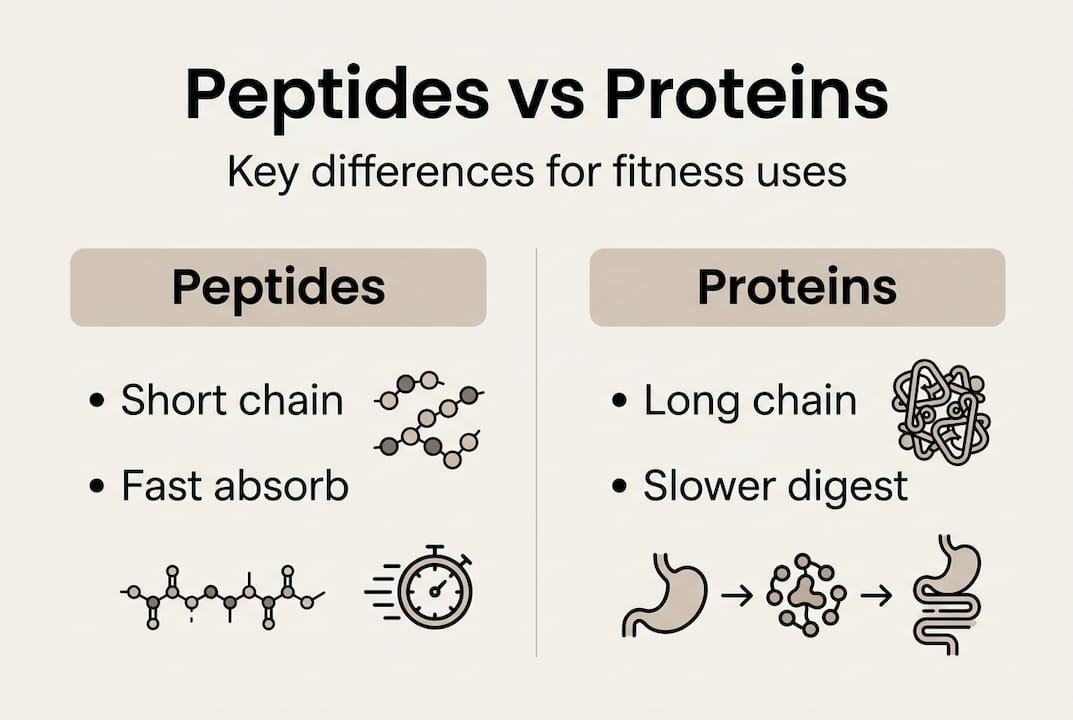
Peptides sit in a fascinating middle ground between single amino acids and full proteins. They’re short chains of amino acids, typically between 2 and 50 residues, linked by peptide bonds, and they act as signaling molecules rather than structural building blocks. That distinction is everything. While proteins like whey are primarily used for construction and repair, peptides are more like text messages your body sends to trigger specific biological responses.
The structural difference between peptide vs protein differences matters practically because smaller molecules absorb differently, act faster, and target specific receptors more precisely. When a peptide reaches a cell receptor, it can trigger hormone release, modulate inflammation, or signal tissue repair with a specificity that larger protein molecules simply can’t match.
Peptides bind to cell receptors to trigger targeted responses, including hormone regulation like insulin release and appetite control through GLP-1 signaling. This receptor-level precision is what makes certain peptides medically powerful and what the fitness industry is trying to leverage.
The three main categories you’ll encounter in fitness are:
- Collagen peptides: Derived from hydrolyzed collagen, used for joint, connective tissue, and recovery support
- Signaling peptides: Compounds that mimic or stimulate natural hormones (GLP-1 analogs, growth hormone secretagogues)
- Research peptides: Experimental compounds like BPC-157 and TB-500 with animal data but no human approval
Peptides vs proteins: quick comparison
| Feature | Peptides | Proteins |
|---|---|---|
| Size | 2 to 50 amino acids | 51+ amino acids |
| Primary role | Signaling, triggering responses | Structure, enzymatic function |
| Absorption speed | Faster, direct uptake | Slower, requires digestion |
| Fitness use | Recovery, hormone regulation | Muscle protein synthesis |
| Examples | BPC-157, GLP-1, collagen peptides | Whey, casein, egg albumin |
Pro Tip: When you’re evaluating a peptide supplement, knowing whether it’s a signaling peptide or a structural one tells you immediately what outcome to expect. Don’t buy a collagen peptide expecting the same muscle-building signal as a growth hormone secretagogue.
Exploring bioactive peptide benefits reveals just how diverse these compounds are, from gut health to cellular repair, and why a one-size-fits-all approach to peptide supplementation rarely works.
Types of peptides used in fitness and their effects
Understanding what peptides are sets the foundation; next, let’s look at the most popular types in the fitness world and what the research really tells us about their potential.
Collagen peptides are the most studied and accessible option. Collagen peptides at 10 to 15g per day, ideally paired with vitamin C, meaningfully reduce muscle soreness, aid recovery, and improve explosive power in trained athletes. The catch: they don’t outperform free amino acids for muscle protein synthesis, so they’re not a replacement for your protein intake. They’re a recovery tool, not a muscle-builder.

GLP-1 analogs (glucagon-like peptide-1 agonists) are prescription medications with some of the strongest documented effects in all of metabolic medicine. These work by mimicking a natural gut hormone that suppresses appetite, slows gastric emptying, and improves blood sugar control. Their effectiveness for peptides for muscle recovery and weight loss is clinically substantiated at a level most supplements could never match.
Research peptides like BPC-157 and TB-500 are where things get murky. Animal studies show impressive tissue-healing properties, but none of these compounds have passed human clinical trials. They’re often sold online labeled “for research use only” as a legal workaround.
Here’s a comparison of the main types:
| Peptide type | Claimed benefits | Evidence level | Regulatory status |
|---|---|---|---|
| Collagen peptides | Recovery, joint health, power | Strong human data | Legal, OTC supplement |
| GLP-1 analogs | Weight loss, appetite control | Excellent clinical data | FDA-approved, prescription |
| BPC-157 | Tendon and gut healing | Animal studies only | Not FDA-approved |
| TB-500 | Muscle repair, tissue recovery | Animal studies only | Not FDA-approved |
| Growth hormone secretagogues | Lean mass, fat loss | Mixed, limited human data | Varies by compound |
Before researching peptides on your own, recognize that “promising animal data” and “proven for humans” are separated by years of trials and billions of dollars in research costs. Many compounds that healed rats in a lab have failed spectacularly in human studies.
- Collagen peptides: best-documented option for active recovery
- GLP-1 agonists: most effective for weight management under medical supervision
- BPC-157 and TB-500: interesting mechanism, zero human proof, genuine risks
- Growth hormone secretagogues: variable evidence, legal gray zone in many countries
Are peptides safe? Risks, regulations, and common misconceptions
Now that we’ve covered the main peptide types and their effects, it’s crucial to look at safety, regulation, and the realities beyond the hype.
The safety profile of peptides varies enormously depending on which one you’re discussing. Collagen peptides eaten as a food-derived supplement carry a low risk profile. FDA-approved GLP-1 medications are prescription-only because they require monitoring, but they have a well-characterized safety record. The danger zone is the research peptide category.
BPC-157 and TB-500 show genuine healing potential in animal models through mechanisms like angiogenesis and tissue repair, but they have no randomized controlled human trials and carry real unknowns including the possibility of promoting cancer through the same angiogenesis pathways that make them attractive for healing. Stimulating new blood vessel growth helps injured tissue, but it can also feed existing tumors.
For practical guidance, collagen peptides are safest for recovery with solid empirical support. GLP-1 analogs are proven for weight loss but require a prescription and medical oversight due to gastrointestinal side effects. Unapproved peptides like BPC-157 should be avoided simply because no human evidence exists to support their use.
A critical point most fitness content glosses over is product quality. Unregulated online sources carry serious contamination risks, and experts consistently note that the hype around performance peptides far exceeds what the evidence actually supports.
“The excitement around research peptides in fitness circles moves much faster than the science. That gap is where people get hurt, either from unknown compounds or contaminated products purchased from unverified sources.” — synthesis of expert guidance on peptide safety
Red flags and best practices for peptide safety:
- Avoid any peptide sold as “for research use only” that’s marketed for human consumption
- Demand third-party testing certificates before using any supplement
- Check peptide regulations in your country; legal status shifts frequently
- If a claim sounds revolutionary, search for human RCT data before buying
- Always consult a physician before starting any peptide protocol, including OTC collagen
Pro Tip: The safest litmus test for any peptide supplement is to ask one question: is there published, peer-reviewed human clinical trial data? If the answer is no, the risk-to-reward calculation changes significantly, regardless of what the product page says.
Exploring peptide performance cautions will give you a fuller picture of where the evidence ends and the marketing begins.
Making peptides work for you: Practical application and tips
After detailing safety and regulation, let’s explore how you can practically implement peptide science into your fitness routine, safely and smartly.
The good news is that the peptides with the strongest evidence base are also the most accessible. Here’s a practical approach to getting real results without unnecessary risk:
- Define your goal first. Recovery and joint health point toward collagen peptides. Weight management and appetite control may involve a conversation with your doctor about GLP-1 options. Muscle building is better addressed through well-established protein strategies, sleep, and progressive overload.
- Research legal status. Peptide regulations change. What is legal in one country may be prohibited in another, especially for competitive athletes subject to anti-doping rules.
- Prioritize quality sourcing. Only purchase supplements with third-party certificates of analysis. For prescription peptides, use licensed pharmacies exclusively.
- Time collagen peptides correctly. 10 to 15g per day with vitamin C taken 30 to 60 minutes before training has shown the best outcomes for connective tissue support and recovery in athlete populations.
- Be consistent. Peptide effects, especially with collagen, accumulate over weeks, not days. Short-term experimentation rarely shows results.
- Consult a professional. Whether a sports medicine physician or a registered dietitian with peptide experience, professional guidance reduces both risk and wasted investment.
- Track your response. Keep a simple training log noting soreness, recovery time, and performance metrics. This gives you real feedback instead of relying on how you feel on any given day.
For improving peptide outcomes, the combination of smart timing, quality sourcing, and consistency outperforms high doses of questionable compounds every time.
Pro Tip: If a peptide supplement makes claims about rapid muscle gain, injury reversal, or dramatic fat loss without citing human RCTs, that’s not confidence, that’s marketing. Genuine peptide bioavailability tips come from understanding absorption, timing, and synergistic nutrients, not from magic doses.
The real story on peptides: What the research and experts reveal
After years of watching the peptide space evolve, one pattern stands out clearly: the distance between what athletes believe these compounds do and what the clinical evidence actually supports keeps growing. Collagen peptides and GLP-1 analogs represent the legitimate, proven tier, and even within that group, outcomes depend heavily on consistency, dosing, and professional guidance.
The research peptides are a different story. BPC-157 and TB-500 aren’t fraudulent in concept, but using animal-model data to justify human self-administration is a logical leap with real consequences. The athletes getting the best long-term results aren’t chasing experimental compounds. They’re combining proven supplementation strategies with disciplined training, adequate sleep, and smart nutrition.
Our honest take: peptides can be a meaningful part of a performance and recovery strategy when chosen based on human evidence and used under appropriate supervision. Exploring performance evidence and benefits shows that the most effective athletes treat peptides as one tool among many, not a shortcut.
Explore trusted peptide resources for your goals
If you’re serious about making peptides part of your fitness strategy, the next step is going deeper than surface-level supplement marketing. Quality information is the difference between results and wasted money or, worse, unnecessary health risk.

At PrimeGen Labs, we’ve built resources specifically for fitness-focused individuals who want science-backed guidance without the hype. Whether you’re starting with collagen peptides for recovery or trying to understand the full landscape, our muscle growth peptide guide covers the research in practical, actionable detail. For a broader view of what compounds actually deliver results, our deep-dive on peptide performance evidence cuts through the noise with clinical data and honest analysis.
Frequently asked questions
What are peptides and why are they popular in fitness?
Peptides are short amino acid chains, typically 2 to 50 residues, that act as signaling molecules throughout the body. Their popularity in fitness comes from their targeted roles in recovery, fat loss, and hormonal signaling, which athletes hope to leverage for a competitive edge.
Which peptides actually work for muscle recovery?
Collagen peptides have the strongest human data for recovery. Taking 10 to 15g daily with vitamin C reduces soreness and supports explosive power in athletes. Most research peptides like BPC-157 lack the human clinical trials needed to call them proven.
Are there side effects or risks with peptide supplements?
Collagen peptides are generally low-risk. GLP-1 medications carry real gastrointestinal side effects and require prescription management. Research peptides like BPC-157 have no human RCT data, unknown contamination risks from unregulated sources, and theoretical cancer-promotion risks through angiogenesis mechanisms.
How do peptides compare to proteins for muscle building?
Collagen peptides do not outperform free amino acids for muscle protein synthesis after exercise. They support recovery and connective tissue health, but your standard protein intake from whole food or whey remains the superior driver of muscle growth.