
Peptide Handling Procedure: Safe, Effective Lab Practices

TL;DR:
- Proper handling protocols, including aliquoting and protection from light and oxygen, preserve peptide integrity.
- Storage at -20°C or -80°C and thorough documentation ensure long-term stability and reproducibility.
- Sensitive peptides with residues like Met and Cys require inert atmospheres and strict pH control during handling.
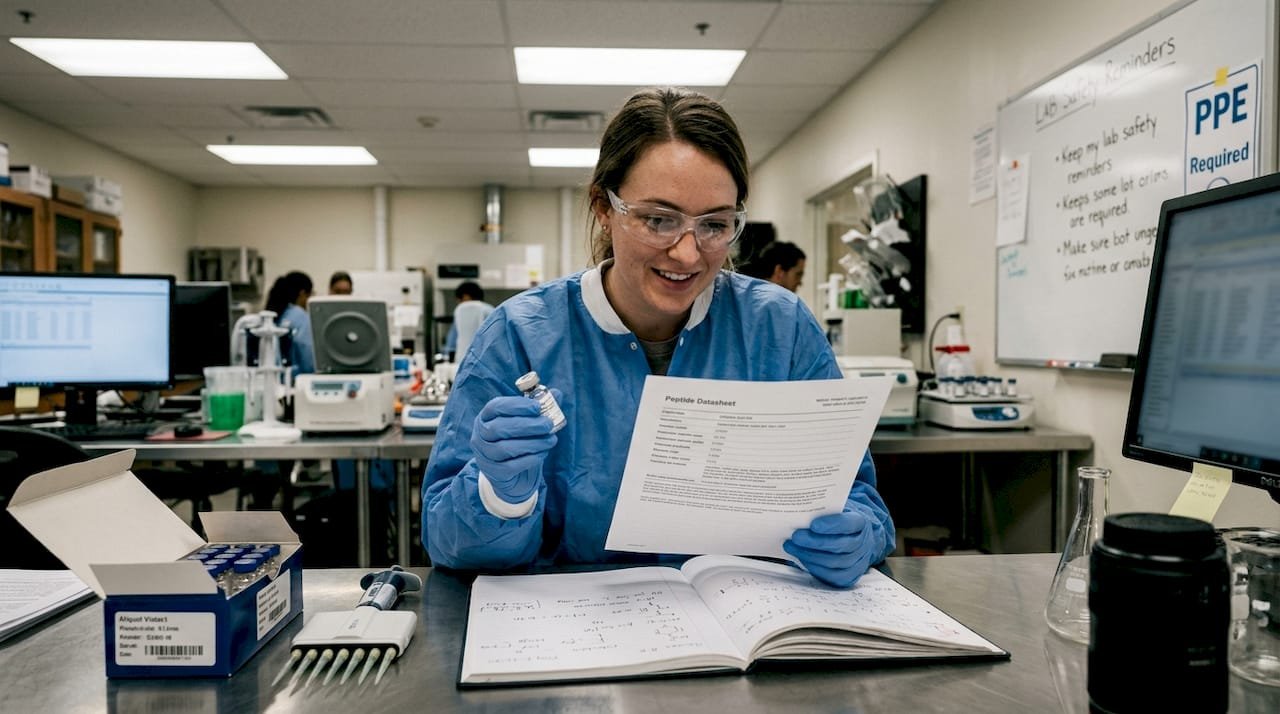
Improper peptide handling costs more than reagents. A single freeze-thaw cycle, an unlabeled vial, or a few minutes of light exposure can silently degrade your sample, corrupt data, and set research back by weeks. For biotech and pharmaceutical labs running sensitive assays, these are not abstract risks. They happen routinely, often because handling procedures feel routine. This guide covers the complete peptide handling workflow: workspace preparation, step-by-step handling, storage and documentation best practices, and troubleshooting for sensitive sequences. Follow this protocol and you protect both sample integrity and research reproducibility.
Table of Contents
- Essential tools and preparation before handling peptides
- Step-by-step peptide handling procedure
- Proper storage, labeling, and documentation
- Special cases: Handling sensitive peptides and troubleshooting
- Why most labs underestimate peptide stability risks
- Where to find research peptides and in-depth guides
- Frequently asked questions
Key Takeaways
| Point | Details |
|---|---|
| Prep is critical | Proper workspace setup and PPE ensure safe, accurate peptide handling. |
| Minimize freeze-thaw cycles | Aliquot peptides and use optimal storage temperatures to prevent degradation. |
| Sensitive peptides need more | Special residues require ultra-cold, inert, and light-protected techniques. |
| Documentation matters | Accurate labeling and logs support reproducibility and regulatory compliance. |
Essential tools and preparation before handling peptides
Before you open a vial, your workspace must be ready. A disorganized bench introduces contamination, weighing errors, and mislabeled aliquots. Start by cleaning your work surface with 70% ethanol, confirming that your analytical balance is calibrated, and ensuring your biosafety cabinet or clean bench is running properly. Every tool you touch should be sterile or freshly cleaned.
Required PPE checklist:
- Lab coat (full-length, chemical resistant)
- Nitrile gloves (change frequently, especially after touching other surfaces)
- Safety goggles or face shield
- Mask if working with powdered lyophilized peptides
Essential tools and materials:
- Calibrated analytical balance (0.01 mg precision or better)
- Sterile microcentrifuge tubes and low-binding vials
- Appropriate solvents (sterile water, PBS, DMSO, acetonitrile)
- Micropipettes and sterile tips
- Permanent marker and pre-printed labels
- Peptide datasheet for each compound
Always review the peptide datasheet before starting. It specifies the solubility, recommended solvents, and any stability concerns unique to that sequence. Skipping this step is where most errors originate. For a detailed walkthrough on dissolving peptides correctly, the peptide reconstitution procedure provides sequence-specific guidance that pairs directly with these preparation steps. You should also review peptide safety guidelines before handling novel or potent compounds.
| Preparation item | Why it matters |
|---|---|
| Calibrated balance | Ensures accurate dosing and concentration |
| Low-binding vials | Reduces peptide loss through adsorption |
| Sterile solvent | Prevents microbial contamination |
| Peptide datasheet | Confirms storage and solubility parameters |
| Pre-labeled aliquot vials | Eliminates post-handling confusion |
Aliquoting solutions minimizes freeze-thaw cycles to preserve peptide quality. Prepare your aliquot vials before reconstitution so you can transfer immediately without delay.
Pro Tip: Always label aliquots with the peptide name, concentration, preparation date, and your initials before you fill them. Labeling after the fact creates mix-ups, especially in busy labs.
Step-by-step peptide handling procedure
With your bench set up and tools in place, you’re ready for actual peptide handling. Treat each step as a critical control point.
- Receive and inspect. When peptides arrive, inspect the packaging for damage. Confirm the peptide is in lyophilized form and has not been exposed to heat or moisture during shipping. Do not open the vial until it reaches room temperature to prevent condensation on the powder.
- Equilibrate to room temperature. Allow sealed vials to warm for 30 to 60 minutes. Moisture condensing on cold powder is a common and preventable source of degradation.
- Weigh the peptide. Tare your balance and weigh the required amount using a pre-cleaned spatula. Use anti-static precautions: static charge scatters fine powders and skews measurements. An anti-static mat or ionizing bar prevents this.
- Reconstitute in the correct solvent. Add solvent slowly and in small volumes. Avoid vortexing aggressively. Gentle swirling or brief bath sonication keeps peptide structure intact. The choice of solvent matters enormously and follows from the peptide synthesis basics of the sequence. For practical solvent selection, consult your reconstitution protocols.
- Aliquot immediately. Divide the reconstituted solution into single-use volumes. This prevents repeated freeze-thaw cycles, which steadily degrade peptide quality.
- Store correctly. Lyophilized peptides are stable at 2-8°C for months, but -20°C or -80°C is preferred for long-term storage.
Critical control point: Exposure to light, oxygen, and moisture are the three most common causes of peptide degradation during handling. Work quickly, cap vials immediately, and minimize ambient exposure at every step.
| Storage format | Recommended condition | Typical stability |
|---|---|---|
| Lyophilized | -20°C or -80°C | Years |
| Reconstituted | 4°C (short-term) | 2 to 4 weeks |
| Reconstituted | -20°C (aliquoted) | Several months |
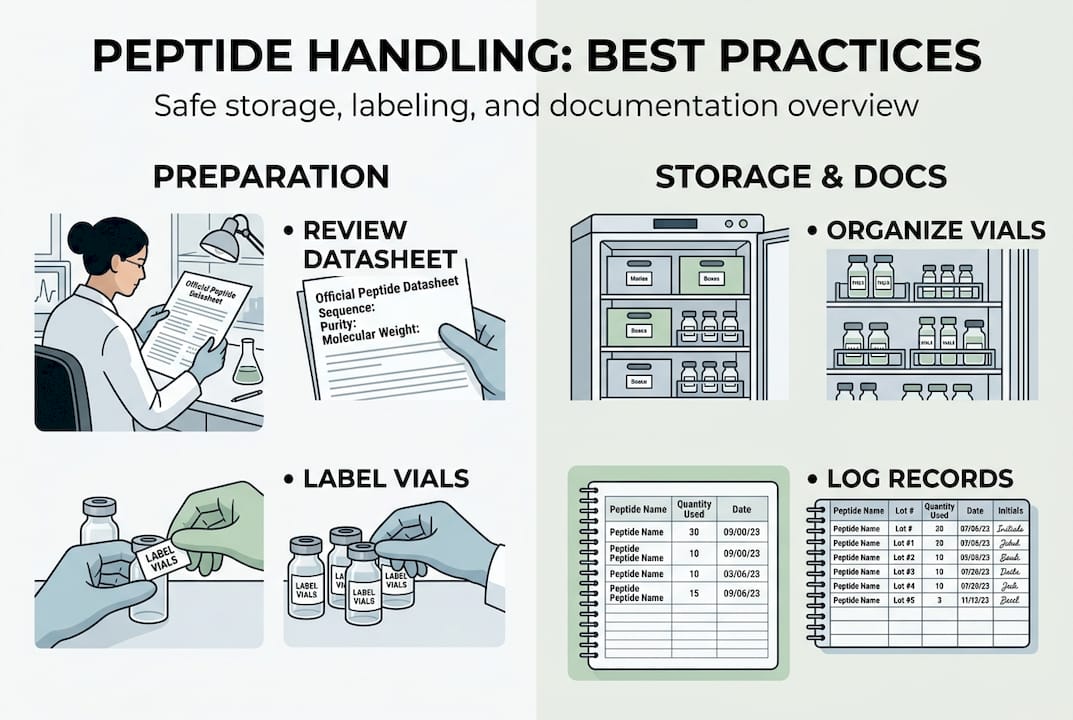
Pro Tip: Shield sensitive peptides from light by wrapping vials in aluminum foil or using amber vials. Oxygen exposure is equally damaging. Cap vials immediately after every use.
Proper storage, labeling, and documentation
Once you have aliquots prepared, your next priority is robust storage and accurate records. This is where research integrity is either protected or quietly compromised.
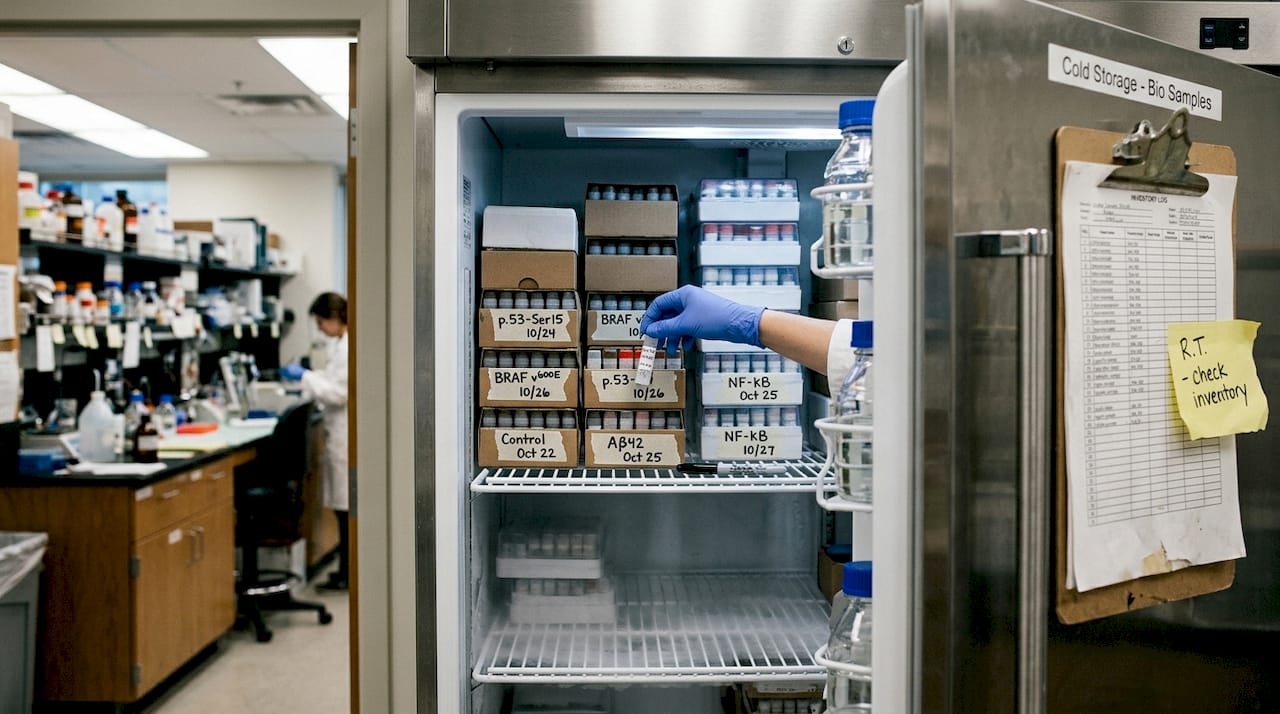
Store each aliquot at the designated temperature without deviation. Avoid placing peptide stocks near the door of a freezer where temperature fluctuates during opening. Dedicate a consistent freezer location and use a temperature log if your freezer is not monitored automatically.
Vial labeling must include:
- Peptide name or catalog number
- Concentration (in mg/mL or mM)
- Preparation date
- Storage condition (e.g., -20°C, light protected)
- Lot or batch number
- Researcher initials
Store lyophilized peptides at -20°C or -80°C for long-term use and protect them from oxygen, heat, and light. Lyophilized peptides stored correctly at -20°C remain stable for years, making proper initial storage one of the highest-return investments in your workflow.
| Documentation field | Purpose |
|---|---|
| Batch number | Links vial to original supplier certificate |
| Handling dates | Tracks how many times a vial was accessed |
| Storage condition changes | Flags potential stability events |
| Reconstitution solvent | Ensures reproducibility across experiments |
For labs operating under GLP or GMP frameworks, documentation is not optional. Every handling event should be logged in a lab notebook or electronic system with enough detail that another researcher could reproduce the exact conditions. Poor records create reproducibility failures that are nearly impossible to trace after the fact.
Think about bioavailability optimization and peptide purity impact as downstream variables that are directly affected by your upstream storage quality. Degraded or contaminated stock produces unreliable data regardless of how well the assay itself is run.
Special cases: Handling sensitive peptides and troubleshooting
Beyond general handling, some peptides demand additional safeguards and troubleshooting know-how. Not all sequences behave the same way.
Sensitive residues and their risks:
- Asn and Gln: Prone to deamidation, especially in neutral to basic pH. Store at acidic pH where possible.
- Met, Cys, and Trp: Highly susceptible to oxidation. Require inert atmosphere (nitrogen or argon) and should be kept away from oxygen exposure entirely.
- Disulfide-containing peptides: Reducing agents in the solvent (like DTT) can break bonds and alter structure.
Sensitive residues including Asn, Gln, Met, Cys, and Trp require -80°C storage, inert gas protection, and pH control. Hydrophobic peptides may additionally need organic solvent for initial dissolution.
Troubleshooting checklist:
- Precipitation after reconstitution: Try sonication, adjust pH, or switch to a different solvent system.
- Cloudy solution: Filter through a 0.22 µm membrane, check solubility parameters on the datasheet.
- Rapid degradation: Confirm storage temperature, check for freeze-thaw cycles, test for oxidation (especially Met/Cys/Trp peptides).
- Low yield from weighing: Check for static charge, verify balance calibration, and inspect for moisture in the powder.
For advanced safety tips on handling high-potency or novel sequences, and for context on how sequence design affects handling demands, lab peptide research practices provide useful framing.
Pro Tip: Hydrophobic peptides often refuse to dissolve in aqueous solvent. Dissolve them first in a small volume of DMSO or acetonitrile (5 to 10% of final volume), then add your aqueous buffer slowly with gentle mixing.
Why most labs underestimate peptide stability risks
After years of working with peptides across research settings, the pattern is clear: technical protocols are rarely the problem. The real failure point is lab culture. Researchers follow procedures carefully when a project is new, but shortcuts creep in as work becomes routine. A vial left out a few minutes longer. An aliquot not made because the volume seemed small. A label filled out from memory instead of from the datasheet.
These feel minor. They are not. A single uncontrolled freeze-thaw event can shift peptide concentration by a measurable margin and introduce aggregates that alter binding assay results entirely. The peptide safety lessons that matter most are not the dramatic ones. They are the quiet disciplines: capping vials immediately, logging every handling event, aliquoting even when it feels redundant.
Protocols only protect your research when every step is respected every time. The difference between a lab that generates reproducible data and one that doesn’t often has nothing to do with equipment. It comes down to whether the team treats every vial like it matters.
Where to find research peptides and in-depth guides
Translating handling protocols into research progress begins with trusted resources and reliable products.
At Primegen Labs, we supply research-grade peptide products designed for laboratory use, with documentation that supports your quality and compliance requirements. Each product is accompanied by specifications that make implementing these protocols straightforward from the first vial. For hands-on guidance that goes beyond the basics, our practical reconstitution guide walks through solvent selection, pH adjustment, and aliquoting in detail. Whether you are establishing a new peptide workflow or refining an existing one, our protocol library and product catalog are built to support you at every stage.
Frequently asked questions
What is the best temperature for long-term peptide storage?
Lyophilized peptides should be stored at -20°C or -80°C for long-term stability. -80°C is preferred for sensitive sequences or extended timelines.
How do I avoid peptide degradation during handling?
Use single-use aliquots, protect peptides from light and oxygen at every step, and minimize the number of freeze-thaw cycles. Aliquoting and protection from light and oxygen are among the most effective preservation strategies.
Are there special storage needs for peptides with sensitive residues?
Yes. Sensitive residues need -80°C storage, inert gas atmosphere (nitrogen or argon), and acidic pH conditions to minimize deamidation and oxidation.
How long can reconstituted peptides be kept refrigerated?
Reconstituted peptides stored at 4°C typically remain stable for 2 to 4 weeks when prepared under aseptic conditions and kept in sealed, labeled vials.
What should all peptide aliquot labels include?
Every label must show the peptide name, concentration, preparation date, storage condition, batch number, and researcher initials. This information supports both traceability and reproducibility in regulated lab environments.