

Peptides and performance: why they’re booming in fitness


TL;DR:
- Peptides, especially FDA-approved GLP-1 agonists, have become mainstream for weight loss due to proven efficacy.
- Risks include muscle loss without proper training, purity issues, and legal concerns with non-prescription peptides.
- Success with peptides depends heavily on lifestyle factors like diet, resistance training, and proper sourcing.
Peptide injections went from medical clinics to mainstream gym culture faster than almost anyone predicted. The turning point was the 15-22% body weight loss delivered by GLP-1 agonists like semaglutide and tirzepatide, which made needles feel normal for millions of people. Now the word “peptide” covers everything from fat-loss drugs to muscle-repair compounds to collagen supplements, and the line between science and hype blurs constantly. This guide cuts through the noise, covering what peptides actually do, which ones have real evidence behind them, and what every fitness-focused person should know before jumping in.
Table of Contents
- What are peptides and why are they big in 2026?
- How peptides work for weight loss and muscle building
- Risks, side effects, and regulatory gray zones
- What’s driving the peptide hype? Hype, facts, and the future
- A clear-eyed take: What most guides miss about peptide use
- Explore safe, evidence-based peptide solutions
- Frequently asked questions
Key Takeaways
| Point | Details |
|---|---|
| GLP-1s normalized peptides | Prescription injections like semaglutide made peptide use mainstream for weight loss. |
| Science vs. hype | Some peptides are well-studied, but many ‘fitness’ peptides lack strong evidence or oversight. |
| Pair with resistance training | For safe and effective results, peptides should be combined with regular strength exercise. |
| Regulatory risks exist | Many peptides remain unregulated and may be banned in sports, so source carefully. |
What are peptides and why are they big in 2026?
Peptides are short chains of amino acids, typically 2 to 50 amino acids long. Think of them as smaller, more targeted cousins of full proteins. Where a protein like whey contains hundreds of amino acids folded into a complex structure, a peptide is compact and designed to trigger very specific biological responses. That specificity is exactly what makes them so interesting, and so powerful, in performance and medical contexts.
The mainstream explosion really started with FDA approvals of GLP-1 agonists between 2021 and 2023. Drugs like semaglutide (Ozempic, Wegovy) and tirzepatide (Mounjaro) are technically peptides, and their FDA-approved weight loss results normalized the concept of regular injections for health and body composition goals. Before this era, injections felt extreme to most people. After millions of Americans started weekly Wegovy shots, the psychological barrier dropped significantly.
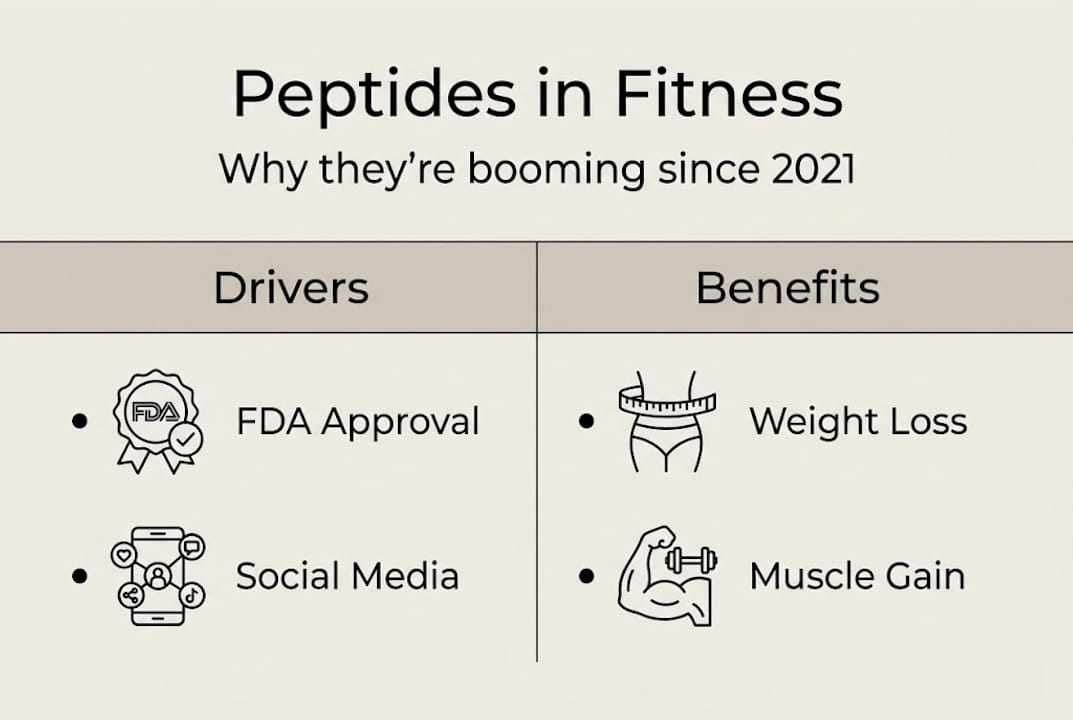
Social media accelerated things further. Fitness influencers, biohackers, and even celebrities began discussing peptides openly, collapsing the distinction between prescription compounds and the gray-market options flooding online communities. The word “peptide” became a fitness buzzword almost overnight, appearing in wellness podcasts, gym conversations, and Reddit threads with tens of thousands of active members.
| Peptide type | Primary use | Regulatory status |
|---|---|---|
| GLP-1 agonists (semaglutide, tirzepatide) | Weight loss, blood sugar | FDA-approved |
| Collagen peptides | Joint and muscle support | Generally recognized as safe |
| BPC-157 | Tissue repair, recovery | Unregulated / gray market |
| Growth hormone peptides (e.g., sermorelin) | Muscle, anti-aging | Prescription only |
Older peptide applications, like insulin and oxytocin, have existed in medicine for decades. What changed is the reach. Today, understanding bioactive peptides explained in plain terms matters because people are making real decisions about real compounds based on social media clips rather than clinical context.
“Peptides are not a monolith. Lumping GLP-1 drugs, gray-market BPC-157, and collagen powders into one category creates dangerous confusion about safety, effectiveness, and legality.”
How peptides work for weight loss and muscle building
GLP-1 peptides work primarily through three mechanisms. First, they suppress appetite by acting on hunger-regulating centers in the brain. Second, they slow gastric emptying, meaning food stays in your stomach longer and you feel full on less. Third, they improve insulin sensitivity and lower blood sugar spikes after meals. These combined effects create a caloric deficit without the misery of willpower-based dieting.

The clinical numbers are hard to argue with. Semaglutide produces 14.9 to 17% weight loss in trials like STEP, while tirzepatide hits 20.9% in the SURMOUNT trials. These are results that most traditional diets simply cannot match at scale. Women tend to respond slightly differently to GLP-1s, often experiencing more pronounced appetite suppression but also greater risk of lean mass loss if protein intake is insufficient.
Beyond GLP-1s, the muscle growth peptide science around collagen peptides and BPC-157 is generating real interest. Collagen peptides, when paired with resistance training, show measurable improvements in muscle synthesis and joint recovery. BPC-157 is studied for tissue repair and tendon healing, though most evidence remains animal-based so far.
Key benefits supported by current evidence:
- GLP-1 agonists drive significant, sustained fat loss when used consistently
- Collagen peptides improve muscle and connective tissue recovery when combined with training
- BPC-157 shows promise for injury repair but lacks human clinical trials
- Resistance training dramatically changes how muscle-preserving peptides perform
Pro Tip: If you are using any weight loss peptide guide to start a GLP-1 protocol, pair it with at least 3 resistance training sessions per week and hit 1.2 to 1.6 grams of protein per kilogram of bodyweight daily. This combination protects lean muscle while fat comes off.
| Peptide | Mechanism | Average result |
|---|---|---|
| Semaglutide | GLP-1 receptor agonist | 14.9-17% weight loss |
| Tirzepatide | GLP-1 + GIP dual agonist | 20.9% weight loss |
| Collagen peptides | Muscle/connective tissue support | Improved lean mass with RT |
| BPC-157 | Tissue regeneration | Promising (animal data only) |
Risks, side effects, and regulatory gray zones
The biggest mistake people make is treating all peptides as interchangeable. GLP-1s are rigorously tested and FDA-approved. Most other fitness peptides are not. The evidence gap is significant, and that gap creates real risks for people who skip past it.
One of the most under-discussed downsides of GLP-1 use is lean muscle loss. Without adequate resistance training and protein, users can lose a meaningful percentage of muscle along with fat. This matters because muscle drives metabolism, and losing it makes weight regain far more likely after stopping the drug. This is not a rare edge case; it is a documented pattern in clinical literature.
The regulatory picture is equally complicated. Fitness peptides lack trials and face serious regulatory pressure; non-GLP-1 peptides carry cancer concerns, purity risks, and explicit WADA bans for competitive athletes. Buying peptides outside a licensed medical provider means you genuinely do not know what is in the vial. Contamination, mislabeling, and dosing errors are all real risks in gray-market supply chains.
Key risks to know before starting any peptide protocol:
- Muscle loss from GLP-1s without structured resistance training
- Weight rebound if peptides are stopped without lifestyle changes in place
- Purity concerns with gray-market or research-grade compounds
- WADA bans on multiple peptides used in competitive sport
- Limited long-term data for most non-GLP-1 performance peptides
- Potential cancer risk signals in some compounds under investigation
Pro Tip: Always review safety tips for peptides before starting any compound. Confirm regulatory status, source only from licensed providers, and never base a protocol solely on social media recommendations.
The phrase “natural peptide” is particularly misleading. Many peptides exist naturally in the body, but synthesized versions at pharmacological doses behave very differently. Natural origin does not guarantee safety at therapeutic concentrations.
What’s driving the peptide hype? Hype, facts, and the future
Social media did something that clinical trials rarely manage: it made peptides feel personal and accessible. Before platforms like TikTok and Reddit normalized these conversations, most people would never have encountered terms like GLP-1 or BPC-157 outside a doctor’s office. Now they are dinner table topics.
The r/peptides subreddit sees over 70,000 visitors regularly, a number that reflects genuine public curiosity but also a community where anecdote frequently outpaces evidence. Influencers share transformation photos, stack recommendations, and sourcing tips, often without mentioning side effects, drug interactions, or regulatory status. The signal-to-noise ratio is genuinely poor.
“The peptide conversation online is 80% transformation photos and 20% actual science. That imbalance is exactly where people get hurt.”
Common myths worth addressing directly:
- “All peptides build muscle fast.” Most non-GLP-1 performance peptides lack human trial evidence for this claim.
- “Peptides are safe because they’re natural.” Synthesized compounds at pharmacological doses are not comparable to naturally occurring levels.
- “Stopping is easy.” GLP-1 cessation often leads to appetite returning strongly, with rapid weight regain if habits are not solid.
- “Only bodybuilders use peptides.” The majority of GLP-1 users are everyday people managing metabolic health, not athletes.
- “Gray-market peptides are basically the same as prescriptions.” Purity testing and dosing consistency differ enormously.
The future is likely to bring more rigorous trials, clearer regulatory frameworks, and better public education. Explore peptide evidence and caution to separate what science currently supports from what is still speculative. Medical attitudes are shifting too, with stigma around weight management slowly giving way to a more clinical, compassionate view of obesity as a chronic condition.
A clear-eyed take: What most guides miss about peptide use
Most articles on peptides either celebrate them uncritically or dismiss them entirely. Neither position reflects reality. The honest picture is more complicated and actually more interesting.
GLP-1 agonists represent a genuine pharmacological breakthrough for metabolic health. That is not hype; the trial data is solid and reproducible. But the broader peptide landscape is a regulatory wild west where legitimate research compounds sit next to untested gray-market products in the same online communities, and users rarely have the tools to tell them apart.
What experienced users and practitioners consistently note is this: results depend almost entirely on what surrounds the peptide. Diet quality, resistance training frequency, sleep, and stress management all determine whether a peptide protocol succeeds or fades. The compound itself is rarely the whole story. Check out strategies for improving peptide fitness results to understand how lifestyle factors multiply the effectiveness of any protocol.
Skeptics who ask hard questions about sourcing, trial evidence, and long-term outcomes are not being pessimistic. They are being smart. Start with what is proven, use legitimate sources, and build your protocol around training and nutrition first.
Explore safe, evidence-based peptide solutions
You now have a clearer picture of what peptides actually do, where the evidence is strong, and where the risks live. The next step is finding resources that match that level of rigor.

At Primegen Labs, we back every recommendation with current science and transparent sourcing. Browse our evidence-based peptide advice to see how research translates into real protocols. The in-depth peptide guide covers muscle building and recovery in detail, while our S-10 peptide details page explains one of our most requested compounds. Whether you are new to peptides or refining an existing approach, the right information makes every decision sharper.
Frequently asked questions
What are peptides most commonly used for in fitness?
Peptides are primarily used for weight loss, muscle building, and recovery acceleration, with GLP-1 peptides driving the largest share of mainstream adoption through medically supervised body composition programs.
Are fitness peptides safe and legal?
GLP-1 agonists like semaglutide are FDA-approved and considered safe under medical supervision, but many fitness peptides are unregulated and banned in competitive sports by WADA, making sourcing and legality critical considerations.
Can peptides help preserve muscle during weight loss?
Collagen peptides and adequate protein support muscle retention during fat loss, but GLP-1 agonists risk lean mass loss without consistent resistance training, making exercise a non-negotiable part of any GLP-1 protocol.
Why do peptides have a stigma or controversy?
Stigma stems from concerns about weight rebound after stopping, gray-market sourcing risks, and the perception that peptide use is a shortcut rather than a legitimate medical or performance tool.