

Peptide reconstitution procedure: Step-by-step safety guide

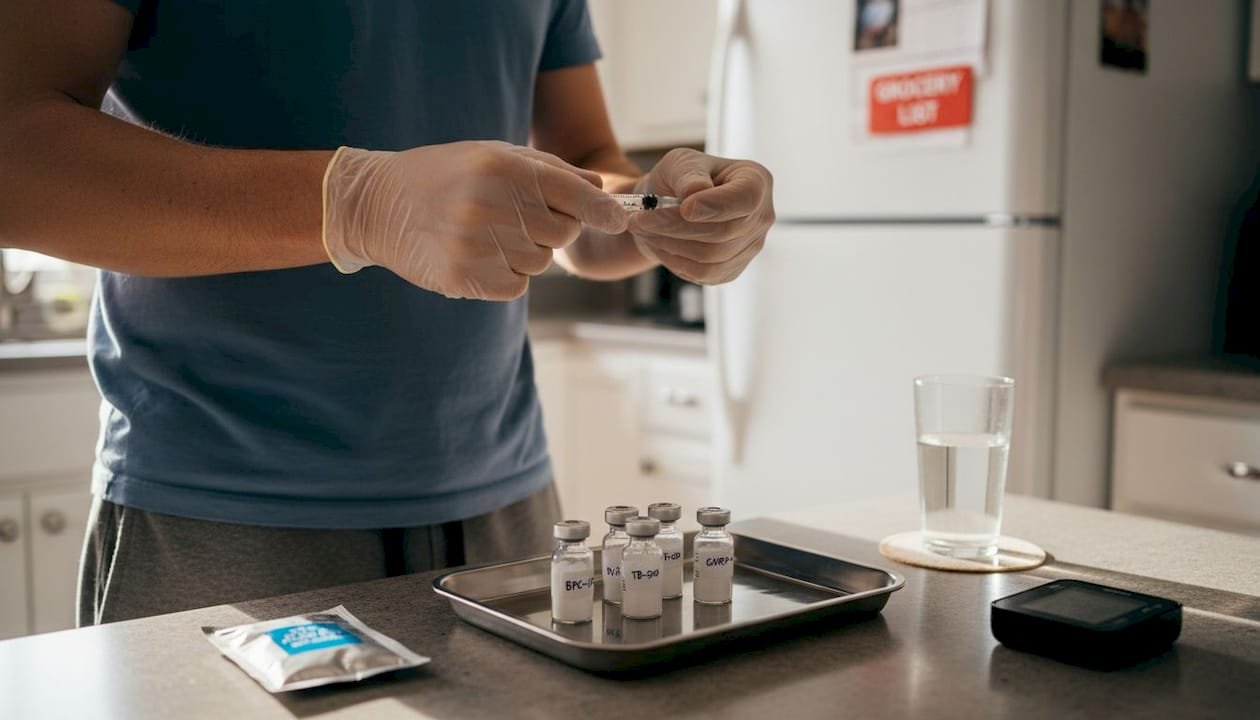
Getting peptide reconstitution wrong doesn’t just waste money. It can produce an unstable, ineffective, or even unsafe compound that undermines every fitness and weight loss goal you’re working toward. Whether you’re working with BPC-157 for recovery or Semaglutide for metabolic support, understanding how peptides function is critical for results. If you want to know how to reconstitute peptides properly, this guide walks you through every stage, from understanding the science to gathering materials, executing the procedure, and protecting your product after the fact. Follow this roadmap and you’ll handle peptides with the precision they demand.
Table of Contents
- Understanding peptide reconstitution
- Gather all tools and materials
- Step-by-step peptide reconstitution procedure
- Tips for maximizing peptide stability and storage
- Troubleshooting and common mistakes
- Explore quality peptides and support
- Frequently asked questions
Key Takeaways
| Point | Details |
|---|---|
| Correct solvent is crucial | Choosing the right solvent significantly impacts peptide stability and effectiveness for fitness goals. |
| Mix gently, avoid errors | Avoid shaking, jetting, and using cold vials to prevent peptide degradation and foaming. |
| Store immediately and safely | Refrigerate reconstituted peptides promptly and avoid exposure to light or temperature swings for optimal preservation. |
| Troubleshooting prevents waste | Recognizing and correcting mistakes early prevents product loss and ensures safe results. |
Understanding peptide reconstitution
Peptide reconstitution is the process of dissolving a lyophilized (freeze-dried) peptide powder into a liquid solvent to create an injectable solution. Manufacturers ship peptides in powder form because it dramatically extends shelf life and preserves molecular integrity during transit. Once you add solvent, the clock starts ticking.
Purity and stability are non-negotiable here. A peptide that degrades before use delivers zero benefit, and in some cases, degraded compounds can cause unexpected reactions. For fitness and weight loss applications, where precise dosing drives results, even minor degradation throws off your protocol. You can explore how peptides compare in fitness and recovery by reviewing peptide vs protein differences before choosing your protocol.
Key peptide types used in fitness and weight loss include:
Some compounds like Retatrutide are being studied for weight loss and metabolic support.
- BPC-157: Tissue repair and gut health
- Semaglutide: GLP-1 receptor agonist for appetite and metabolic regulation
- TB-500: Systemic recovery and inflammation reduction
- CJC-1295/Ipamorelin: Growth hormone stimulation
- AOD-9604: Fat metabolism support
One critical fact: degradation accelerates roughly 2x for every 10°C rise in temperature. That means a peptide left on a warm counter degrades twice as fast as one kept refrigerated. Understanding reconstitution basics before you start is the single best way to protect your investment.
Gather all tools and materials
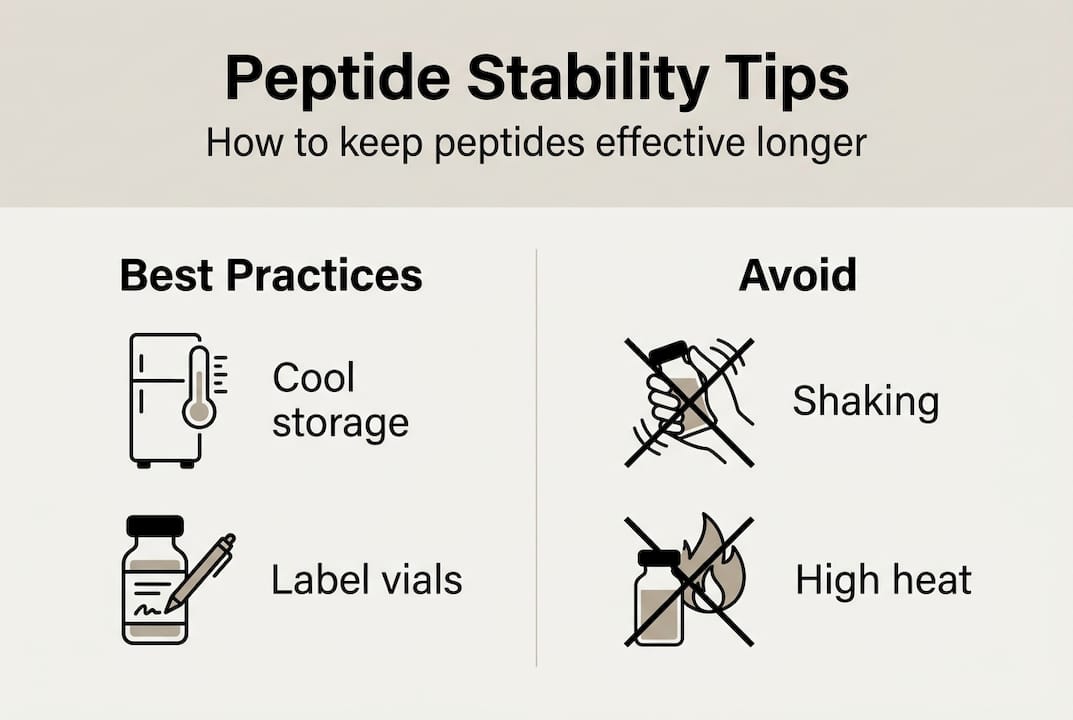
Once you understand the process, you need the right materials for safe and effective reconstitution. Using the wrong solvent or a non-sterile syringe introduces contamination risk immediately. There’s no workaround for this step.
Here’s what you need before you begin:
- Bacteriostatic water (BAC water): The preferred solvent for most fitness peptides
- Sterile insulin syringes: For drawing and injecting precise volumes
- Alcohol swabs: To sterilize vial tops before every puncture
- Sterile mixing vials: If transferring between containers
- Gloves: Nitrile, powder-free
- Sharps disposal container: For safe needle disposal
| Solvent | Best for | Stability window |
|---|---|---|
| Bacteriostatic water | BPC-157, Semaglutide, most fitness peptides | Up to 28 days refrigerated |
| Sterile water | Single-dose use only | Less than 48 hours |
| 0.6% Acetic acid | Basic peptides (e.g., IGF-1) | Up to 14 days refrigerated |
| Ammonium bicarbonate | Acidic peptides | Varies by compound |
BAC water is preferred for most fitness peptides including BPC-157 and Semaglutide, while acetic acid suits basic peptides and ammonium bicarbonate works for acidic ones. Choosing the wrong solvent doesn’t just affect stability. It can alter the peptide’s charge and solubility, making it harder to dissolve and less bioavailable.
Safety note: Never use tap water, saline from an unsealed source, or any solvent that hasn’t been confirmed sterile. One contaminated draw can introduce bacteria directly into your injection site.
You can source bacteriostatic water and supporting materials from a trusted supplier to ensure sterility standards are met. If you’re running peptide stacks, confirm solvent compatibility for each compound individually before mixing protocols.
Step-by-step peptide reconstitution procedure
With everything ready, follow these exact steps for optimal results.
- Wash your hands thoroughly and put on nitrile gloves before touching any equipment.
- Wipe all vial tops with a fresh alcohol swab and allow them to air dry for 10 seconds.
- Bring the peptide vial to room temperature before adding solvent. Cold vials cause condensation that can degrade the powder on contact.
- Draw your solvent into the syringe. The volume depends on your target concentration. For a 5mg vial, 1mL of BAC water gives you 5mg/mL.
- Angle the syringe so the solvent runs slowly down the inside wall of the vial. Never jet it directly onto the powder. Direct pressure causes shear stress that breaks peptide bonds.
- Allow the powder to dissolve naturally. Gently swirl the vial in a slow circular motion if needed. Do not shake.
- Inspect the solution before use. It should be clear or very slightly tinted. Any cloudiness, foam, or particles are red flags.
- Label the vial with the peptide name, concentration, solvent used, and reconstitution date.
- Store immediately in the refrigerator at 2 to 8°C, away from light.
Pro Tip: For BPC-157 reconstitution, use BAC water and aim for a concentration that makes your target dose easy to measure with a standard insulin syringe. A 5mg vial with 2mL BAC water gives you 2.5mg/mL, which is easy to work with at common dose ranges.
| Common mistake | Recommended action |
|---|---|
| Shaking the vial | Gently swirl or roll between palms |
| Jetting solvent onto powder | Angle solvent down the vial wall |
| Using cold vials | Bring to room temperature first |
| Using sterile water for multi-dose | Use BAC water for extended stability |
| Skipping vial labeling | Always label with date and concentration |
Shaking causes foaming and denaturation, direct jetting creates shear stress, and cold vials introduce condensation that accelerates degradation. These aren’t minor oversights. They’re the most common reasons a peptide protocol fails before it starts. For weight loss compounds, check the semaglutide guide for concentration and dosing specifics.
You can also review recent peptide research trends to understand how these compounds are evolving in fitness and medical research.
Tips for maximizing peptide stability and storage
After reconstituting, it’s crucial to protect the peptide’s potency for safe use. The work doesn’t stop once the powder dissolves.
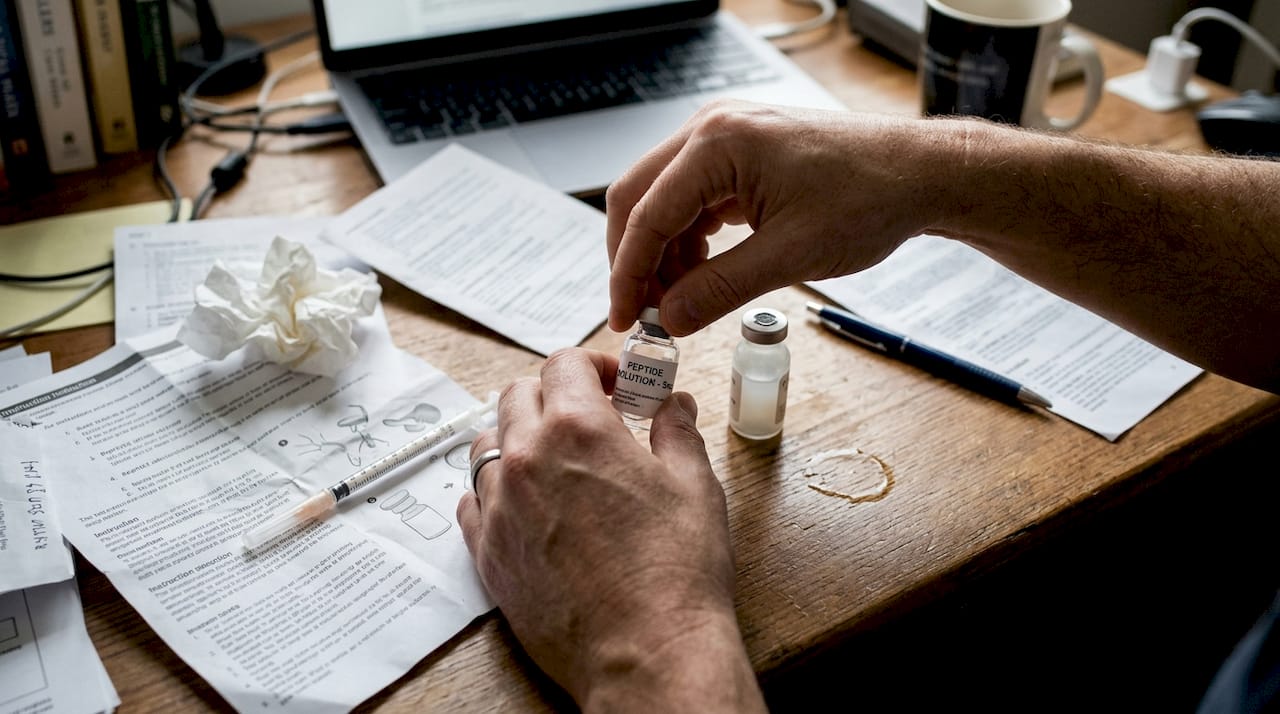
Best practices for storage:
- Refrigerate immediately after reconstitution. Don’t leave vials at room temperature for more than a few minutes.
- Store at 2 to 8°C. The middle shelf of your refrigerator is more stable than the door, which experiences temperature swings every time it opens.
- Keep vials away from light. UV exposure accelerates oxidation. Use amber vials or wrap clear vials in foil.
- Never freeze a reconstituted peptide. Freezing can cause ice crystal formation that physically damages the peptide structure.
- Use a dedicated storage box inside the fridge to prevent accidental knocking or exposure to strong-smelling foods.
- Track your dates. BAC water solutions last up to 28 days. Sterile water solutions must be used within 48 hours.
Pro Tip: Label every vial with a small piece of tape showing the reconstitution date and solvent used. When you’re managing multiple compounds, this prevents mix-ups and ensures you never use a degraded solution by accident.
Since degradation doubles with every 10°C increase in temperature, even brief exposure to warm conditions matters. A vial left near a stove or in a warm car for 30 minutes can lose meaningful potency. Treat your peptide stability as seriously as the reconstitution process itself. Browse peptide storage solutions to find products designed with stability in mind.
Troubleshooting and common mistakes
Even with careful attention, mistakes can happen. Here’s how to stay safe and correct errors.
Symptoms of poor reconstitution or degradation:
- Cloudiness or turbidity: May indicate contamination, improper solvent, or degradation
- Visible foam: Usually caused by shaking. Discard the vial if foam persists after 10 minutes of rest
- Particles or sediment: Undissolved powder or contamination. Do not inject
- Discoloration: Yellow or brown tint beyond a faint hue suggests oxidation
- Unusual smell: Any odor from a reconstituted peptide is a warning sign
Rule of thumb: If you’re unsure whether a reconstituted peptide is safe to use, discard it. The cost of a replacement vial is far lower than the risk of injecting a degraded or contaminated compound.
The most common reconstitution errors include shaking the vial, jetting solvent directly onto the powder, using cold vials, and relying on sterile water for multi-dose protocols where BAC water is required. Each of these mistakes has a direct consequence on peptide integrity.
Error prevention checklist:
- Confirm solvent type before drawing
- Bring vials to room temperature before adding solvent
- Always swirl, never shake
- Inspect solution visually before every use
- Store immediately after reconstitution
- Track reconstitution dates on every vial
For mistake prevention across multi-compound protocols, keep a simple log of each vial’s reconstitution date, solvent, and concentration. It takes 30 seconds and eliminates a major source of protocol errors.
Following essential peptide safety tips helps prevent contamination and ensures consistent results.
Explore quality peptides and support
Once you’ve mastered the procedure, here’s where to find reliable products and support. Reconstitution is only as good as the peptide you start with. Low-purity compounds, inconsistent lyophilization, or poor packaging can undermine even a perfect technique.
PrimeGen Labs provides fitness peptide products that are manufactured to high purity standards, making reconstitution straightforward and results more predictable. Whether you’re starting with BPC-157 10MG for recovery or exploring the S-10 peptide for performance, you’ll find detailed product information and support resources to guide your protocol. Quality sourcing is the foundation of a safe and effective peptide program.
Frequently asked questions
Which solvent is safest for peptide reconstitution?
Bacteriostatic water is the preferred solvent for most fitness peptides such as BPC-157 and Semaglutide, providing stability and minimizing degradation risk over a 28-day window.
How long does a reconstituted peptide remain stable?
Stability depends on the solvent. Bacteriostatic water offers up to 28 days of refrigerated stability, while sterile water lasts under 48 hours without a preservative.
What are the signs my peptide is degraded?
Cloudiness, persistent foaming, discoloration, or visible particles all indicate possible degradation. Shaking and direct jetting are the most common causes of these issues.
Can I reconstitute peptides at home safely?
Yes. Using sterile equipment, the correct solvent, and a step-by-step protocol makes home reconstitution safe and practical for personal fitness use.
7 thoughts on “Peptide reconstitution procedure: Step-by-step safety guide”