

How Peptides Work: Functions, Benefits, and Evidence


TL;DR:
- Peptides function as signaling molecules targeting specific receptors to influence muscle growth, recovery, or fat loss. Their effects vary based on receptor activity and scientific evidence, which is often limited and context-dependent. Proper goal alignment, responsible sourcing, and patience are essential for safe, effective peptide use alongside robust training and nutrition.
Not all peptides do the same thing, and assuming they do is one of the most expensive mistakes a serious lifter or athlete can make. Whether your priority is building lean muscle, cutting recovery time between sessions, or improving body composition, the peptide you choose matters because different compounds hit entirely different receptors and trigger entirely different biological responses. This article breaks down how peptides actually work, what the evidence really says, and how to make smarter, goal-aligned decisions instead of chasing whatever supplement trend is dominating forum discussions this month.
Table of Contents
- Understanding peptide basics and functions
- How peptide types differ in their actions
- Key nuances: Stacks, synergy, and limitations
- Practical application: Choosing and using peptides safely
- Perspective: Why understanding peptide differences beats following hype
- Explore more peptide guides and evidence
- Frequently asked questions
Key Takeaways
| Point | Details |
|---|---|
| Function follows targets | The effects of peptides depend on which receptors and pathways they act on in your body. |
| Different peptides, different results | Muscle growth, fat loss, and recovery peptides all work in distinct ways and suit different needs. |
| Evidence is mixed | Some peptides show promise, but most results in athletes are modest and still require solid training. |
| Safety and regulations matter | Not all peptides are legal or tested for bodybuilding—research legality and rely on high-quality sources. |
| Application is key | Smart use aligns peptide type, personal goals, and foundational fitness habits for best results. |
Understanding peptide basics and functions
Peptides are short chains of amino acids, typically between 2 and 50 amino acids long, that act as signaling molecules in the body. Unlike whole proteins, peptides are small enough to interact directly with specific cell receptors, triggering targeted biological responses. This specificity is exactly why they’re so interesting from a performance standpoint and why peptide vs protein differences matter in practical training contexts.
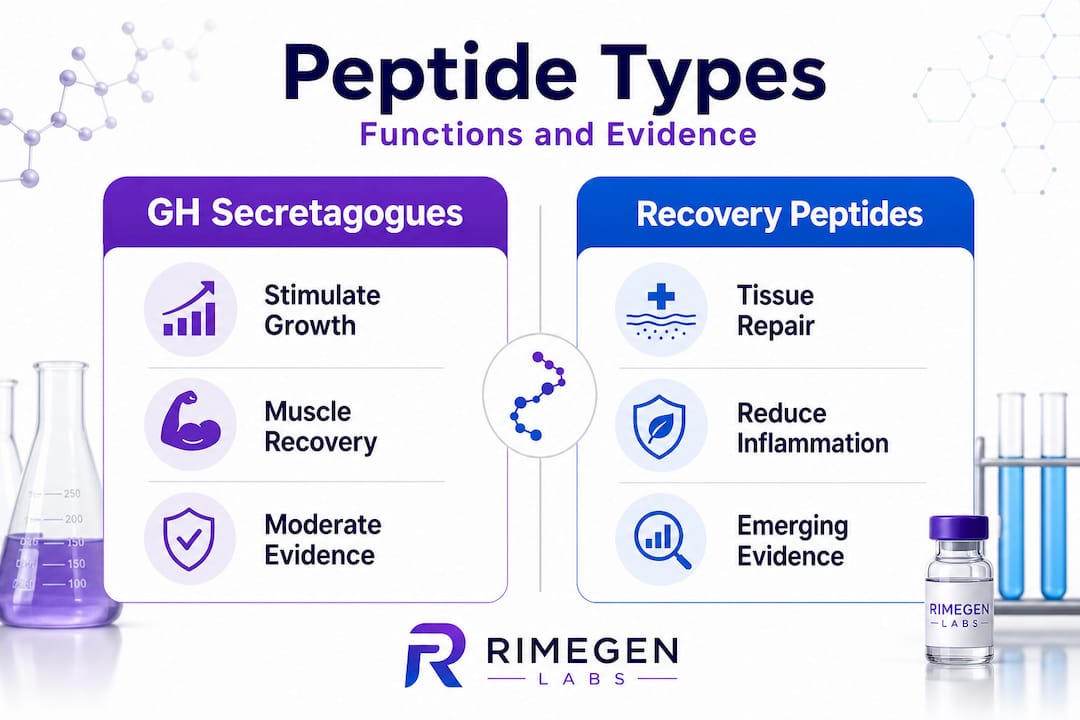
The major peptide categories relevant to fitness include growth hormone (GH) secretagogues, which stimulate natural GH release from the pituitary gland; recovery peptides like BPC-157 and TB-500, which promote tissue healing and reduce inflammation; fat-burning peptides that influence lipid metabolism; and IGF-1 stimulators that work downstream of GH to drive muscle protein synthesis. Each category is distinct in mechanism, not just in name.
As this science-backed peptide guide explains, peptides differ in function primarily by their target receptors and signaling pathways, leading to distinct effects on muscle growth, recovery, and performance. That distinction is not a minor detail. It determines whether a peptide is even remotely useful for your specific goal.
Popular peptides and their primary targets:
| Peptide | Receptor/Target | Primary Function |
|---|---|---|
| CJC-1295 | GHRH receptor | GH stimulation, muscle growth |
| Ipamorelin | Ghrelin receptor | GH pulse, lean mass support |
| BPC-157 | Various (gut, tendon) | Tissue repair, injury healing |
| TB-500 | Actin-binding proteins | Cellular migration, recovery |
| AOD-9604 | Fat cell receptors | Lipolysis, fat loss |
| IGF-1 LR3 | IGF-1 receptor | Muscle hypertrophy signaling |
Here is how peptides interact with your body’s biochemistry, step by step:
- Binding to target receptors. Each peptide binds to a specific receptor type on the surface of target cells. CJC-1295 binds to GHRH receptors in the pituitary. BPC-157 interacts with receptors in connective tissue and the gut wall.
- Triggering intracellular signaling. Once bound, the receptor activates internal signaling cascades. For GH secretagogues, this means releasing stored GH into the bloodstream. For BPC-157, it involves activating growth factor pathways like VEGF, which supports new blood vessel formation.
- Downstream effects on tissue. The released GH then stimulates the liver to produce IGF-1. IGF-1 enters muscle tissue and drives protein synthesis and satellite cell activation, both essential for hypertrophy.
- Adaptation and clearance. Peptides are typically cleared quickly, which is why dosing frequency matters. Some, like CJC-1295 with DAC (Drug Affinity Complex), are modified to extend their half-life.
Pro Tip: Before selecting any peptide, write down your primary goal in one sentence. “I want to increase lean mass in 12 weeks” leads to a completely different peptide strategy than “I need to recover from a partial tendon tear.”
How peptide types differ in their actions
Understanding categories is useful, but knowing the actual differences in mechanisms and evidence quality is where the real value lies. Not all peptides carry the same level of scientific backing, and this gap is often hidden by marketing language.
| Peptide Type | Mechanism | Evidence Level | Typical Effect Window |
|---|---|---|---|
| CJC-1295 + Ipamorelin | GHRH + ghrelin receptor activation | Moderate (clinical + anecdotal) | 8 to 16 weeks |
| BPC-157 | Multi-pathway tissue repair | Strong (animal), emerging (human) | 4 to 8 weeks |
| TB-500 | Actin modulation, cell migration | Strong (animal), limited (human) | 4 to 8 weeks |
| AOD-9604 | Mimics GH fat-mobilizing fragment | Moderate (some human trials) | 12 to 16 weeks |
| IGF-1 LR3 | Direct IGF-1 receptor activation | Limited human, strong anecdotal | 4 to 6 weeks |
Clinical data on GH secretagogues shows modest lean mass gains of 3 to 8 lbs over 12 weeks in combination with training, though these figures come largely from anecdotal and limited clinical sources rather than large-scale, randomized bodybuilder trials. Recovery peptides like BPC-157 and TB-500 are genuinely impressive in animal models, particularly for tendon, ligament, and muscle injury repair, but human controlled trials are still catching up.

This evidence gap is important. A compound being effective in rats does not guarantee the same results in a 200-pound athlete doing five training sessions a week. Check the best peptides for muscle recovery breakdown for a closer look at recovery-focused compounds and where the evidence actually holds up.
Here is what to consider when matching peptide type to athlete profile:
- Strength athletes focused on hypertrophy tend to see the most actionable results from GH secretagogue stacks, given their impact on IGF-1 production and nitrogen retention.
- Athletes recovering from soft tissue injuries are the most likely to benefit from BPC-157 and TB-500 based on the existing animal and emerging human data.
- Endurance athletes may see some benefit from recovery peptides due to repetitive stress on joints and connective tissue, though the research base here is thinner.
- Physique competitors in fat loss phases sometimes explore AOD-9604 or combination strategies, but should scrutinize claims carefully given the limited human trial data.
- Beginners in peptide use should start with better-researched, lower-risk options before moving toward less-studied compounds.
The peptide actions real science guide goes deeper on mechanism-to-outcome connections if you want to match the biology more precisely to your training blocks.
Key nuances: Stacks, synergy, and limitations
Stacking peptides, meaning using two or more together, is common practice in the performance world. When done correctly, it can produce a synergistic effect where the combined result exceeds what either peptide would achieve alone. When done carelessly, it creates unnecessary risk and muddies the water on what’s actually working.
Common stacks and why they’re used:
- CJC-1295 + Ipamorelin. This is arguably the most popular GH secretagogue stack. CJC-1295 stimulates GHRH receptors for sustained GH release while Ipamorelin activates ghrelin receptors for a sharper GH pulse. Together they mimic the body’s natural pulsatile GH pattern more closely than either alone.
- BPC-157 + TB-500. BPC-157 promotes healing at the cellular and vascular level while TB-500 drives cell migration to damaged tissue. They target complementary parts of the healing process, which is why athletes dealing with overuse injuries often use them together.
- GH secretagogue + IGF-1 LR3. A more advanced approach that stimulates both upstream (GH) and downstream (IGF-1) simultaneously, though this carries greater complexity and risk.
- AOD-9604 + CJC-1295. Sometimes used during recomposition phases to address both body composition and lean mass simultaneously.
“GH secretagogues and recovery peptides each occupy distinct roles, and stacking requires understanding not just their mechanisms but their interactions over time. Monitoring for desensitization, maintaining source quality, and respecting regulatory status is essential before committing to any stack protocol.”
One key distinction often overlooked is the difference between natural GH pulsatility and exogenous GH use. GH secretagogues, as highlighted in sports medicine research, preserve the body’s pulsatile GH release, which is important for maintaining receptor sensitivity and avoiding negative feedback suppression. Exogenous GH bypasses this entirely, which is part of why secretagogues are considered by many to carry a more favorable risk profile for long-term use.
Per expert analysis from peptide researchers, Ipamorelin is considered one of the cleanest GHRPs (growth hormone releasing peptides) due to its highly selective action without significantly increasing cortisol or prolactin, which is a key differentiator when choosing between GH-stimulating compounds.
Pro Tip: Check the regulatory status of any peptide before purchasing or using it. Most GH secretagogues and recovery peptides are banned by WADA in competitive sport and are not FDA-approved for bodybuilding purposes. Competing athletes face real consequences from inadvertent use.
Understanding how to research peptides properly before committing to a protocol is just as important as the protocol itself.
Practical application: Choosing and using peptides safely
With a solid understanding of mechanisms, evidence, and stack dynamics, the next step is applying this knowledge in a structured, responsible way. Here is a practical framework for aligning peptide selection with real-world goals.
- Identify your specific goal clearly. Muscle hypertrophy, injury recovery, fat loss, or general performance each point toward different compounds. Choosing based on a vague desire to “get bigger” leads to poor compound selection and disappointing results.
- Match the peptide to the evidence. Prioritize compounds with at least some human data relevant to your goal. For muscle growth support, GH secretagogue stacks have the most usable evidence. For injury recovery, BPC-157 and TB-500 are the most studied options available.
- Establish your baseline. Know your current body composition, training volume, and nutrition status before adding any peptide. Peptides do not compensate for inadequate protein intake or poorly structured training. As the evidence on recovery and performance shows, there is limited empirical data in trained athletes, with preclinical recovery data being stronger than GH body composition data in real-world training contexts.
- Source responsibly. Third-party tested, high-purity peptides from verified suppliers significantly reduce contamination and dosing inconsistency risks. The difference between a 98% pure peptide and a 72% pure one is not trivial when you’re injecting.
- Start with one compound. Resist the urge to run a full stack immediately. Starting with a single peptide lets you assess tolerance, observe effects clearly, and identify any adverse reactions without the confusion of multiple variables.
- Consult a healthcare professional. Especially relevant if you have existing conditions, are on medications, or are subject to sports drug testing. This step protects you legally and medically.
Pro Tip: Always prioritize third-party tested, pharmaceutical-grade peptides over cheap alternatives. Impure compounds carry real risks including immune reactions, inaccurate dosing, and bacterial contamination from substandard lyophilization processes.
The beginner’s peptide guide covers these practical steps in more detail if you’re new to structured peptide use.
Perspective: Why understanding peptide differences beats following hype
Here is something most peptide content won’t tell you: the majority of lifters chasing peptides are still undertrained and under-recovered in ways that no compound can fix. We see this pattern constantly. Someone runs a full GH secretagogue stack for 16 weeks, doesn’t track their sleep, eats maintenance calories with inconsistent protein, and then blames the peptide when results are underwhelming.
The uncomfortable truth is that the performance gap between a lifter with optimized training, nutrition, and recovery and one who uses peptides but ignores those fundamentals is massive. Peptides work at the margins. Elite margins matter enormously, but they don’t replace the foundation.
What we’ve seen work consistently is this: athletes who understand exactly which peptide they’re using, why they chose it over alternatives, what outcome they’re measuring, and what their fallback is if results plateau. That kind of clarity doesn’t come from following a forum recommendation. It comes from reading evidence-backed peptide cautions and making decisions based on actual biology rather than anecdotal testimonials.
The other reality is that patience is underrated in peptide use. GH secretagogues take weeks to accumulate meaningful hormonal effect. Recovery peptides work gradually, not overnight. The lifters who get frustrated after four weeks and switch compounds are the same ones who never give anything long enough to know if it worked. Real, lasting progress in performance requires the same measured approach you’d apply to a periodized training block.
Explore more peptide guides and evidence
You’ve done the work of understanding how peptides function, where the evidence stands, and how to choose wisely. The next step is going deeper with resources built specifically for athletes who take this seriously.

At Primegen Labs, we’ve built a library of evidence-focused content designed to cut through the noise. Whether you’re ready to look at a complete muscle growth peptide guide that ties mechanism to practical outcomes, explore research peptides for performance with a focus on real-world application, or want the full evidence-based peptide resource that covers benefits and cautions in depth, we have you covered. Every guide is written for serious athletes who want clarity, not clickbait.
Frequently asked questions
What is the main way peptides differ in function?
Peptides differ mainly by which body receptors they target and what cellular signals they trigger, affecting muscle growth, fat loss, or recovery. As the research confirms, distinct signaling pathways are the core reason why two peptides with similar amino acid counts can produce completely different outcomes.
Are peptides more effective than protein supplements for muscle building?
Peptides may target growth and recovery more directly, but strong evidence for superiority over protein is lacking, and results depend heavily on individual peptide type and use. Protein remains the non-negotiable foundation; peptides work best layered on top of adequate dietary protein.
Are all peptides legal for athletes and bodybuilders?
Many peptides are banned in competitive sports under WADA guidelines and are not FDA-approved for bodybuilding, so checking regulations before use is essential. Legal status varies by country and sporting body, so individual research is critical.
Do peptides cause faster results than training and nutrition alone?
Peptides may help, but gains are modest and depend entirely on ongoing training and nutrition, not a shortcut. The limited empirical data in trained athletes consistently shows that peptides support progress rather than create it independently.