

Injectable peptides explained: uses, safety, and real results


TL;DR:
- Injectable peptides are short amino acid chains used to target specific biological pathways, with injection bypassing digestion for higher efficacy.
- Their safety and effectiveness depend heavily on regulation, sourcing, and proper medical supervision, as not all peptides are FDA-approved or reliable.
If you’ve been researching peptide injections for fat loss or muscle building, you’ve probably run into a wall of conflicting information: miracle results on one forum, serious warnings on another, and influencer recommendations that seem to contradict everything your doctor says. The confusion is real, and it’s growing fast as injectable peptides move from clinical settings into mainstream fitness culture. Not all peptides are the same, not all of them are proven, and not all of them are legal. This guide cuts through the noise to give you a clear, evidence-based picture of what injectable peptides actually are, which ones have real science behind them, and how to approach them safely.
Table of Contents
- What are injectable peptides?
- Not all injectable peptides are created equal
- Evidence-based peptides for weight loss and body composition
- Safety and regulation: What you must ask before choosing
- Practical tips: Getting started safely with injectable peptides
- Our perspective: Why smart selection (not trends) drives results
- Explore evidence-based peptide solutions
- Frequently asked questions
Key Takeaways
| Point | Details |
|---|---|
| Not all peptides are equal | Regulation, clinical evidence, and safety differ widely between injectable peptide products. |
| FDA-approved works best | GLP-1 drugs like semaglutide and tirzepatide are supported by strong research for weight loss and body composition. |
| Safety checks are critical | Always confirm product source and regulatory status to avoid unproven or unsafe options. |
| Personalization matters | Choosing the right peptide involves understanding your goals, health history, and product legitimacy. |
What are injectable peptides?
At the most basic level, a peptide is a short chain of amino acids, the same building blocks that make up proteins. Your body naturally produces hundreds of peptides that act as chemical messengers, telling cells and organs what to do. Injectable peptides are treatments made from these short amino acid chains that are given by injection to modulate specific biological signaling pathways.
Why inject them instead of swallowing a pill? Because peptides are fragile. Stomach acid and digestive enzymes break them down before they ever reach the bloodstream. Injection bypasses that problem entirely, delivering the peptide directly where it needs to go with much higher precision and bioavailability.
Think of injectable peptides like keys designed for specific locks in your body. Each peptide is shaped to fit a particular receptor, triggering a specific response. One key might tell your pituitary gland to release more growth hormone. Another might signal your pancreas to produce insulin or tell your brain you’re full. The right key in the right lock produces a targeted, measurable effect.
There are two common delivery methods:
- Subcutaneous injection: Into the fatty tissue just below the skin, typically in the abdomen or thigh. This is the most common method for peptides targeting fat loss and metabolic health.
- Intramuscular injection: Directly into muscle tissue for faster absorption, though less commonly used with most fitness-oriented peptides.
Popular targets for injectable peptide therapy include muscle growth, fat loss, metabolic regulation, and recovery. To understand the underlying biology, check out this overview of bioactive peptides explained.
“Injectable peptides work by mimicking or amplifying the body’s own signaling molecules, making them highly specific tools when used correctly — but that same specificity means the wrong peptide or dosing strategy can produce unpredictable results.”
Not all injectable peptides are created equal
Here’s where most people go wrong. They hear “peptide injections” and assume every product on the market operates the same way, carries the same risks, and delivers the same results. That assumption is dangerous.
Peptide products are not one uniform category: each peptide has distinct mechanisms, evidence quality, and risk profiles, so evaluation must be individualized. A GLP-1 agonist approved by the FDA after thousands of clinical trials is an entirely different product from a peptide vial sourced through a grey-market website with no third-party testing.
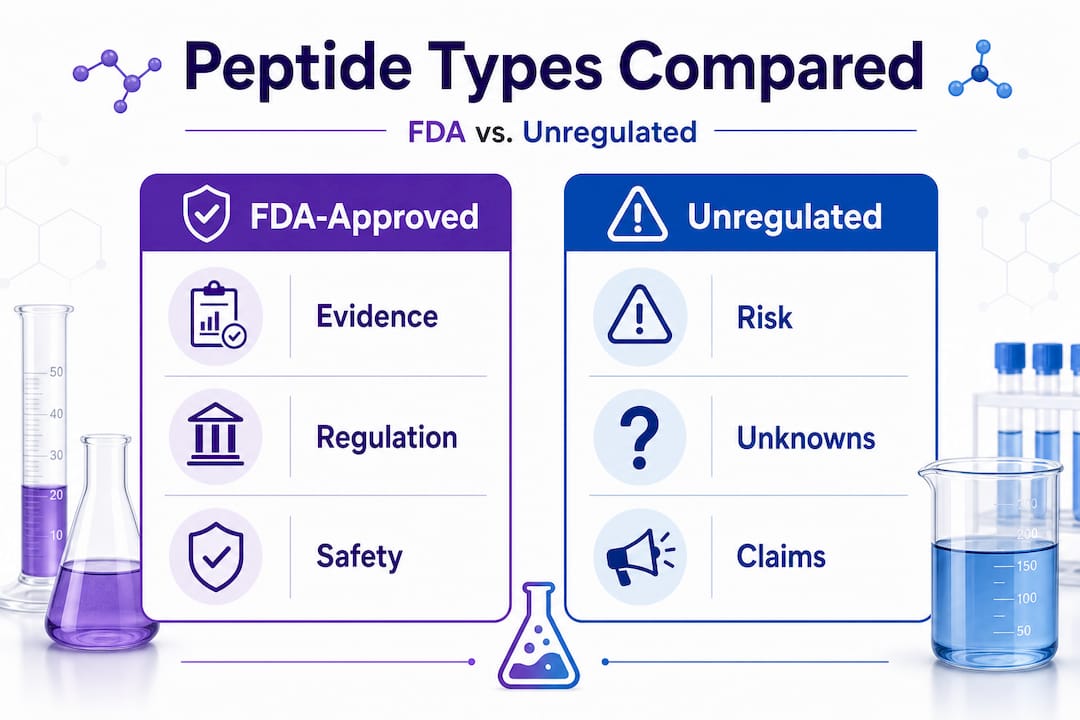
| Factor | FDA-approved peptides (e.g., semaglutide, tirzepatide) | Unregulated/compounded peptides |
|---|---|---|
| Regulatory oversight | Full FDA approval, rigorous trials | None to minimal |
| Evidence quality | Large-scale clinical trials | Limited, anecdotal, or absent |
| Manufacturing controls | Pharmaceutical-grade standards | Variable, often unknown |
| Legal status | Prescription required, legal | Grey market, potentially illegal |
| Known side effects | Well-documented | Often unknown |
| Contamination risk | Very low | Potentially high |
The fitness market is flooded with peptides like BPC-157, TB-500, CJC-1295, and Ipamorelin. Many have been studied in animal models or small human trials, but none carry FDA approval for the uses commonly marketed online. That doesn’t automatically make them useless, but it does mean you’re accepting a much higher degree of uncertainty about both effectiveness and safety.
Pro Tip: Before you research any specific peptide, look up its regulatory status first. If it isn’t FDA-approved or at minimum compounded legally through a licensed pharmacy, the rest of the product’s marketing claims become much harder to evaluate honestly.
Did you know? The global peptide therapeutics market was valued at over $40 billion in 2023 and is projected to keep growing, which means more products, more marketing, and more noise for consumers to wade through.
Understanding peptide supplement risks and how peptides in fitness are being marketed in 2026 can help you evaluate claims more critically before making any purchasing decision.
Evidence-based peptides for weight loss and body composition
Let’s talk about what the research actually supports. For weight loss and body composition goals, some well-evidenced injectable peptide drugs are GLP-1 and related incretin receptor agonists, including semaglutide and tirzepatide, both of which are FDA-approved and backed by large clinical trials.
These peptides work by mimicking hormones your gut naturally releases after eating. They signal your brain to reduce appetite, slow gastric emptying so you feel full longer, and improve blood sugar regulation. The result is a powerful combination of reduced calorie intake and better metabolic function.
The SURMOUNT-5 trial published in the New England Journal of Medicine compared tirzepatide head-to-head with semaglutide and produced striking results:
| Outcome | Tirzepatide | Semaglutide |
|---|---|---|
| Average body weight reduction | ~20% | ~14% |
| Waist circumference reduction | Significant | Moderate |
| Gastrointestinal side effects | Common (mild-moderate) | Common (mild-moderate) |
| Completion rate | High | High |
These are not small effects. For context, most traditional weight loss drugs produce 5 to 10% weight reduction. GLP-1 drugs are genuinely changing what’s possible for people struggling with obesity or metabolic conditions.
Here are the top three takeaways for fitness-focused users considering these drugs:
- They work best alongside lifestyle changes. Clinical trial participants who combined drug therapy with diet and exercise consistently outperformed those relying on the drug alone.
- Side effects are real but manageable. Nausea, vomiting, and diarrhea are the most common complaints, mostly during the initial dose escalation period. Starting low and going slow dramatically reduces discomfort.
- Muscle loss is a concern. Rapid weight loss from any source can reduce lean muscle mass. Pairing GLP-1 therapy with resistance training and adequate protein intake is essential to preserve your gains.
For a broader breakdown of options, the weight loss peptides guide covers additional options and their evidence levels in detail. If recovery and muscle building are your primary goals, the muscle recovery guide provides targeted advice.
“The clinical evidence for GLP-1 receptor agonists represents some of the strongest data we’ve ever seen for pharmacological weight loss interventions, but results still depend heavily on adherence, lifestyle factors, and individual metabolic response.”
Safety and regulation: What you must ask before choosing
Efficacy is only half the story. Safety is where things get complicated, and where too many fitness enthusiasts cut corners because they’re focused on results.

Not all peptide injections used for fitness and weight loss are regulated like FDA-approved drugs; some are promoted online and may come from unapproved or grey-market sources. This matters enormously. When you buy from a source that isn’t subject to pharmaceutical manufacturing standards, you have no reliable way to know what’s actually in the vial.
Most mainstream safety discussions focus on two themes: first, evidence gaps for many marketed peptides, and second, safety and quality risks from unregulated sources. Contamination, mislabeled concentrations, bacterial endotoxins, and unstable compounds are all real risks when peptides are manufactured outside regulated environments.
Before starting any injectable peptide protocol, ask yourself these questions:
- Is this peptide FDA-approved for my intended use? If not, do I understand what the evidence actually shows?
- Where is this product manufactured? Is it from a licensed compounding pharmacy or an unverified online vendor?
- Has this batch been third-party tested? Can I access a certificate of analysis?
- Do I have a healthcare provider involved? Have I disclosed my full health history?
- What are the documented side effects? Am I prepared to recognize and respond to them?
- What is the legal status in my state or country? Could sourcing this product put me at legal risk?
Pro Tip: Regulation protects you in ways you can’t replicate on your own. A prescription from a licensed physician and a product from an FDA-registered pharmacy adds layers of accountability that no online forum recommendation can replace.
The legal landscape for compounded GLP-1 drugs is also shifting rapidly. In 2024 and 2025, the FDA tightened policies around compounded semaglutide and tirzepatide as national supplies began to stabilize. Staying current on 2026 regulation updates is not optional if you’re serious about this space. And reviewing peptide safety tips before starting any protocol can help you avoid the most common and preventable mistakes.
Practical tips: Getting started safely with injectable peptides
You’ve done your research, consulted a physician, and decided to move forward. Here’s how to start safely and track your progress effectively.
Safety depends on patient selection, dosing strategy, duration, and product quality, including manufacturing controls, analytical testing, and stability. Every one of those factors is within your control to some degree.
Follow these steps before your first injection:
- Get a full medical evaluation. Bloodwork, metabolic panels, and a conversation with your doctor about your goals and health history are non-negotiable starting points.
- Confirm product legitimacy. Verify your source is a licensed pharmacy, request a certificate of analysis, and check that the peptide is appropriate for your prescription.
- Start at the lowest effective dose. Most protocols recommend starting low and titrating up slowly to minimize side effects. Don’t rush the escalation phase.
- Document everything. Track your starting weight, body composition, energy levels, sleep quality, and any side effects from day one.
- Set a clear review timeline. Decide in advance at what point you’ll evaluate whether the protocol is working, typically 8 to 12 weeks for most peptides.
- Know your exit plan. Have a clear threshold for stopping: specific side effects, lack of results after adequate time, or changes in your health status.
For tracking progress, the following matter most: body weight (weekly, same time of day), waist circumference (monthly), energy and mood (daily log), and any gastrointestinal symptoms or injection site reactions.
Pro Tip: One of the most common mistakes even well-researched users make is abandoning a protocol too early during the adjustment phase. Nausea and fatigue in the first two to four weeks are often temporary. The second mistake is changing too many variables at once, which makes it impossible to know what’s actually working.
To get more out of your protocol, the peptide outcomes tips resource offers practical, experience-based strategies for maximizing results while staying safe.
Our perspective: Why smart selection (not trends) drives results
Here’s an uncomfortable truth the peptide community doesn’t talk about enough: most people who try injectable peptides based on influencer recommendations or forum hype don’t get the results they expected. Not because peptides don’t work, but because they chose the wrong product for the wrong reason.
The popularity of injectable peptides is moving faster than public understanding of how they work, what the evidence shows, and what the risks are. That gap is where bad outcomes live. When you make a decision based on someone’s “transformation post” rather than clinical data, you’re essentially running an uncontrolled experiment on yourself.
We’ve also seen the other extreme: people who dismiss all peptide therapy as dangerous or experimental, missing out on genuinely effective, FDA-approved options that could meaningfully improve their health. Both blind enthusiasm and blanket skepticism get in the way of good decisions.
The people who get real, lasting results from injectable peptides share a few consistent traits. They worked with a healthcare provider. They chose products with documented evidence. They started conservatively and adjusted based on actual outcomes. They understood what success looked like before they started, not after three weeks of no results.
Evidence-based selection and personalization are the real drivers here, not the latest peptide being promoted on social media. When you strip away the marketing and look at the data, the path forward becomes much clearer. For a grounded look at what the research actually supports, the performance and benefits cautions resource is a useful reality check.
Explore evidence-based peptide solutions
If this guide has helped clarify your thinking, the next step is putting that clarity into action with the right resources behind you.

At Primegen Labs, we’ve built a library of science-backed resources specifically for fitness enthusiasts who want to make informed, effective choices with peptides. Whether you’re just starting to evaluate your options or ready to go deeper on specific products, we have the tools to guide you. Start with our evidence, benefits, and cautions resource for a balanced overview, explore our science-backed peptides guide for foundational knowledge, or use our peptide selection criteria framework to narrow down what’s actually right for your goals. Good decisions start with good information.
Frequently asked questions
How do injectable peptides differ from oral supplements?
Injectable peptides offer better bioavailability than oral forms because they bypass digestive breakdown, delivering a precise dose directly into the bloodstream, while oral supplements are often degraded before absorption.
Are all peptides for weight loss FDA-approved?
No. Only select drugs like semaglutide and tirzepatide carry FDA approval for weight management, while many peptides sold online come from unapproved or grey-market sources without proper regulatory oversight.
What are the most common side effects of injectable peptides?
Gastrointestinal adverse events including nausea, diarrhea, and vomiting are the most commonly reported effects, typically mild to moderate and most pronounced during the dose escalation phase.
How can I check if a peptide product is safe and legitimate?
Risk assessment should include verifying the product’s regulatory approval status, sourcing from a licensed pharmacy, and requesting a certificate of analysis to confirm product quality.
Do I need a prescription for injectable peptides?
FDA-approved injectable peptides like semaglutide and tirzepatide require a prescription, and FDA approval is required for most legitimate therapeutic uses, meaning you should always involve a licensed healthcare provider.