

Optimize peptide dosage workflow for fitness results

TL;DR:
- Proper workflow, including precise reconstitution and site rotation, is key to effective peptide results.
- Conservative dosing, timing, and cycle management reduce side effects and enhance benefits.
- Following safety protocols and sourcing quality peptides maximize safety and efficacy.
Peptide dosing advice is everywhere, and most of it contradicts itself. One source says 200mcg twice daily, another says 500mcg once, and a third swears timing doesn’t matter. That kind of noise doesn’t just slow your progress. It leads to wasted product, blunted results, and side effects that could have been avoided entirely. What separates bodybuilders who get real gains from peptides and those who don’t usually isn’t the peptide itself. It’s the workflow. This guide breaks down every stage of a smart peptide dosing workflow, from setup to administration to troubleshooting, so you can stop guessing and start getting results.
Table of Contents
- Tools and materials: What you need before you start
- Step-by-step peptide dosing workflow
- Dosage guidelines and sample cycles
- Troubleshooting, safety tips, and common mistakes
- Why workflow mastery beats chasing higher doses
- Take your peptide workflow further with expert resources
- Frequently asked questions
Key Takeaways
| Point | Details |
|---|---|
| Workflow consistency | Following a clear peptide workflow prevents errors and ensures optimal results. |
| Conservative dosing | Starting with low doses reduces side effects and lets you find your ideal protocol. |
| Timing matters | Injecting peptides at strategic times, like before sleep, maximizes their effectiveness. |
| Safety first | Proper injection techniques and site rotation minimize risks and discomfort. |
| Cycle structure | Using evidence-based cycles prevents tolerance and supports sustainable performance gains. |
Tools and materials: What you need before you start
Before you draw a single drop of reconstituted peptide, your workspace and tools need to be dialed in. Skipping this step is one of the most common reasons experienced athletes still get inconsistent results. Poor prep leads to contamination, inaccurate dosing, and degraded peptides before they ever enter your body.
Here’s what you need to have ready before starting any peptide protocol:
- Insulin syringes (29G to 31G): These are the standard for subcutaneous injections. Finer gauges mean less discomfort and cleaner entry.
- Bacteriostatic water (BW): The preferred solvent for reconstitution. It extends shelf life after mixing compared to sterile water.
- Peptide vials: Lyophilized (freeze-dried) powder form is the most common. Store unopened vials in the freezer.
- Alcohol swabs: Wipe the rubber stopper of every vial before inserting a needle. Every time.
- Sharps container: Dispose of needles safely. This is non-negotiable.
- Insulin U-100 syringe calculator or dosing chart: Helps you convert mcg doses to units on the syringe without errors.
- Refrigerator space: Reconstituted peptides must be stored at 2 to 8°C and used within 2 to 4 weeks.
| Tool | Purpose | Notes |
|---|---|---|
| 29G to 31G insulin syringe | Subcutaneous injection | Rotate sites each dose |
| Bacteriostatic water | Reconstitution solvent | Extends usable life post-mix |
| Alcohol swabs | Sterilization | Use on vial stopper and skin |
| Sharps container | Safe needle disposal | Required for safety compliance |
| Dosing chart | Accurate mcg to unit conversion | Prevents over or underdosing |
For subcutaneous injection into the abdomen fat, use a 90-degree angle with a 29 to 31G insulin syringe and rotate sites with each injection to prevent tissue buildup and maintain absorption quality.
Pro Tip: Before your first injection session, run through a dry practice. Load a syringe with bacteriostatic water only, and walk through every step. This builds muscle memory and reduces errors when it counts.
If you haven’t reconstituted peptides before, follow a step-by-step reconstitution guide to avoid common errors like foaming or temperature shock that degrade the peptide chain. Pair that with solid peptide safety tips to protect both your health and your investment.
Step-by-step peptide dosing workflow
With your tools prepared, follow these step-by-step instructions to ensure safe and effective dosing every time.
- Reconstitute your peptide. Add bacteriostatic water slowly by letting it run down the inside wall of the vial. Never inject directly onto the powder. Swirl gently, never shake. Shaking breaks peptide bonds.
- Calculate your dose. Use a dosing chart to convert your target mcg dose to the correct unit measurement on your insulin syringe. Double-check before drawing.
- Prepare your injection site. Wipe the area with an alcohol swab and let it air dry for 10 to 15 seconds. Wet alcohol can sting and may introduce trace contamination.
- Draw your dose. Insert the needle into the vial stopper at an angle, draw back the plunger to your calculated unit mark, then check for air bubbles. Tap and push out any air.
- Inject subcutaneously. Pinch the skin at your chosen site, insert the needle at 90 degrees, and depress the plunger slowly and steadily.
- Rotate your site. Log the injection site used so you don’t repeat the same spot within 48 hours. Common sites include left abdomen, right abdomen, and upper thighs.
- Dispose and store. Cap the needle, place it in your sharps container, and return the reconstituted vial to the refrigerator immediately.
| Peptide type | Best injection timing | Rationale |
|---|---|---|
| GH peptides (Ipamorelin, CJC-1295) | Fasted, 2 to 3 hours pre-dose; pre-bed optimal | Matches natural GH pulse cycles |
| Healing peptides (BPC-157, TB-500) | Near injury site or systemic | Targets tissue repair pathways |
For GH peptides, a fasted state 2 to 3 hours before dosing and a pre-bed injection window are considered optimal because they align with the body’s natural growth hormone pulses.
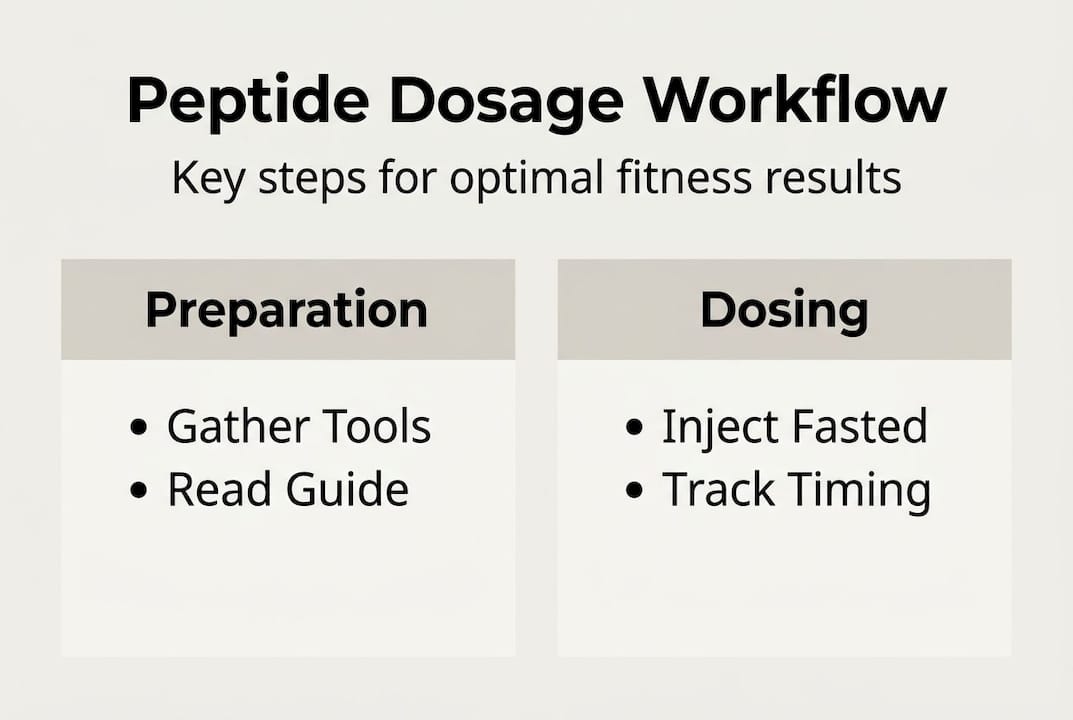
Pro Tip: Set a recurring phone alarm for your peptide injection window. Consistency in timing matters as much as the dose itself, especially for GH-releasing peptides where pulse timing drives results.
For a deeper look at how peptides interact with muscle tissue, the muscle growth peptide guide covers the science behind timing and absorption. You can also improve your protocol by reviewing peptide bioavailability tips that affect how much of each dose your body actually uses. For broader context on how peptides work in the body, therapeutic peptide basics provides solid foundational knowledge.
Dosage guidelines and sample cycles
After understanding the workflow, let’s examine dosage ranges and stacking strategies to tailor your peptide approach.
Here are the most commonly used peptides in fitness and their evidence-backed dosage ranges:
- BPC-157: 200 to 500mcg per day, split into 1 to 2 injections, for 4 to 12 weeks. Best for injury recovery and gut health.
- TB-500: 4 to 6mg per week during a loading phase, then 2 to 4mg per week for 6 to 12 weeks. Excellent for systemic healing and flexibility.
- Ipamorelin: 200 to 300mcg per injection, 2 to 3 times daily. One of the cleanest GH secretagogues with minimal cortisol or prolactin spikes.
- CJC-1295 (no DAC): 100 to 300mcg per injection, 2 to 3 times daily, typically stacked with Ipamorelin for synergistic GH release.
| Peptide | Dose range | Cycle length | Primary goal |
|—|—|—|
| BPC-157 | 200 to 500mcg/day | 4 to 12 weeks | Injury recovery |
| TB-500 | 4 to 6mg/week loading | 6 to 12 weeks | Systemic healing |
| Ipamorelin | 200 to 300mcg x2 to 3/day | 8 to 12 weeks | GH release, lean mass |
| CJC-1295 | 100 to 300mcg x2 to 3/day | 8 to 12 weeks | GH pulse amplification |
The “Wolverine stack” combines BPC-157 and TB-500 for aggressive recovery support, typically run for 8 weeks on, followed by 4 to 8 weeks off. This on/off structure helps prevent tolerance and maintains receptor sensitivity over time.
Pro Tip: Start every new peptide at the low end of the dosage range for the first two weeks. Your body’s response at 200mcg tells you far more than jumping to 500mcg on day one.

For practical strategies on improving peptide outcomes and understanding the peptide performance evidence behind each compound, those resources will help you build a more informed cycle plan.
Troubleshooting, safety tips, and common mistakes
Even the best workflows and plans face issues. Let’s cover the most common mistakes and how to handle them.
Signs you may have a dosing error:
- Sudden intense hunger shortly after injection (common with GHRP peptides at higher doses)
- Water retention or puffiness around joints (often from excessive GH stimulation)
- Injection site swelling, redness, or hardness lasting more than 24 hours
- No noticeable effect after 3 to 4 weeks (possible degraded peptide or incorrect reconstitution)
“Start at conservative doses, such as 100mcg for GH peptides, to assess tolerance. Higher doses yield diminishing returns with more side effects including hunger and water retention.”
Peptide degradation is a silent killer of results. If you’re not seeing effects and your protocol looks correct on paper, check your storage. Reconstituted peptides left at room temperature for more than a few hours lose potency fast. Always refrigerate immediately after drawing your dose.
Common workflow mistakes to avoid:
- Shaking the vial during reconstitution (breaks peptide bonds)
- Reusing needles (increases infection risk and dulls the tip, causing more tissue damage)
- Skipping site rotation (leads to lipohypertrophy, a buildup of fatty tissue that impairs absorption)
- Dosing GH peptides after eating (insulin presence blunts GH release)
- Storing peptides in the door of the refrigerator where temperature fluctuates
Pro Tip: Keep a simple injection log. Note the date, peptide, dose, site, and any reactions. After two to three weeks, patterns become obvious and you can adjust with real data instead of guessing.
For more detailed guidance, review advanced peptide safety tips and learn how peptide purity directly affects both your safety and the quality of your results.
If you experience persistent pain, systemic reactions, or anything beyond mild, transient effects, consult a healthcare provider. Peptides are powerful compounds and deserve the same respect as any other performance tool.
Why workflow mastery beats chasing higher doses
Here’s the uncomfortable truth most peptide content won’t say out loud: the majority of people who plateau on peptides aren’t using the wrong compound. They’re using the right one incorrectly.
Chasing higher doses is the most common trap. It feels logical. More peptide should mean more effect. But higher doses produce diminishing returns while stacking on side effects like hunger spikes and water retention that actively work against your physique goals.
Real optimization is a process, not a number. It means logging your injections, observing your body’s response at conservative doses, and adjusting based on actual feedback rather than forum advice. The athletes who get the most from peptides treat their protocol like a system, not a shortcut. Understanding peptide vs protein differences also sharpens your thinking about what these compounds actually do at the cellular level. The peptide research overview reinforces that even clinically studied compounds require careful, individualized dosing. Workflow mastery is the edge most people overlook.
Take your peptide workflow further with expert resources
You now have a complete framework for running a smart, safe peptide dosing workflow. The next step is putting it into practice with the right products and support behind you.

At PRIMEGEN LABS, we’ve built a library of in-depth guides and curated peptide resources specifically for bodybuilders and performance-focused athletes. Whether you’re refining a GH stack or starting your first recovery protocol, the peptide muscle growth guide gives you the science-backed detail to move forward with confidence. Ready to shop? Browse our peptide product selection to find high-quality compounds matched to your goals. Your workflow is only as strong as the tools you use.
Frequently asked questions
How do I decide the right peptide dosage for me?
Start with conservative doses such as 100mcg for GH peptides, assess your tolerance over two weeks, and adjust based on your response and cycle goals.
What is the importance of injecting peptides at specific times?
Timing peptide injections, especially pre-bed for GH peptides in a fasted state, enhances results by aligning with your body’s natural hormone pulses for maximum GH release.
How do I troubleshoot injection site pain or unexpected side effects?
Rotate injection sites with every dose, confirm your syringe technique is correct, and reduce your dose if effects persist. Consult a healthcare provider for any severe or persistent reactions.
Are peptide cycles necessary for muscle growth?
Yes. Structured cycles such as 8 weeks on, 4 to 8 weeks off for stacks like the Wolverine protocol help maximize results while reducing the risk of tolerance and side effects.
How can I ensure peptide purity and safety?
Source peptides from reputable providers, follow proper storage and reconstitution protocols, and note that most peptides carry a research-only status and are not FDA-approved for performance enhancement.