

Advanced peptide compounds for sports performance and health

TL;DR:
- Advanced peptides incorporate structural modifications, enhanced delivery systems, and precise targeting to outperform conventional options. They demonstrate longer stability, receptor specificity, and controlled release, leading to superior clinical and performance outcomes. Regulatory scrutiny in 2026 emphasizes prioritizing peptides with substantial human data and proven safety profiles.
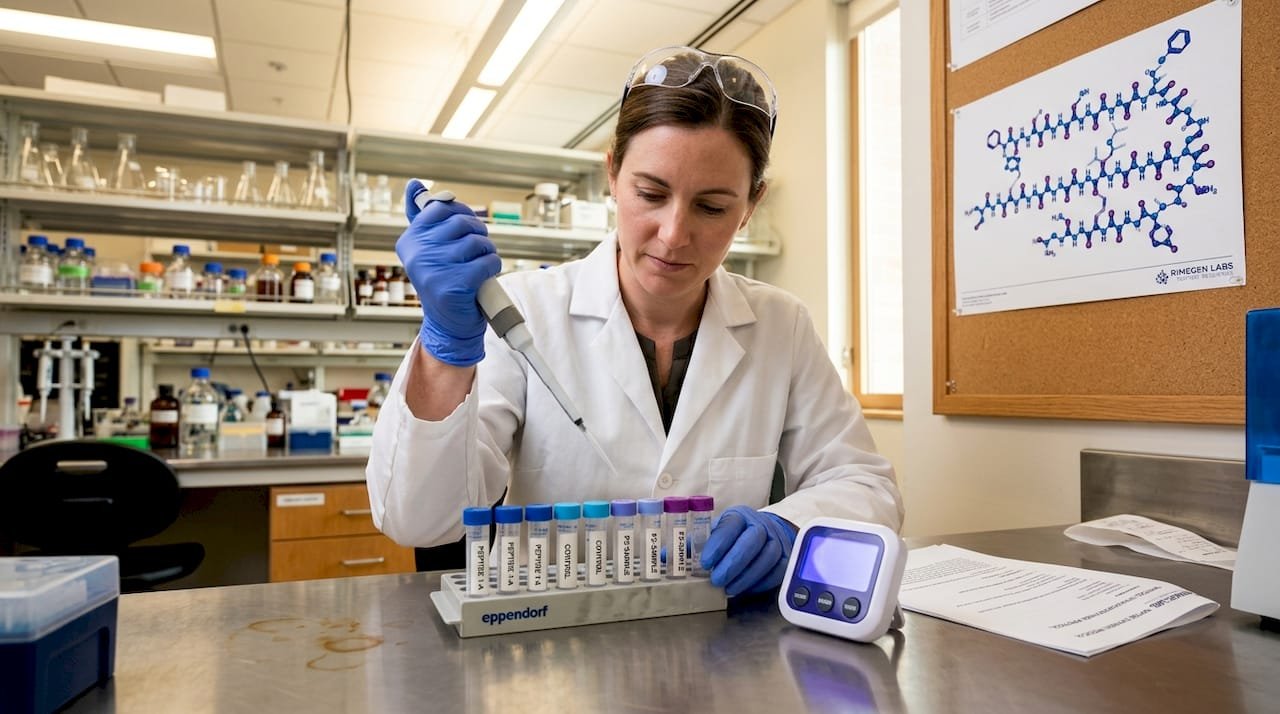
Not all peptides are created equal, and the fitness and research communities are only beginning to reckon with that reality. While basic peptide supplementation has been mainstream for years, a newer class of structurally modified, precisely targeted compounds is rewriting what’s possible in performance enhancement, metabolic health, and therapeutic recovery. This article breaks down what separates advanced peptide compounds from conventional options, what the clinical evidence actually supports, how delivery systems determine real-world outcomes, and where the regulatory landscape stands heading into the second half of 2026.
Table of Contents
- What defines advanced peptide compounds?
- Real-world breakthroughs: Performance and therapeutic applications
- Delivery, bioavailability, and optimization: Overcoming peptide challenges
- Regulatory caution: Safety, legality, and current FDA status
- What most articles miss about advanced peptide compounds
- Where to find more on advanced peptide research and solutions
- Frequently asked questions
Key Takeaways
| Point | Details |
|---|---|
| Advanced peptide definition | Advanced peptides use modern modifications and delivery to target effects and overcome stability issues. |
| Real-world evidence | Only a few advanced peptides, like tirzepatide and Vicia faba hydrolysate, have published, high-quality results in humans. |
| Delivery method matters | Injectable or encapsulated forms are essential for meaningful bioavailability and effectiveness. |
| Legal and safety landscape | Regulations are evolving; many popular peptides are under FDA review or restricted due to safety concerns. |
| Choose evidence-based solutions | Prioritize peptides with robust clinical data and compliance for both safety and performance gains. |
What defines advanced peptide compounds?
Peptides are short chains of amino acids that act as biological messengers, triggering everything from growth hormone release to immune modulation. Standard peptides work by mimicking naturally occurring sequences. Advanced peptide compounds go further, incorporating structural modifications, enhanced delivery mechanisms, and precision targeting to overcome the limitations that make conventional peptides unpredictable or short-lived in the body.
The distinction matters enormously in practice. Complex peptide injectables mimic natural peptides for targeted therapy, using nanoparticle encapsulation and conjugation to overcome the stability and absorption challenges that limit simpler formats. These innovations translate directly into greater specificity, longer half-lives, and controlled release profiles that researchers and clinicians can actually rely on.
Here’s what separates advanced peptides from their conventional counterparts:
- Structural modifications: D-amino acid substitutions, cyclization, and PEGylation (attaching polyethylene glycol chains) to resist enzymatic breakdown
- Advanced delivery: Nanoparticle encapsulation, lipid carriers, and conjugation to targeting ligands
- Longer stability: Reduced degradation in plasma, enabling less frequent dosing
- Receptor specificity: Engineered to bind only to target receptors, reducing off-target effects
- Controlled release: Depot formulations that sustain therapeutic levels over days or weeks
Exploring peptide optimization strategies helps clarify how these design choices translate into measurable therapeutic outcomes.
| Feature | Conventional peptides | Advanced peptide compounds |
|---|---|---|
| Structure | Natural amino acid sequences | Modified, cyclized, or conjugated |
| Delivery | Simple injection or oral | Nanoparticle, lipid carrier, depot |
| Stability | Hours to days | Days to weeks |
| Receptor targeting | Broad | Highly specific |
| Applications | General signaling support | Metabolic, oncology, sports therapy |
For fitness professionals and researchers, this table isn’t academic. It explains why two peptides with similar names can produce wildly different results in clinical settings.
Real-world breakthroughs: Performance and therapeutic applications
Understanding the science is one thing. Seeing it validated in controlled trials is another. Advanced peptide compounds have generated compelling data across weight management, muscle performance, and bone health in the past several years.

The clearest example is tirzepatide, a dual agonist targeting both GIP (glucose-dependent insulinotropic polypeptide) and GLP-1 (glucagon-like peptide-1) receptors. Tirzepatide demonstrated superior weight management and glycemic control compared to single agonists in large-scale trials, making it one of the most significant metabolic peptides to emerge in recent years. For athletes managing body composition or researchers studying metabolic adaptation, this compound represents a benchmark for what engineered peptides can achieve.
On the performance side, plant-derived peptides are gaining serious traction. A Vicia faba protein hydrolysate paired with resistance training enhanced strength, endurance, and bone mineral content in an 8-week randomized controlled trial, providing rare human data on a non-pharmaceutical peptide compound. PeptiStrong, derived from fava bean hydrolysate, showed statistically significant improvements in lean mass and functional performance compared to placebo.
| Compound | Study type | Key outcome | Effect size |
|---|---|---|---|
| Tirzepatide (GIP/GLP-1) | Phase 3 RCT | 22.5% body weight reduction | Large |
| Vicia faba hydrolysate | 8-week RCT | Increased strength and bone mineral content | Moderate |
| GLP-1 agonists (general) | Meta-analysis | Improved insulin sensitivity | Moderate to large |
The top three real-world applications where advanced peptide compounds are producing measurable outcomes:
- Weight and metabolic management: GLP-1/GIP agonists like tirzepatide are now used in both clinical obesity treatment and performance body composition protocols, with evidence that far outpaces older compounds.
- Muscle recovery and hypertrophy: Plant-derived hydrolysates and growth hormone secretagogues support post-training recovery, with some compounds showing direct effects on satellite cell activation and protein synthesis.
- Bone health and injury resilience: Clinical and emerging data show that specific peptide compounds influence bone mineral density, making them relevant for contact sport athletes and aging populations alike.
Pro Tip: Plant-derived peptides like Vicia faba hydrolysate may offer a legal, empirically supported performance edge when pharmaceutical peptides are inaccessible or restricted. They’re worth serious consideration in any evidence-based protocol.
For professionals building evidence-based programs, resources on peptides for weight loss and recovery and bioactive peptide benefits provide deeper context on compound selection.
Delivery, bioavailability, and optimization: Overcoming peptide challenges
Even the most precisely engineered peptide compound is only as effective as its delivery system. This is where many practitioners underestimate the complexity involved, and where advanced formulation science makes the biggest difference.
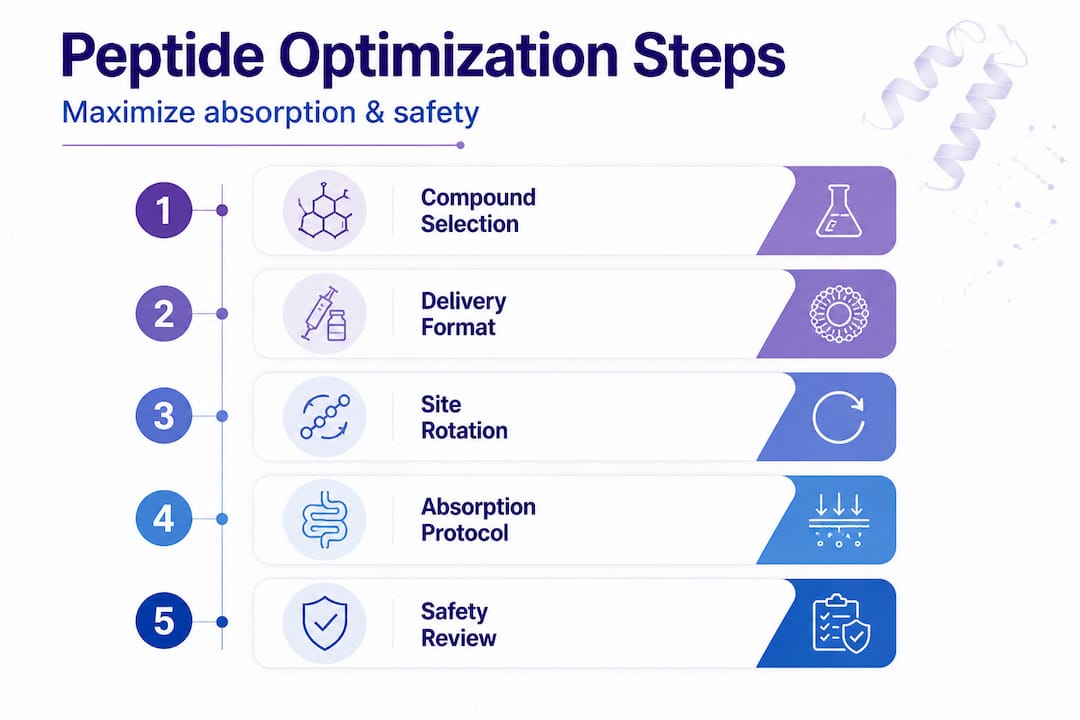
The core problem is enzymatic degradation. Oral peptide bioavailability remains under 1% due to breakdown by proteases in the gastrointestinal tract, meaning the vast majority of an oral dose never reaches systemic circulation. This is why injectables dominate clinical and research applications, and why the peptide supplement industry has faced persistent credibility challenges around oral formats.
Current approaches to maximizing peptide delivery include:
- Nanoparticle encapsulation: Wraps the peptide in a protective shell that survives GI transit and releases the compound at the target site
- Lipid-based carriers: Particularly effective for hydrophobic peptide analogs, improving membrane permeability
- Conjugation strategies: Attaching peptides to albumin, antibodies, or fatty acid chains to extend half-life and improve tissue targeting
- Injectable depot formulations: Subcutaneous or intramuscular slow-release formats that sustain therapeutic levels over extended periods
- Transdermal and intranasal routes: Emerging alternatives for specific compounds where systemic exposure is required but injection is impractical
“AI-driven peptide design is accelerating the identification of delivery-optimized sequences, allowing researchers to predict stability, receptor affinity, and formulation compatibility before synthesis. This shortens development cycles and improves the odds of clinical translation significantly.” — Advanced Formulation Research, 2025
Pro Tip: Rotate injection sites systematically and log any local reactions. Repeated injections at the same site increase the risk of lipodystrophy (localized fat tissue changes) and reduce absorption consistency over time.
The peptide bioavailability guide covers practical protocols for maximizing absorption across different compound classes, which is essential reading for anyone designing research or clinical protocols.
Regulatory caution: Safety, legality, and current FDA status
The performance peptide space moves faster than regulation, and that gap creates real risk for fitness professionals and researchers who don’t stay current. The FDA has established clear frameworks for peptide oversight, and 2026 is a pivotal year for several high-profile compounds.
Under current FDA definitions, peptides are classified as compounds containing 40 or fewer amino acids. Several fall into Category 2, meaning they are considered unsafe or unsuitable for compounding due to insufficient safety data or known risks. The FDA’s 2026 review of BPC-157, TB-500, and MOTs-C by the Pharmacy Compounding Advisory Committee (PCAC) in July 2026 reflects growing regulatory scrutiny around immune system effects and impurity risks from compounding pharmacies.
Peptides currently under restriction or close regulatory scrutiny include:
- BPC-157 (Body Protection Compound 157): Popular in recovery circles, but flagged for insufficient human safety data and immune modulation concerns
- TB-500 (Thymosin Beta-4 fragment): Widely used in athletic recovery; under PCAC review for compounding safety
- MOTs-C: A mitochondrial-derived peptide with metabolic applications; included in the July 2026 review agenda
- Epithalon and Selank: Nootropic and anti-aging peptides with limited regulatory approval in the United States
- CJC-1295 and Ipamorelin: Growth hormone secretagogues that remain in a gray area for compounding
Key dates and numbers to know:
The July 23 to 24, 2026 PCAC meeting is the most significant upcoming regulatory event for performance peptides. Outcomes from this meeting will directly affect which compounds remain accessible through compounding pharmacies and which face outright restriction. Fitness professionals and researchers should treat this date as a hard deadline for reassessing any protocols involving the compounds listed above.
The main safety risks associated with non-pharmaceutical grade peptides include immune activation from sequence impurities, inconsistent dosing from unregulated compounding, and unknown long-term effects for compounds without completed human trials. These aren’t theoretical risks. They’re documented concerns that have driven FDA action.
Staying current on peptide regulations 2026 and reviewing peptide safety tips should be non-negotiable steps for any professional working in this space.
What most articles miss about advanced peptide compounds
Here’s the uncomfortable reality that most content in this space avoids: the gap between clinical-grade peptide evidence and performance peptide evidence is enormous, and the fitness community consistently underestimates it.
Tirzepatide, semaglutide, and other pharmaceutical-grade compounds have gone through Phase 2 and Phase 3 trials with tens of thousands of participants. Their safety profiles, dosing windows, and contraindications are documented. Therapeutic compounds are supported by robust clinical benchmarks, while performance peptides often remain unproven for both safety and efficacy. That’s not a minor distinction. It’s the difference between evidence-based medicine and informed speculation.
The conversation in fitness and research circles tends to conflate these two categories. A compound that shows promising results in a rodent model or a small open-label study gets discussed with the same confidence as a Phase 3-validated drug. That’s a problem, not just ethically, but practically. Practitioners who build protocols around anecdotal compounds expose their clients and themselves to unknown risks and legal liability.
What we consistently see overlooked is the value of legally accessible, empirically supported peptides. Vicia faba hydrolysate isn’t as exciting as BPC-157 in a forum discussion, but it has published human RCT data, no regulatory restrictions, and a clear safety profile. That combination is rare and valuable. The same logic applies to GLP-1 agonists in metabolic health contexts.
The most sophisticated practitioners we work with have shifted their thinking from “what’s the most powerful compound” to “what’s the most defensible compound.” That means prioritizing peptides with published human data, clear regulatory status, and documented safety windows. It means tracking peptide research trends 2026 to stay ahead of regulatory shifts rather than scrambling to adapt after restrictions hit.
Pro Tip: Before adding any peptide to a protocol, run a simple three-point check: Is there published human trial data? What is the current FDA or WADA status? Has the compound been third-party tested for purity? If any answer is unclear, that’s your answer.
The innovation in advanced peptide compounds is real and accelerating. But the practitioners who will have long-term credibility in this field are those who match their enthusiasm for innovation with equal rigor around evidence and compliance.
Where to find more on advanced peptide research and solutions
If you’re ready to move from theory to application, having access to accurate, up-to-date science is the foundation of any effective peptide strategy.

PrimeGenLabs provides research-grade peptides alongside evidence-based resources designed specifically for fitness professionals and researchers who need more than surface-level information. Whether you’re building a performance protocol, evaluating therapeutic applications, or tracking the regulatory landscape, the depth of information available matters. Explore the muscle growth peptide guide for science-backed compound selection, or review the peptide performance evidence resource for a balanced look at what the data actually supports. The goal is informed decisions, not just access to compounds.
Frequently asked questions
What makes a peptide ‘advanced’ compared to standard peptides?
Advanced peptides feature structural modifications, enhanced delivery systems, or specialized targeting that improve stability, specificity, and clinical results versus conventional peptides. Complex peptide injectables use nanoparticle encapsulation and conjugation to achieve targeted therapy that standard formats cannot replicate.
Can advanced peptides be taken orally for performance or health benefits?
No. Oral peptide bioavailability is below 1% for most compounds, making injectables or encapsulated delivery formats necessary for any meaningful physiological effect.
Are all advanced peptides legal and safe for use in sports and health?
No. Several advanced peptides are restricted by the FDA, with ongoing safety reviews in 2026 covering compounds like BPC-157, TB-500, and MOTs-C due to immune risk and compounding safety concerns.
What are the top legal, evidence-based peptides for fitness professionals?
GLP-1/GIP agonists like tirzepatide and plant-derived hydrolysates such as Vicia faba have the strongest human evidence and fewer restrictions compared to research peptides. Tirzepatide and Vicia faba hydrolysate both demonstrate strong evidence for performance and metabolic benefits in controlled trials.