

Designer peptides: Smarter muscle growth and fat loss


TL;DR:
- Designer peptides are engineered molecules that target specific biological pathways to promote muscle growth and recovery without the broad hormonal disruption of steroids. They include categories like GH secretagogues, myostatin inhibitors, and regenerative peptides, which work through precise mechanisms to improve body composition and tissue repair. Carefully managed protocols, sourced from reputable suppliers under medical guidance, can enhance results while minimizing risks and side effects.
Most bodybuilders have heard that designer peptides are basically “safe steroids.” That myth is both wrong and potentially dangerous. Designer peptides are engineered molecules that communicate with specific biological pathways, targeting growth hormone release, myostatin suppression, or tissue repair without the broad hormonal disruption that steroids produce. The science is genuinely exciting, but the fitness community is drowning in hype, questionable sourcing, and half-understood mechanisms. This guide cuts through all of that, giving you a clear picture of what designer peptides actually are, what the evidence shows, and how to use them intelligently.
Table of Contents
- What are designer peptides?
- How designer peptides work: Mechanisms and categories
- Evidence: Results, benchmarks, and nuances
- Application in fitness: Practical guidance for safe and effective use
- Debates and future directions
- Our take: Peptide potential vs. practical reality
- Ready to explore safe, science-backed peptides?
- Frequently asked questions
Key Takeaways
| Point | Details |
|---|---|
| Precision not panacea | Designer peptides can target muscle growth and fat loss pathways, but they’re not magic shortcuts compared to steroids. |
| Science over hype | Real studies show benefits, but evidence—and risks—vary widely by peptide type and personal use. |
| Safety first | Medical oversight, source verification, and cycling are essential for effective and safe peptide use. |
| Legal and ethical nuance | Rules for use depend on location and sport, so always double-check before incorporating peptides into your routine. |
What are designer peptides?
Designer peptides are short chains of amino acids, typically between 2 and 50 residues, that are synthetically engineered to trigger very specific biological responses. Unlike standard peptides that occur naturally in the body, these molecules are structurally optimized to bind to particular receptors, resist enzymatic breakdown, or amplify signals that control muscle growth, fat metabolism, or tissue recovery.
Think of your endocrine system as a complex switchboard. Traditional anabolic steroids flood the entire board with androgen signals, producing results but also tripping dozens of unintended switches. Designer peptides are more like precision tools that flip only the switches you want activated. That selectivity is the core appeal, and it’s what makes them fundamentally different from steroids, prohormones, or even conventional peptide supplements like collagen.
The main categories relevant to fitness include:
- GH secretagogues: Peptides that stimulate the pituitary gland to release more growth hormone, either by mimicking GHRH (growth hormone releasing hormone) or ghrelin
- Myostatin inhibitors: Molecules that block the protein GDF-8, which acts as a natural brake on muscle development
- Regenerative peptides: Sequences that accelerate healing, support blood vessel formation, and reduce inflammation after injury or hard training
- GLP-1 receptor agonists: Peptides that regulate appetite and glucose metabolism, useful for fat loss with muscle preservation
“Designer peptides can target specific growth or recovery pathways more precisely than traditional anabolic agents.”
That precision is what separates them from nearly everything else in the performance enhancement landscape. For a broader foundation on how these molecules function in the body, the bioactive peptides overview at PrimeGen Labs is worth reading before going deeper into specific compounds.
How designer peptides work: Mechanisms and categories
Now that we’ve defined designer peptides, let’s break down how different types actually work and what makes them unique.
GH secretagogues
CJC-1295 is a modified GHRH analog that binds to GHRH receptors on the pituitary, producing sustained GH pulses. Ipamorelin mimics ghrelin and binds to the GHS-R1a receptor, triggering a sharp, clean GH release without significantly raising cortisol or prolactin. When stacked together, they create synergistic GH output that drives IGF-1 production in the liver, which then stimulates protein synthesis in muscle tissue. The result is accelerated lean mass accrual, improved sleep quality (GH is primarily secreted during deep sleep), and enhanced fat oxidation.
Myostatin inhibitors
Every human carries a built-in limit on how much muscle they can build. Myostatin, the protein encoded by the GDF-8 gene, enforces that ceiling by signaling through the Smad2/3 pathway to suppress muscle fiber growth. Follistatin directly neutralizes myostatin. Bimagrumab, a monoclonal antibody, blocks the activin type IIB receptor that myostatin uses to communicate its stop signal. In clinical settings, key mechanisms include GH secretagogues stimulating pituitary GH release via GHRH/ghrelin mimicry, leading to IGF-1 mediated protein synthesis; myostatin inhibitors blocking GDF-8 to remove muscle growth limits via Smad2/3 inhibition; and regenerative peptides promoting angiogenesis via VEGF and GHR upregulation.

Regenerative peptides
BPC-157 (Body Protection Compound 157) and TB-500 (a fragment of thymosin beta-4) are the two most studied regenerative peptides in the fitness world. BPC-157 promotes angiogenesis (new blood vessel formation) through VEGF upregulation and accelerates tendon, ligament, and gut healing. TB-500 modulates actin, a structural protein involved in cell movement and tissue repair, making it particularly valuable for recovering from muscle tears or chronic joint inflammation.
| Peptide | Primary mechanism | Main fitness benefit |
|---|---|---|
| CJC-1295 | GHRH receptor agonist | Sustained GH release, lean mass |
| Ipamorelin | Ghrelin receptor agonist | Clean GH pulse, fat loss, recovery |
| Follistatin | Myostatin neutralization | Muscle growth ceiling removal |
| Bimagrumab | ActRII receptor blockade | Lean mass gain, fat reduction |
| BPC-157 | VEGF upregulation, GHR | Injury repair, gut health |
| TB-500 | Actin modulation | Soft tissue healing, inflammation |
Pro Tip: Pairing a GH secretagogue with a regenerative peptide during a hard training block can amplify both muscle adaptation and connective tissue resilience simultaneously. This combination is especially valuable for athletes who train at high frequencies and accumulate joint stress over time.
For a thorough breakdown of the science behind these mechanisms, the real science of peptides resource covers the research in detail. If you’re specifically evaluating BPC-157, the BPC-157 product page includes purity specifications and usage context.
Evidence: Results, benchmarks, and nuances
Understanding the “how” is only half the puzzle. Here’s what the data says about actual results, risks, and limitations of designer peptides.
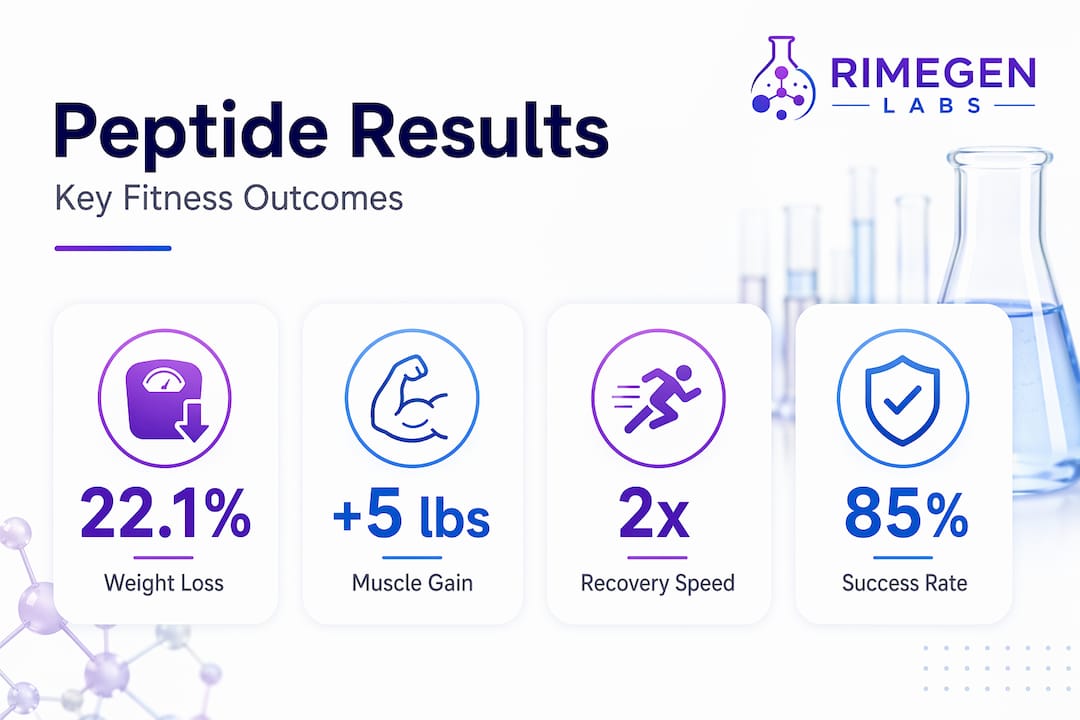
The clinical data on designer peptides is genuinely impressive in some areas and still immature in others. The most striking numbers come from combination protocols. Bimagrumab combined with semaglutide achieved 22.1% total weight loss, with an extraordinary 92.8% of that loss coming from fat rather than muscle. ACE-031, another ActRII blocker, increased lean mass by 3.3% in early trials. These are not trivial outcomes.
For GH secretagogues, the data shows consistent improvements in GH pulse amplitude, IGF-1 levels, body composition, and sleep quality, particularly in individuals with low baseline GH. Regenerative peptides like BPC-157 show strong preclinical results in animal models for tendon repair and gastric healing, though controlled human trials are still limited.
| Peptide/Protocol | Outcome measure | Result |
|---|---|---|
| Bimagrumab + semaglutide | Total weight loss | 22.1% |
| Bimagrumab + semaglutide | Fat-derived loss | 92.8% of total |
| ACE-031 | Lean mass increase | 3.3% |
| CJC-1295 | IGF-1 elevation | Up to 200% above baseline |
| Ipamorelin | Cortisol/prolactin increase | Minimal to none |
However, the nuances matter enormously. Research highlights several mass-function disconnects in myostatin inhibitors where increased muscle mass does not always translate to proportional strength gains. Hypoglycemia risk with IGF-1 LR3 is real and under-discussed. Desensitization from prolonged GH peptide use requires structured cycling protocols. Non-selective myostatin blockade with ACE-031 also produced adverse effects including epistaxis (nosebleeds), which halted trials.
Key risks to understand before starting any protocol:
- Desensitization: Continuous GHRH/ghrelin mimicry can downregulate receptors, reducing effectiveness
- Hypoglycemia: IGF-1 enhancing peptides can lower blood glucose, especially around training
- Source contamination: Gray-market peptides carry serious contamination and dosing accuracy risks
- Mass without function: Some myostatin inhibitors build muscle volume without corresponding strength improvement
Pro Tip: Track both body composition changes AND strength metrics when running a peptide protocol. If your lean mass is climbing but your lifts are stagnating, that mass-function disconnect is a signal worth investigating. Understanding peptides for weight loss helps contextualize whether your protocol is actually hitting your primary goal. And before starting anything, review solid peptide safety tips to avoid the most common and avoidable mistakes.
Application in fitness: Practical guidance for safe and effective use
With the evidence laid out, let’s pivot to how you can approach designer peptides wisely in your own fitness journey.
Getting results from designer peptides isn’t just about picking the right compound. Protocol design, sourcing, and integration with your training and nutrition all determine whether you get transformative outcomes or waste your money chasing unrealized potential. Cycling, specialized combinations, and medical guidance are necessary to optimize designer peptide regimens for both safety and effectiveness.
- Work with a knowledgeable physician or sports medicine doctor before starting any peptide protocol. Baseline bloodwork, including IGF-1, GH, testosterone, and metabolic panels, gives you a starting point and a way to measure response objectively.
- Cycle your protocols deliberately. A common approach for GH secretagogues is 12 weeks on, 4 weeks off. This prevents receptor downregulation and maintains sensitivity.
- Choose reputable, tested sources. Established sources emphasize that preclinical promise is strong but human data is still catching up. Verify third-party testing, certificates of analysis, and avoid any supplier that can’t provide documentation.
- Stack intelligently, not aggressively. A GH secretagogue plus a regenerative peptide is a well-tolerated, evidence-supported starting point. Adding a GLP-1 agonist for fat loss targets a separate pathway without compounding hormonal stress.
- Calibrate your training and nutrition to match peptide activity. GH secretagogues work best when fasted or at least 2 hours post-meal (high insulin blunts GH release). Increase protein intake to 1.0 to 1.2 grams per pound of bodyweight to capitalize on elevated protein synthesis.
- Monitor and adjust every 6 to 8 weeks. Body composition scans, bloodwork, and subjective recovery data all tell you whether the protocol is working and whether dosing needs adjustment.
For a curated selection of research-backed peptide products with verified purity, PrimeGen Labs provides documentation to support informed decisions. If you want to maximize every dollar spent on peptides, the guide on how to boost peptide absorption walks through timing, storage, and administration best practices that most athletes overlook.
Debates and future directions
No guide is complete without addressing the debates, pushback, and what’s truly on the horizon for peptide performance science.
The designer peptide field is not without controversy. On one side, proponents argue that these compounds offer an entirely new tier of precision: tissue-specific signaling, lower androgenic activity, and recovery benefits that traditional performance enhancers simply cannot match. On the other, skeptics push back hard.
“Proponents highlight targeted signaling over steroids’ risks; skeptics argue little evidence for direct growth effects and warn of DIY dangers.”
Both camps have valid points. The honest position is that the science is promising but uneven. Most of the most exciting data comes from preclinical models or small human trials, not the large-scale, long-term randomized controlled trials that would satisfy most physicians. For serious athletes, this means making risk-calibrated decisions rather than all-in bets.
Key ongoing debates in the field:
- Whether myostatin inhibitors will ever produce functional strength alongside mass gains in healthy athletes
- The regulatory future of peptides, particularly as sports governing bodies move to expand prohibited substance lists
- The ethics and risks of DIY peptide use without medical oversight, which is increasingly common and genuinely dangerous
- Frontier combinations like trevogrumab plus semaglutide, which represent the next generation of body recomposition protocols currently in trials
- Whether personalized genomic profiles will eventually guide peptide selection the same way precision medicine guides cancer treatment
Understanding these debates is essential context before making any protocol decisions. For a balanced breakdown of where the evidence actually holds up and where it doesn’t, the peptide benefits vs. risks resource at PrimeGen Labs gives an honest audit of the current landscape.
Our take: Peptide potential vs. practical reality
Here’s the uncomfortable truth that most peptide content won’t tell you: the biggest gains from designer peptides almost always go to athletes who were already doing most things right. The person sleeping 8 hours, hitting high-quality protein targets, training with real progressive overload, and managing stress effectively. Peptides amplify what’s already working. They don’t fix broken foundations.
We’ve seen bodybuilders run sophisticated stacks and get mediocre results because their training was inconsistent or their sleep was garbage. We’ve also seen athletes get remarkable body recomposition outcomes from a simple CJC-1295/Ipamorelin protocol layered onto an already disciplined lifestyle. The peptide was not the variable that explained the difference. The foundation was.
The other thing worth saying plainly: sourcing is not a minor detail. The gray market for peptides is filled with under-dosed, contaminated, and misidentified products. One contaminated vial can set your health back by months. The argument for spending more with a verified supplier is not about prestige. It’s about not poisoning yourself with something that wasn’t what the label claimed.
Looking forward, the most exciting development in this space is not any single compound. It’s the move toward individualized, data-driven peptide stacking, where bloodwork, genetic markers, and training response data guide protocol design in real time. That’s where the expert peptide insights point and where the most serious practitioners are already heading. Precision over volume. Science over marketing.
Ready to explore safe, science-backed peptides?
You’ve just gone through one of the most thorough breakdowns of designer peptides available for fitness athletes. The knowledge is powerful, but the next step is having access to products and resources you can actually trust. At PrimeGen Labs, every compound is backed by third-party testing and detailed documentation so you know exactly what you’re working with.

Whether you’re just getting started or refining an advanced protocol, the comprehensive peptide guide is the best place to continue your journey. Explore verified compounds, dosing frameworks, and stacking strategies built around real science, not marketing copy. Your results depend on the quality of what you put in your body. Make it count.
Frequently asked questions
Are designer peptides legal for athletes and bodybuilders?
Designer peptide legality varies significantly by country and sporting organization, so always verify local regulations and check your governing body’s prohibited substance list before using any compound.
Do designer peptides really build muscle faster than steroids?
Designer peptides support muscle growth through targeted pathways and are not steroid replacements; their effects are more precise and generally carry lower risk when used under medical supervision, but raw anabolic output differs substantially from traditional steroids.
What are the main risks or side effects of designer peptides?
Key risks include hormone imbalance, hypoglycemia, receptor desensitization, and contamination from unregulated sources; DIY risks and unproven human efficacy make medical oversight a non-negotiable safeguard.
Which designer peptide is best for weight loss with muscle preservation?
The bimagrumab plus semaglutide combination has produced the most striking clinical data, achieving 22.1% weight loss with lean mass preserved, with the vast majority of loss coming from fat tissue.
Should I cycle peptides or use them continuously?
Cycling is strongly recommended because desensitization from prolonged GH peptides reduces effectiveness over time; always work with a qualified medical professional to structure your on and off periods appropriately.