

How to improve peptide outcomes for fitness and recovery


TL;DR:
- Proper administration route and sourcing are crucial for peptide effectiveness and safety.
- Combining peptides with exercise and nutrition enhances results, especially when timed correctly.
- Consistency, monitoring, and personalized adjustments are key to maximizing peptide benefits.
Peptides have real potential to elevate performance, accelerate recovery, and sharpen body composition, but most users never get close to their full benefit. The gap between expectation and result usually comes down to a handful of avoidable mistakes: wrong administration route, poor sourcing, or no monitoring at all. This guide cuts through the noise and walks you through every critical step, from understanding what peptides actually need to work, to pairing them with exercise and nutrition, to troubleshooting when things go sideways. If you’ve been using peptides and wondering why results feel underwhelming, you’re in the right place.
Table of Contents
- Understand peptide basics and requirements
- Optimize administration and dosing strategies
- Pair peptides with exercise and nutrition for enhanced gains
- Troubleshooting, monitoring, and avoiding common mistakes
- The reality about improving peptide outcomes: What most guides miss
- Unlock next-level peptide results with expert resources
- Frequently asked questions
Key Takeaways
| Point | Details |
|---|---|
| Route matters most | Choose subcutaneous or intramuscular injection for highest peptide results. |
| Exercise pairing boosts effects | Combine peptides with resistance training and high-protein diet for bigger gains. |
| Start low, monitor | Begin at low doses, track effects with bloodwork, and adjust for optimal safety. |
| Avoid common mistakes | Quality sourcing and following step-by-step protocols prevent wasted effort. |
| Edge cases affect results | Special scenarios like fasting or post-exercise timing can change peptide effectiveness. |
Understand peptide basics and requirements
Peptides are short chains of amino acids, typically between 2 and 50 residues, that act as signaling molecules in the body. Unlike full proteins, they’re small enough to bind directly to specific receptors and trigger targeted biological responses. Growth hormone secretagogues like Ipamorelin signal the pituitary to release GH. Repair peptides like BPC-157 accelerate tissue healing. Collagen peptides supply the building blocks your connective tissue needs to rebuild. Each category works through a distinct mechanism, which means each one also has distinct requirements for delivery and timing.
One of the most overlooked factors is bioavailability, which refers to how much of a peptide actually reaches your bloodstream and target tissue in active form. Bioavailability varies widely depending on the administration route, and the differences are dramatic. Oral peptides are largely destroyed by digestive enzymes before they can absorb. Injectable routes bypass that problem entirely. Understanding this upfront saves you months of wasted effort.
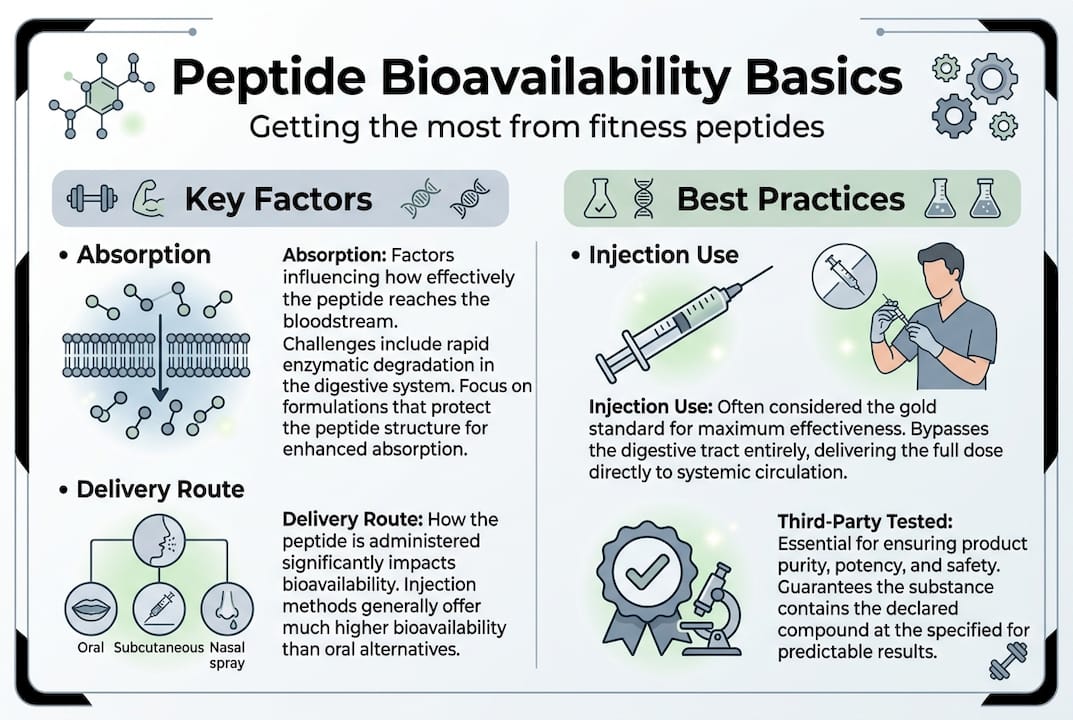
Before you start any protocol, you need the right tools and baseline knowledge. The bioactive peptide benefits vary by peptide type, so matching the right compound to your goal is step one.
Essential supplies and prerequisites:
- Bacteriostatic water for reconstitution
- Sterile syringes (insulin syringes for subcutaneous use)
- Alcohol swabs and a clean prep surface
- Baseline bloodwork (IGF-1, hormones, liver panel)
- A reliable, third-party tested peptide source
- A tracking log for doses, timing, and response
Bioavailability comparison by route:
| Administration route | Approximate bioavailability | Best use case |
|---|---|---|
| Intravenous (IV) | ~100% | Clinical settings only |
| Subcutaneous (SC) | 70-90% | Most peptides, home use |
| Intramuscular (IM) | 70-90% | Larger volume injections |
| Intranasal | 10-30% | Convenience, lower potency |
| Oral | Less than 2% | Collagen peptides only |
This table alone should reframe how you think about delivery. If you’ve been relying on oral capsules for GH secretagogues, you’ve likely been getting less than 2% of the active compound. That’s not a dosing problem. That’s a delivery problem.
Optimize administration and dosing strategies
Now that you know what peptides require for best results, let’s break down exactly how to use them safely and effectively.
Subcutaneous or intramuscular injections offer the highest bioavailability for most peptides, which is why they remain the standard for serious protocols. Subcutaneous injection into the abdomen or thigh is the most practical method for home use. It’s consistent, minimally invasive, and delivers predictable absorption. The reconstitution process matters too. Follow the peptide reconstitution steps precisely to avoid degrading the compound before it even enters your body.
Standard starting doses for common peptides:
- BPC-157: 200 to 500mcg per day, split into one or two injections. Best used near the injury site subcutaneously for localized repair.
- Ipamorelin: 200 to 300mcg per dose, typically two to three times daily. Administer on an empty stomach for best GH pulse response.
- CJC-1295 (without DAC): 100 to 200mcg per dose, often stacked with Ipamorelin to amplify the GH pulse.
These safe dosing guidelines represent conservative starting points, not maximums. The goal is to establish your individual response before increasing anything. Peptide regulation is also shifting, so staying current on peptide regulation changes in 2026 is part of responsible use.
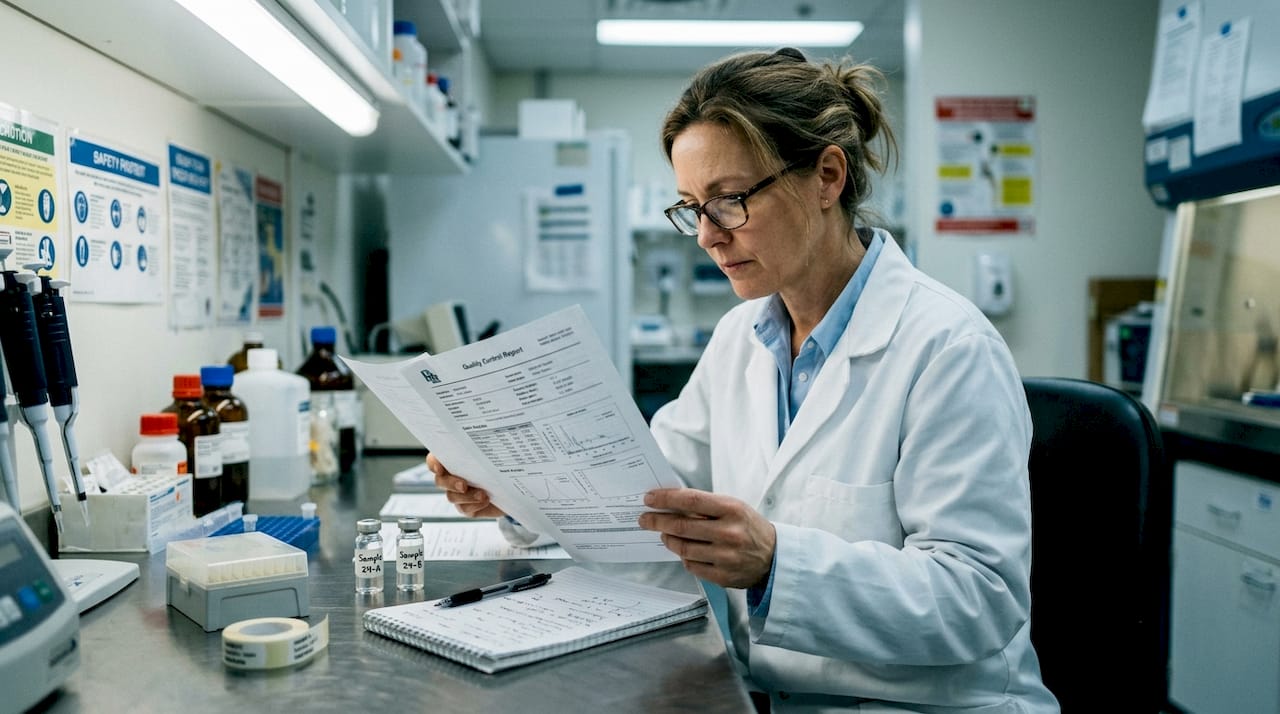
Quality sourcing is non-negotiable. Third-party tested peptides with a certificate of analysis (COA) are the baseline standard. Impure or mislabeled compounds don’t just underperform. They introduce real safety risks.
Monitoring markers to track from week one:
| Marker | Why it matters | Check frequency |
|---|---|---|
| IGF-1 | GH peptide response indicator | Every 4-6 weeks |
| Fasting glucose | Insulin sensitivity check | Monthly |
| Liver enzymes | Safety baseline | Every 8 weeks |
| Body composition | Performance outcome | Every 4 weeks |
Pro Tip: Schedule your bloodwork before you start any peptide protocol. Without a baseline, you have no way to measure whether what you’re doing is working or causing harm.
Pair peptides with exercise and nutrition for enhanced gains
Safe and effective dosing is only the start. To truly elevate your outcomes, you need the right exercise and nutrition pairing.
The research here is clear and compelling. Collagen peptides paired with resistance training at 10 to 20 grams per day significantly improve fat-free mass, tendon strength, and overall body composition compared to resistance training alone. The mechanism is straightforward: collagen peptides provide the proline and glycine your body needs to rebuild connective tissue, and resistance training signals where that rebuilding should happen. Together, they produce outcomes neither achieves as effectively on its own.
For GH secretagogues like Ipamorelin and CJC-1295, the timing rule is different. These peptides work by triggering a natural GH pulse, and that pulse is blunted by insulin. Administer them in a fasted state, either first thing in the morning or at least two hours after your last meal. GH peptides require fasting to work as intended, while collagen peptides don’t carry that restriction and can be taken around your training window.
Practical pairing strategies:
- Take GH secretagogues fasted, 30 to 60 minutes before training or at bedtime
- Use collagen peptides 30 to 60 minutes before resistance training for connective tissue support
- Maintain total daily protein intake at 1.6 to 2.2g per kilogram of bodyweight
- Prioritize leucine-rich protein sources (chicken, eggs, whey) to maximize muscle protein synthesis alongside peptide use
- Avoid high-carbohydrate meals within two hours of GH peptide administration
For fat loss goals, GH peptides combined with a moderate caloric deficit and consistent resistance training create a favorable hormonal environment. The peptide vs protein differences matter here because peptides work upstream of protein synthesis, signaling the body to prioritize lean tissue even in a deficit.
The peptide muscle growth guide goes deeper on stacking strategies, but the core principle is simple: peptides amplify what your training and nutrition already do. They don’t replace either. Users who treat peptides as a shortcut around discipline consistently underperform compared to those who layer them on top of solid fundamentals.
Troubleshooting, monitoring, and avoiding common mistakes
Even with the right protocols, unexpected issues can arise. Here’s how to spot, fix, and prevent them.
The most common complaint is no noticeable effect. Before assuming the peptide isn’t working, check three things: your source’s COA, your administration technique, and your timing. Poor reconstitution, incorrect injection depth, or taking GH peptides with food are the most frequent culprits. If all three check out and you still see no response after four to six weeks, consider a dose adjustment or a different peptide for your goal.
“Start low, go slow, and let your bloodwork guide you. Peptide protocols are not one-size-fits-all, and individual response varies significantly based on baseline hormone levels, lifestyle, and genetics.”
Step-by-step troubleshooting process:
- Verify your peptide source has a valid COA from an independent lab
- Confirm reconstitution was done correctly with bacteriostatic water
- Check injection site and technique (subcutaneous, not intramuscular, for most peptides)
- Review timing relative to meals and training
- Pull bloodwork and compare to your baseline
- Consult a knowledgeable practitioner before increasing dose
Monitor bloodwork and start with low doses from day one. This isn’t optional caution. It’s the only way to know if your protocol is actually working and safe. Staying informed about 2026 peptide trends also helps you adapt as new compounds and protocols emerge.
Adverse reactions like water retention, tingling, or increased hunger are common with GH peptides and usually dose-dependent. Reduce the dose, monitor, and increase gradually if tolerated. Injection site reactions typically indicate poor sterile technique rather than a peptide problem.
Pro Tip: Keep a simple daily log: dose, time, fasting status, training session, and any noticeable effects. After four weeks, patterns become obvious and adjustments become much easier to make.
The reality about improving peptide outcomes: What most guides miss
For all the science and practical steps above, it’s worth considering what actually drives success. Most peptide guides focus on the compound itself and treat protocol as secondary. That’s backwards. In practice, the biggest variable in peptide outcomes isn’t which peptide you choose. It’s the consistency and quality of everything surrounding it.
We’ve seen users run textbook BPC-157 protocols with certified compounds and still see minimal results because their sleep was poor, their training was inconsistent, or they skipped bloodwork entirely. Peptides amplify a system. If the system is broken, amplification doesn’t help.
The other thing most guides won’t tell you: individual response varies more than the research suggests. Population averages are useful starting points, not guarantees. Some users respond strongly to Ipamorelin at 200mcg. Others need 300mcg and a different injection timing. The muscle recovery science supports personalization, not rigid protocols. Treat your first cycle as a data-gathering phase, not a results phase. That mindset shift alone separates users who optimize over time from those who give up after six weeks.
Unlock next-level peptide results with expert resources
Want to accelerate your learning and get the resources to put this guide into action? The protocols above are a strong foundation, but the real edge comes from having access to research-grade compounds and expert-curated guidance in one place.

At Primegen Labs, the advanced peptide guide gives you science-backed stacking strategies built for serious athletes and recovery-focused users. If you’re looking for a specific compound, the S-10 peptide is one worth exploring for its recovery applications. And if you’re still building your foundational understanding, the bioactive peptide support resource covers everything from mechanism to practical use in plain language.
Frequently asked questions
Which peptide administration route offers the best bioavailability?
Subcutaneous or intramuscular injections provide 70 to 90% bioavailability, far surpassing oral or nasal methods, which deliver less than 2% and 10 to 30% respectively.
How should fitness enthusiasts combine peptides with exercise?
Taking 10 to 20g collagen peptides daily alongside resistance training increases muscle mass, tendon strength, and reduces body fat more effectively than training alone.
What are safe dosing guidelines for popular peptides?
Start conservatively: BPC-157 at 200 to 500mcg per day, Ipamorelin at 200 to 300mcg per dose, and CJC-1295 at 100 to 200mcg. Monitor your response before adjusting.
What are common mistakes to avoid when using peptides?
Skipping baseline bloodwork, starting at high doses, and sourcing from unverified suppliers are the three mistakes that most reliably undermine peptide outcomes and introduce safety risks.
Are there any cases where peptides may not work as expected?
GH peptides are less effective when taken with food due to insulin interference, and post-exercise collagen does not provide additional synthesis benefits beyond what training alone produces.
5 thoughts on “How to improve peptide outcomes for fitness and recovery”