

Optimize peptide bioavailability: guide for fitness in 2026


TL;DR:
- Peptide bioavailability varies widely and determines their effectiveness for recovery and performance.
- Most therapeutic peptides require injections due to poor oral absorption caused by enzymatic breakdown.
- Collagen peptides are highly effective orally for connective tissue support because of their low molecular weight and active transport.
Most athletes buying peptide supplements assume the product does the work. Buy it, take it, recover faster. But the uncomfortable reality is that a peptide sitting in your gut, being broken down by digestive enzymes before it ever reaches your bloodstream, is doing almost nothing for your performance. Bioavailability, meaning the fraction of a peptide that actually enters circulation and produces an effect, varies wildly depending on the peptide type, its molecular weight, and how you take it. Understanding these variables isn’t just academic. It’s the difference between wasting money and actually accelerating recovery, tissue repair, and strength gains.
Table of Contents
- Understanding peptide bioavailability: What it means and why it matters
- Forms of peptide administration: Oral, subcutaneous, and beyond
- Peptide types and bioavailability: Collagen, BPC-157, TB-500, and more
- Evidence-based strategies to maximize peptide outcomes
- A new perspective: The uncomfortable truth about peptide optimization in fitness
- Take the next step: Explore peptide solutions for performance and recovery
- Frequently asked questions
Key Takeaways
| Point | Details |
|---|---|
| Bioavailability is key | Peptide supplements only work if they are properly absorbed and reach target tissues. |
| Choose delivery wisely | Subcutaneous injections are essential for most therapeutic peptides, while oral collagen works for connective tissue. |
| Combine with training | Pairing collagen peptides with resistance training optimizes tendon recovery and performance. |
| Dose matters | Effective collagen peptide doses for athletes are typically 10-20 grams per day. |
| Smart selection wins | Focus on proven peptide routes and prioritize evidence-backed strategies for maximum results. |
Understanding peptide bioavailability: What it means and why it matters
Bioavailability is the percentage of an administered substance that reaches systemic circulation in an active form. For small molecules like caffeine, this is straightforward. For peptides, it’s far more complicated. Peptides are chains of amino acids, and the digestive system treats them like food, breaking them apart before they can act as signaling molecules.
The key factors that determine peptide bioavailability include:
- Molecular weight: Smaller peptides (under 3.5 kDa) pass through intestinal transporters more easily
- Peptide structure: Cyclic or modified peptides resist enzymatic breakdown better than linear ones
- Transporter availability: The PEPT1 transporter in the gut wall actively moves di- and tripeptides into circulation
- Gastric pH: Acidic conditions degrade many peptides before they reach the small intestine
- First-pass metabolism: The liver breaks down many peptides after absorption, further reducing active amounts
This is why bioactive peptides benefits depend so heavily on the specific compound and delivery route chosen. Not all peptides behave the same way once swallowed.
Key insight: Hydrolyzed collagen peptides show superior oral bioavailability because their low molecular weight allows active transport via the PEPT1 transporter, making them one of the few peptides genuinely suited to oral supplementation.
For athletes, this matters because recovery timelines, tendon repair, and muscle adaptation all depend on peptides reaching target tissues at effective concentrations. A peptide with 5% oral bioavailability requires dramatically higher doses to match the effect of one delivered subcutaneously at near-complete absorption. Understanding the peptide vs protein differences in absorption is foundational before building any supplementation protocol.
The practical takeaway: bioavailability isn’t a minor detail. It’s the core variable that determines whether your investment in peptides translates to real-world results or just expensive urine.
Forms of peptide administration: Oral, subcutaneous, and beyond
Delivery method is one of the most consequential decisions in any peptide protocol. The same compound can produce dramatically different outcomes depending on how it enters the body.
| Method | Bioavailability | Onset | Best suited for |
|---|---|---|---|
| Oral | 5-30% (peptide-dependent) | Slower | Collagen, food-derived peptides |
| Subcutaneous (SC) injection | 75-95% | Moderate | BPC-157, TB-500, growth peptides |
| Intranasal | Variable | Fast | CNS-targeted peptides |
| Transdermal | Low for most | Slow | Experimental, limited data |
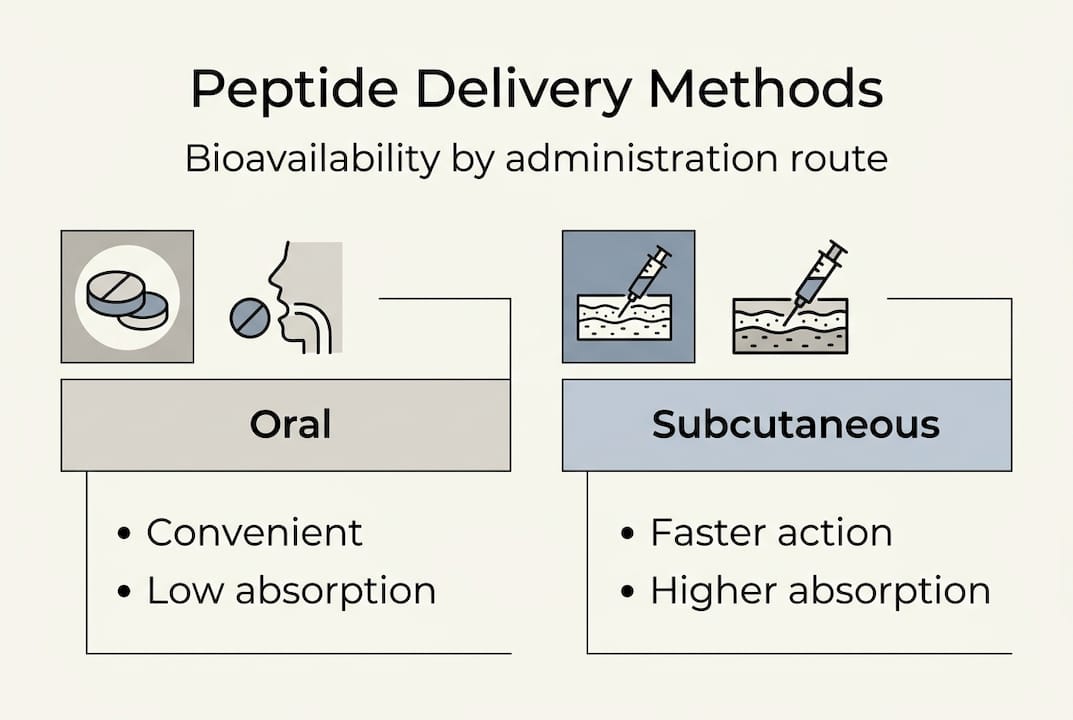
Oral administration is the most convenient, but convenience comes with a cost. Gastric acid and proteolytic enzymes in the stomach and small intestine degrade most therapeutic peptides before they can be absorbed. BPC-157 oral bioavailability sits at roughly 5-10%, making subcutaneous delivery the preferred route for systemic effects.
Subcutaneous injections deposit the peptide into the fatty tissue just beneath the skin, where it absorbs steadily into the bloodstream without the destructive gastrointestinal environment. This method preserves peptide integrity and delivers consistent, predictable plasma levels.
Here’s how to think about choosing a method:
- Identify your peptide’s stability profile before selecting a route. Some peptides are engineered to survive digestion; most aren’t.
- Match the route to the goal. Collagen for joint support works orally. BPC-157 for tendon repair works better subcutaneously.
- Consider convenience vs. efficacy tradeoffs. Oral is easier but often requires higher doses and produces inconsistent results for therapeutic peptides.
- Consult current therapeutic peptide delivery research before committing to a protocol, especially for newer compounds.
Pro Tip: If you’re using a peptide primarily for gut or local GI repair, oral BPC-157 may actually be advantageous since it stays in the GI tract longer. For systemic musculoskeletal effects, always go subcutaneous.
The improving peptide outcomes process starts with getting the delivery method right. Everything else is secondary.
Peptide types and bioavailability: Collagen, BPC-157, TB-500, and more
Not all peptides are created equal, and their bioavailability profiles reflect very different biochemical realities. Here’s a practical breakdown of the peptides most relevant to fitness and recovery.
| Peptide | Oral bioavailability | Preferred route | Primary benefit |
|---|---|---|---|
| Hydrolyzed collagen | High (PEPT1-mediated) | Oral | Joint, tendon, skin repair |
| BPC-157 | ~5-10% | SC or oral (GI-specific) | Tendon, gut, tissue repair |
| TB-500 | Very low | SC only | Systemic musculoskeletal repair |
| Semaglutide | Moderate (modified) | Oral or SC | Metabolic regulation |
Collagen peptides are the standout for oral use. With a molecular weight of 2-3.5 kDa, they’re actively transported through the gut wall. Meta-analysis data shows a standardized mean difference of 0.60 for muscle performance improvements with 10-20g per day, making them one of the most evidence-supported oral peptides for athletes.
BPC-157 is a synthetic peptide derived from a protein found in gastric juice. It shows impressive results for tendon and gut repair, but its oral bioavailability is limited for systemic use. Subcutaneous delivery is preferred when the goal is musculoskeletal recovery rather than gut-specific healing. You can explore the BPC-157 product for research-grade options.

TB-500 (Thymosin Beta-4 fragment) has poor oral stability due to its peptide bonds being rapidly cleaved in the digestive tract. It requires subcutaneous injection for systemic benefit, particularly for muscle fiber repair and reducing inflammation in connective tissue. The TB-500 product is formulated specifically for SC use.
Key considerations for selecting peptides:
- Prioritize oral forms only when the peptide has documented PEPT1 transport or gastric resistance
- Use SC for any peptide where systemic circulation is required for the therapeutic effect
- Dose collagen at 10-20g daily, timed around training sessions for connective tissue support
Evidence-based strategies to maximize peptide outcomes
Knowing which peptide to use and how to deliver it is step one. Optimizing the conditions around that peptide is where serious athletes separate themselves from casual users.
- Pair collagen peptides with vitamin C. Vitamin C is a required cofactor for collagen synthesis. Without adequate vitamin C, the amino acids from collagen peptides can’t be effectively assembled into new connective tissue. Take 250-500mg alongside your collagen dose.
- Time peptide intake around resistance training. Collagen combined with resistance training enhances tendon strength and recovery outcomes. The mechanical stimulus from training appears to amplify the tissue-building signal from the peptide.
- Avoid over-relying on oral forms for non-collagen peptides. If you’re taking BPC-157 or TB-500 orally expecting systemic effects, you’re likely getting minimal benefit. Match the route to the pharmacokinetics.
- Maintain consistent dosing schedules. Peptides work through cumulative signaling effects. Sporadic dosing undermines the sustained receptor activation needed for measurable tissue changes.
- Track recovery markers. Use objective metrics like training volume tolerance, joint pain scores, and sleep quality to assess whether your protocol is producing results.
Statistic callout: Meta-analysis data shows collagen peptide supplementation produces a standardized mean difference of 0.60 for muscle performance, a meaningful effect size that rivals many other recovery interventions.
Pro Tip: Collagen peptides don’t significantly boost muscle protein synthesis the way whey or essential amino acids do. Use them specifically for connective tissue support, not as a protein replacement. Combine with a complete protein source for full recovery support.
The peptide muscle growth guide breaks down how to structure these protocols across different training phases for maximum effect.
A new perspective: The uncomfortable truth about peptide optimization in fitness
Here’s what most peptide content won’t tell you: chasing oral bioavailability optimization for the wrong peptides is a waste of time and money. The fitness industry loves the idea of a universal optimization strategy, take your peptide with food, add enzymes, adjust pH, and suddenly oral delivery rivals injection. The science doesn’t support this for most compounds.
Experienced athletes and coaches don’t spend energy trying to make oral TB-500 work. They accept that oral delivery fails for most peptides due to pharmacokinetic constraints, and they select peptides based on their proven routes rather than their preferred administration convenience.
Negative selection is smarter than universal optimization. Instead of asking “how do I make this oral peptide absorb better,” ask “is this peptide actually suited to oral delivery at all?” The honest answer for most therapeutic peptides is no.
The exceptions are real and worth knowing. Collagen works orally because the science is clear. Semaglutide has been successfully reformulated for oral use. But these are engineered or naturally suited cases, not the norm. Following the muscle recovery guide means choosing the right tool for the right job, not forcing a square peg into a round hole.
Take the next step: Explore peptide solutions for performance and recovery
Understanding bioavailability is only valuable when it leads to better decisions about what you use and how you use it. PrimeGen Labs provides science-backed resources and research-grade peptide products designed specifically for athletes who want evidence behind every choice.
From the muscle growth recovery guide to targeted compounds like the S-10 peptide, the focus is always on matching the right peptide to the right protocol. Explore the full range of bioactive peptides and move from understanding the science to applying it with confidence. Real progress starts with the right foundation.
Frequently asked questions
What is peptide bioavailability and why is it important for athletes?
Peptide bioavailability refers to how much of a peptide supplement enters the bloodstream and delivers its intended effect. Bioavailability determines effectiveness for muscle recovery and performance, making it the core variable in any peptide protocol.
Are oral peptides effective for muscle and joint recovery?
Oral peptides like hydrolyzed collagen are effective for connective tissue support, but most therapeutic peptides require subcutaneous injection for systemic benefits. TB-500 requires SC due to poor oral stability, while collagen is absorbed effectively through the gut.
How can I improve peptide bioavailability for fitness outcomes?
Choose the correct delivery method for your specific peptide, pair collagen with resistance training and vitamin C, and avoid using oral routes for peptides that require systemic circulation. Collagen combined with training measurably improves tendon strength and recovery.
Is oral delivery the best way for all peptides?
No. Most peptides are poorly absorbed orally due to enzymatic degradation and first-pass metabolism. Oral delivery fails for most therapeutic peptides, and subcutaneous injection is preferred except for compounds like collagen that are naturally suited to oral absorption.
What evidence supports using collagen peptides for athlete recovery?
Meta-analyses show collagen peptide supplementation at 10-20g per day improves muscle recovery, joint pain, and strength outcomes in athletes, with a standardized mean difference of 0.60 for muscle performance metrics.
One thought on “Optimize peptide bioavailability: guide for fitness in 2026”