

Top Peptide Research Trends Shaping Health in 2026

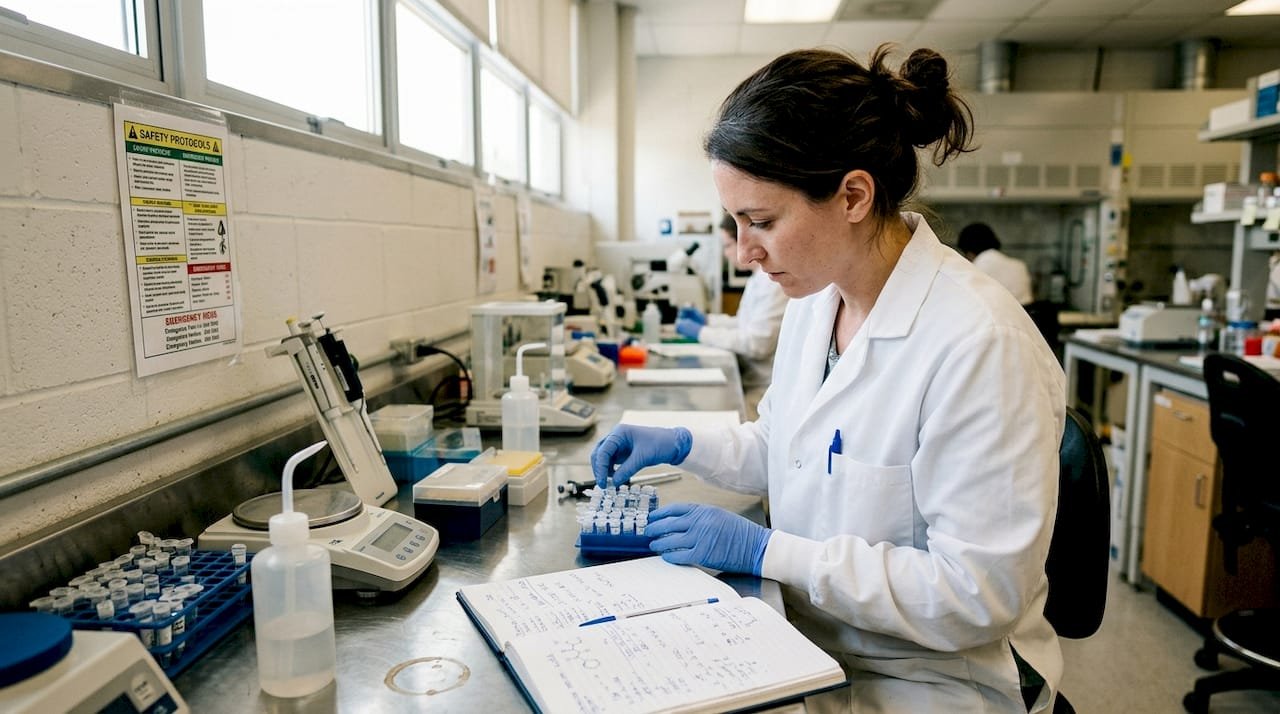
The pressure on biotech research teams to stay current has never been more intense. Peptide science in 2026 is advancing on three simultaneous fronts: delivery engineering, AI-driven design, and precision characterization. Each front is moving fast enough that a strategy built on last year’s assumptions may already be outdated. Oral peptide delivery advances and AI chemistry tools are rapidly changing bioavailability benchmarks and development pipelines. This article breaks down the key evaluation criteria, leading innovations, and a practical comparison to help you prioritize R&D strategies with confidence.
Table of Contents
- How to evaluate peptide research trends in 2026
- Advances in oral peptide delivery
- AI-driven design and discovery in peptide science
- Innovations in peptide characterization and delivery platforms
- Comparing 2026 peptide innovations: Delivery, AI, and analytics
- Choosing the right peptide research paths for your goals
- Advance your peptide research with PRIMEGEN LABS
- Frequently asked questions
Key Takeaways
| Point | Details |
|---|---|
| Oral delivery breakthroughs | New strategies in formulation and excipients are unlocking clinical efficacy at much lower bioavailability. |
| AI accelerates discovery | AI tools are delivering target-specific peptides faster and with higher accuracy than ever before. |
| Analytical advances matter | Modern characterization tools ensure safer, more reliable peptides for therapeutic use. |
| Evidence-driven selection | Robust evaluation frameworks help researchers rank and choose peptide trends by maturity and proof. |
How to evaluate peptide research trends in 2026
With a clear sense of the landscape’s challenges, let’s establish the key criteria for evaluating which peptide trends deserve your team’s full attention. Not every innovation deserves equal investment. The most useful framework filters trends through five lenses: bioavailability, therapeutic focus, clinical maturity, safety profile, and scalability.
Bioavailability and clinical maturity are vital comparison factors because they determine whether a promising preclinical result can realistically translate into a viable therapeutic. A peptide with exceptional receptor affinity but 2% oral bioavailability faces a fundamentally different development path than one with 40% bioavailability and existing Phase III data.
Therapeutic area also shapes how you weight evidence. Robust clinical maturity in metabolic and musculoskeletal indications, such as GLP-1 analogs and collagen peptides, contrasts sharply with the largely preclinical evidence base for regenerative and anti-infective peptides. Understanding where your target sits on that spectrum directly informs risk tolerance and timeline planning.
Key evaluation criteria to apply across any new peptide trend:
- Bioavailability: Oral versus injectable benchmarks and optimization potential
- Clinical maturity: Evidence graded A through D, from randomized controlled trials to expert consensus
- Therapeutic focus: Metabolic, musculoskeletal, regenerative, antimicrobial, or oncology
- Regulatory acceptance: Existing approvals, IND pathways, and precedent compounds
- Scalability: Synthesis complexity, cost per gram, and manufacturing readiness
- AI integration: Whether the platform supports computational screening and lead optimization
Exploring peptide research evidence across these dimensions gives your team a structured basis for go or no-go decisions rather than chasing novelty.
Pro Tip: Prioritize platforms that integrate AI and advanced analytics. Teams combining computational design with robust characterization pipelines are consistently reporting shorter lead optimization cycles and higher candidate success rates.
Advances in oral peptide delivery
Armed with the right evaluation framework, examine delivery, a cornerstone shaping peptide R&D in 2026. Oral administration remains the gold standard for patient compliance, but peptides have historically struggled with enzymatic degradation and poor membrane permeability. That barrier is eroding fast.
The leading oral delivery strategies reshaping the field right now:
- Functional excipients: Absorption enhancers like sodium caprate and SNAC (sodium N-[8-(2-hydroxybenzoyl)amino]caprylate) create transient permeability windows in the GI epithelium, enabling peptide uptake without structural modification.
- Solid formulations: Enteric-coated tablets and microparticle systems protect peptide integrity through gastric transit, releasing the active compound in the small intestine where absorption is most efficient.
- AI-tuned chemistries: Computational tools now optimize non-natural amino acid (NNAA) substitutions and cyclization patterns specifically to resist proteolytic cleavage while maintaining receptor binding.
- Nanoparticle encapsulation: Lipid nanoparticles and polymeric carriers shield peptides from degradation and facilitate lymphatic uptake, bypassing first-pass hepatic metabolism.
- Mucoadhesive systems: Bioadhesive polymers extend residence time at the absorption site, increasing the effective dose window without raising the administered amount.
The clinical results are compelling. Oral semaglutide and MK-0616 show breakthrough efficacy at low absolute bioavailability, while Luna18 has achieved 21 to 47% preclinical bioavailability, a figure that would have seemed unrealistic five years ago. These results are reframing what “sufficient” bioavailability actually means for a peptide drug to be clinically viable.
Innovations like S-10 peptide innovations illustrate how next-generation compounds are being designed with delivery optimization built in from the earliest research stages, not retrofitted after synthesis.
Pro Tip: When translating preclinical oral delivery data into clinical trial criteria, build your dosing protocols around the lowest effective bioavailability threshold demonstrated, not the peak. This approach reduces dose escalation risk and strengthens your regulatory submission narrative.
AI-driven design and discovery in peptide science
The transformation in delivery is only matched by the impact of artificial intelligence on peptide discovery and synthesis. AI is no longer a supplementary tool in peptide research. It is becoming the primary engine for candidate generation, affinity tuning, and library screening.
CreoPep, PepMimic, PepINVENT, and KCM are the leading AI methodologies underpinning recent breakthroughs. Each platform has a distinct strength: CreoPep excels at de novo sequence generation for novel targets, PepMimic focuses on mimicking bioactive peptide scaffolds with improved stability, PepINVENT applies generative chemistry to NNAA-enriched libraries, and KCM (kinetic complexity modeling) predicts in vivo behavior from structural inputs.
Research domains being actively disrupted by AI-driven peptide design:
- Antimicrobial peptides (AMPs): AI screens billions of sequence variants to identify candidates with selective membrane disruption activity against resistant pathogens
- NNAA libraries: Generative models propose non-natural amino acid substitutions that dramatically extend half-life without sacrificing binding specificity
- Affinity tuning: Reinforcement learning algorithms iteratively optimize peptide-receptor interactions, reducing the number of wet-lab synthesis cycles needed
- Cyclization design: AI predicts which backbone cyclization patterns confer the best combination of protease resistance and conformational rigidity
- Multi-target peptides: Computational frameworks now design bifunctional peptides that engage two receptor systems simultaneously, opening new combination therapy possibilities
“Even single-digit oral bioavailability may be sufficient when AI-optimized peptides are engineered for ultra-high receptor affinity and extended half-life. The design compensates for what delivery cannot yet fully solve.”
For teams working with clinically mature peptides like BPC-157, AI tools are being applied to analog design, exploring structural variants that preserve the core mechanism while improving pharmacokinetic profiles.
Innovations in peptide characterization and delivery platforms
Designing and delivering peptides at scale means robust tools for verification and quality control are more crucial than ever. The analytical layer of peptide research has advanced significantly, and it directly determines regulatory confidence and batch reproducibility.
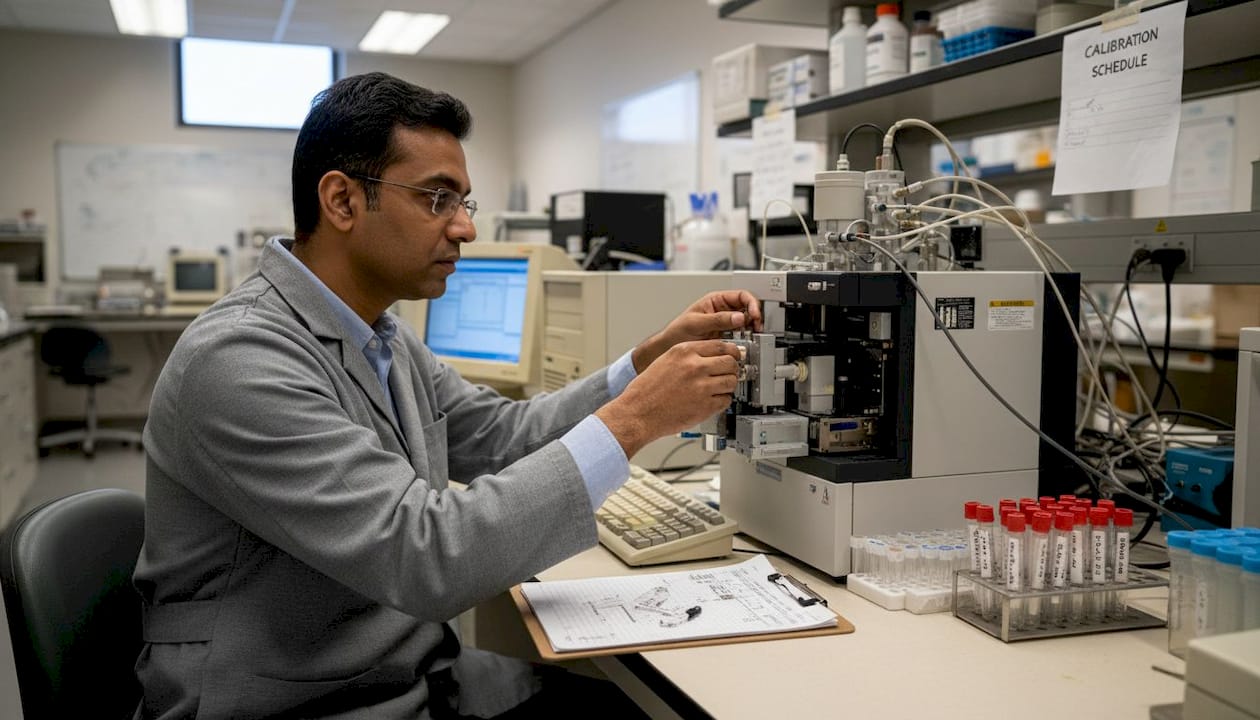
Three key modification and delivery strategies are now standard in advanced pipelines. PEGylation attaches polyethylene glycol chains to peptide structures, extending circulation half-life and reducing immunogenicity. Glycosylation adds sugar moieties that improve solubility and protect against enzymatic degradation. Nanocarrier delivery encapsulates peptides in lipid, polymeric, or inorganic particles that control release kinetics and target specific tissues.
PEGylation, glycosylation, and nanocarriers alongside NMR, CD, LC-MS, HDX-MS, and SAXS represent the current standard for characterization-informed development. Here is how the analytical methods map to what they reveal:
| Analytical method | Primary application | Key insight delivered |
|---|---|---|
| NMR (nuclear magnetic resonance) | Solution structure | Conformational dynamics, folding state |
| CD (circular dichroism) | Secondary structure | Alpha-helix and beta-sheet content |
| LC-MS (liquid chromatography-mass spectrometry) | Purity and identity | Sequence confirmation, impurity profiling |
| HDX-MS (hydrogen-deuterium exchange MS) | Structural flexibility | Binding interface mapping, stability |
| SAXS (small-angle X-ray scattering) | Solution-phase shape | Aggregation state, overall architecture |
How advanced characterization strengthens your research outcomes:
- Provides regulators with orthogonal structural evidence, reducing the likelihood of CMC (chemistry, manufacturing, and controls) queries
- Detects aggregation and degradation products early, before they compromise clinical batch quality
- Enables head-to-head comparison of modified versus unmodified analogs with quantitative structural data
- Supports biosimilar development by establishing rigorous comparability protocols
Access to peptide analytical techniques that align with these standards is increasingly a differentiator between research programs that advance and those that stall at the IND stage.
Comparing 2026 peptide innovations: Delivery, AI, and analytics
Bringing it all together, see how 2026’s top peptide research directions stack up when mapped against the criteria laid out earlier.
| Innovation area | Bioavailability impact | Scalability | Clinical maturity | Best-fit indication |
|---|---|---|---|---|
| Oral delivery (SNAC, excipients) | Moderate (2-15%) | High | High (GLP-1, semaglutide) | Metabolic, cardiovascular |
| Nanocarrier delivery | High (tissue-targeted) | Moderate | Moderate | Oncology, CNS, regenerative |
| AI-designed peptides (CreoPep, KCM) | Variable, optimizable | High | Low to moderate | Antimicrobial, multi-target |
| PEGylation and glycosylation | Indirect (half-life) | High | High | Chronic disease, biologics |
| Advanced analytics (HDX-MS, SAXS) | Not applicable | High | High | All therapeutic areas |
Multiple strategies now offer robust but varied solutions across drug targets and development stages. Metabolic and musculoskeletal indications benefit from the deepest clinical evidence base, while regenerative and anti-infective programs are still building that foundation.
For teams working on novel targets, Kisspeptin peptide examples demonstrate how neuroendocrine peptides with moderate clinical maturity can still advance meaningfully when paired with strong analytical and delivery strategies.
Choosing the right peptide research paths for your goals
With the full landscape compared, your choice depends on project vision and operational priorities. Here is a stepwise decision framework for R&D leaders:
- Define your evidence threshold. Identify the minimum evidence grade (A through D) your regulatory strategy requires before committing resources to a new peptide class.
- Map your indication to the maturity curve. Selection depends on evidence grading, regulatory maturity, and target indication. Metabolic targets offer faster regulatory pathways; regenerative targets require longer preclinical investment.
- Assess delivery feasibility early. If oral administration is a commercial requirement, evaluate bioavailability optimization strategies before finalizing your lead candidate.
- Integrate AI at the design stage, not after. Teams that introduce computational screening after initial synthesis lose the compounding efficiency gains that AI delivers when used from the start.
- Build characterization into your go/no-go criteria. Require HDX-MS or SAXS data before advancing any candidate to IND-enabling studies.
- Evaluate angiogenic risk for oncology-adjacent programs. Peptides with pro-angiogenic activity require additional safety profiling to address tumor growth concerns before clinical entry.
For programs exploring combination peptide approaches, the decision framework above applies at the stack level too. Each component needs independent evidence grading before the combination is assessed for synergy or interaction risk.
Rapid AI prototyping yields the highest ROI when your target lacks existing peptide precedent. Advanced delivery investment pays off most when oral compliance is a commercial differentiator. Analytics investment is non-negotiable at every stage.
Advance your peptide research with PRIMEGEN LABS
When you’re ready to bring these peptide innovations into your own pipeline, connecting with reliable suppliers and expert resources is crucial. PRIMEGEN LABS offers a curated selection of research-grade peptides that align directly with the trends covered here, from metabolically relevant compounds to cutting-edge regenerative candidates.
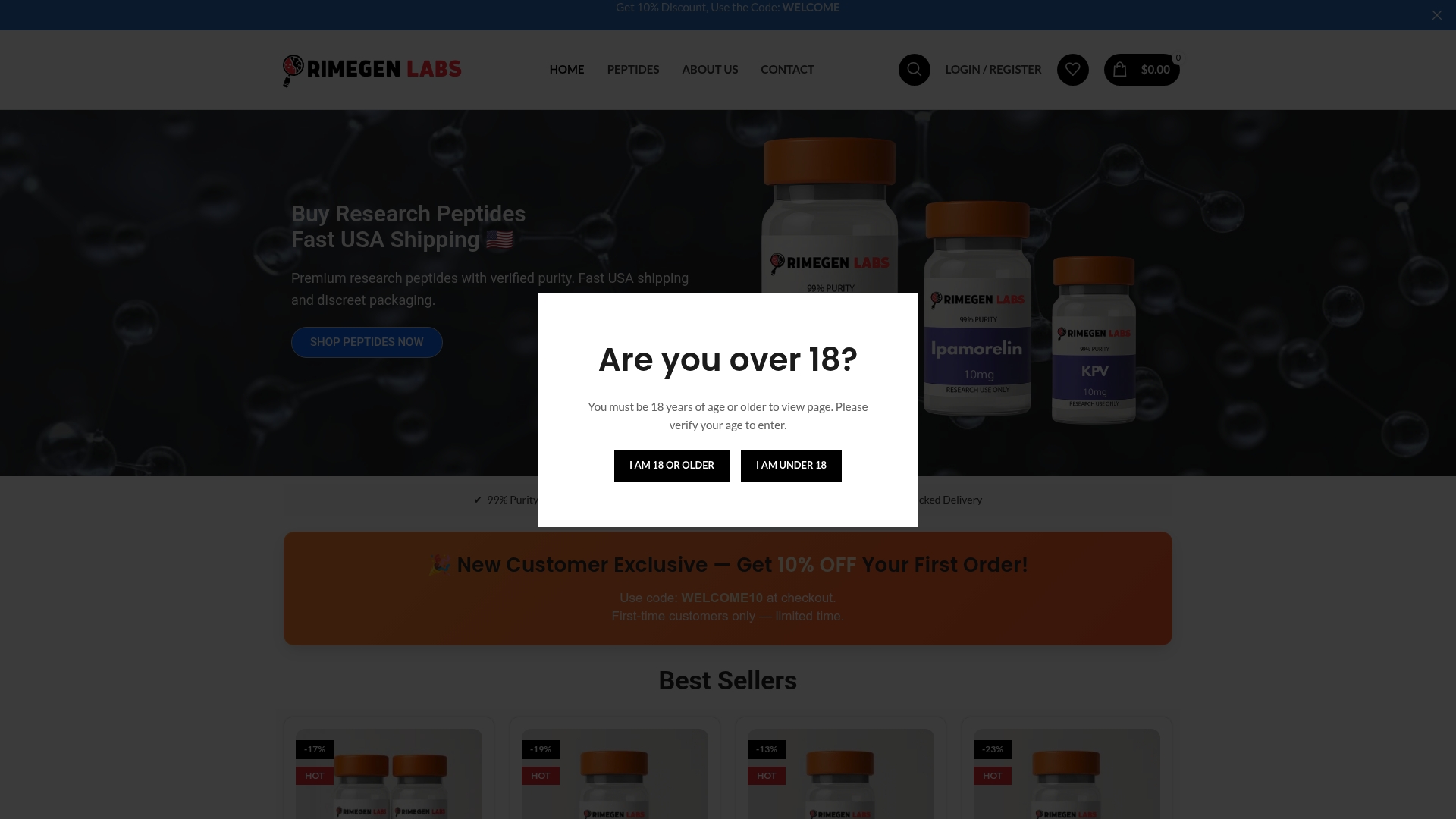
Whether you’re sourcing established compounds or exploring newer entries like the S-10 peptide, PRIMEGEN LABS provides the quality documentation and compound integrity your research demands. Every product in the full peptide catalog is backed by rigorous quality standards that support your characterization and regulatory workflows. Browse the full range and shop peptides matched to your specific research focus, and take the next step toward advancing your 2026 pipeline with confidence.
Frequently asked questions
What oral peptide innovations are most promising in 2026?
Oral semaglutide, MK-0616, and Luna18 are leading the way, with Luna18 achieving 21 to 47% preclinical bioavailability and semaglutide demonstrating that clinical efficacy is achievable even at low absolute absorption rates.
How is artificial intelligence changing peptide development?
AI platforms like CreoPep and KCM enable rapid, target-specific peptide design and screening, compressing lead optimization timelines and expanding the chemical space accessible to research teams.
What are the main challenges with peptide research today?
Scalability, regulatory acceptance, and matching evidence levels to indication requirements remain the dominant hurdles, with clinical maturity varying greatly from Grade A in metabolic indications to Grade D in many emerging regenerative applications.
Which analytical technologies are most used for peptide verification?
NMR, LC-MS, HDX-MS, and SAXS are the mainstays, with HDX-MS and SAXS increasingly required for advanced structural characterization and regulatory submissions involving novel or modified peptide candidates.
8 thoughts on “Top Peptide Research Trends Shaping Health in 2026”