
What Is a Peptide Analog? Your Science-Backed Guide

TL;DR:
- Peptide analogs are chemically engineered versions of natural peptides designed to improve stability and receptor activity in the body. They achieve longer-lasting effects through modifications like lipidation and D-amino acid substitution, which resist enzymatic breakdown. These analogs, exemplified by drugs like semaglutide, enable more practical therapeutic and performance applications due to their enhanced pharmacokinetics.
If you’ve been researching peptides for health or performance and keep hitting the phrase “peptide analog” without a clear explanation, you’re not alone. A peptide analog is an engineered variant of a natural peptide, modified at the chemical level to perform better in the body. The modifications go far beyond cosmetic tweaks. They change how long the compound lasts, how well your body absorbs it, and how precisely it hits its target. This guide breaks down the peptide analog definition, how these compounds work, real-world examples, and what you actually need to know before using them.
Key Takeaways
| Point | Details |
|---|---|
| Definition of peptide analogs | Peptide analogs are chemically modified versions of natural peptides designed to improve stability, potency, or specificity. |
| Modifications drive performance | Changes like lipidation, PEGylation, and D-amino acid substitution extend half-life and reduce enzymatic breakdown. |
| Real-world examples exist | GLP-1 analogs like semaglutide demonstrate measurable clinical results in metabolic health and body composition. |
| Not the same as natural peptides | Peptide analogs differ structurally and pharmacokinetically from their parent peptides in ways that matter for practical use. |
| Quality and sourcing matter | For fitness applications, research-backed analogs from reputable sources are the only reliable option. |
What is a peptide analog, exactly?
To understand the definition of peptide analogs, you need a working grasp of peptides first. Peptides are chains of 2 to 50 amino acids linked by covalent peptide bonds. Your body produces hundreds of them naturally. They act as signaling molecules, hormones, and growth factors, carrying messages between cells and tissues.
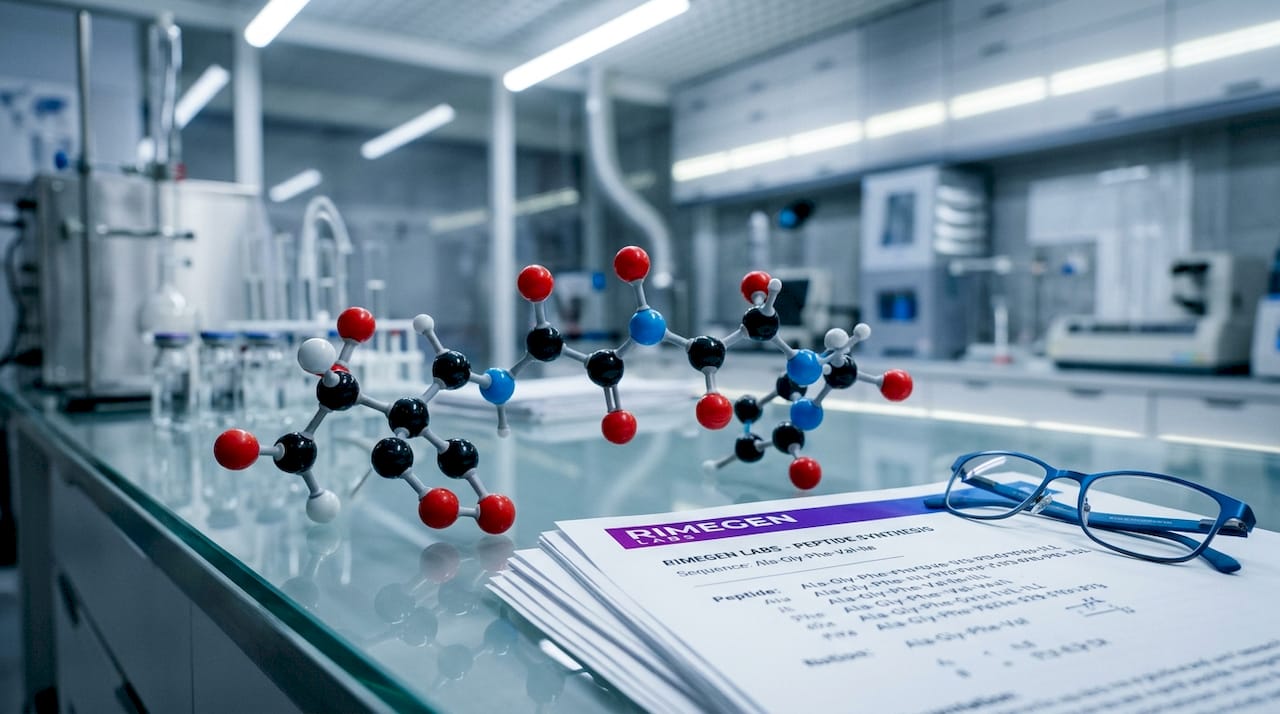
A peptide analog starts with one of those natural sequences and deliberately alters it. The industry term you’ll see in scientific literature is “peptidomimetic” or simply “analog.” Both describe the same concept: a compound that mimics the biological activity of a natural peptide but with structural changes that make it more useful in practice.
The reasons researchers create analogs come down to a few recurring problems with natural peptides:
- Short half-life. Natural peptides break down quickly in the bloodstream, often within minutes.
- Poor oral bioavailability. Enzymes in the gut degrade most peptides before they reach circulation.
- Off-target effects. Some natural peptides trigger receptors you don’t want activated.
- Dosing inconvenience. Rapid clearance means frequent administration.
Analogs are engineered to solve one or more of these problems. The modifications don’t change what the compound is trying to do. They change how well and how long it does it.
How structural modifications create better compounds
The peptide analog definition comes to life when you look at what specific modifications actually do. Chemical modifications such as PEGylation, lipidation, cyclization, and glycosylation are the primary tools researchers use to build more durable, more effective analogs.
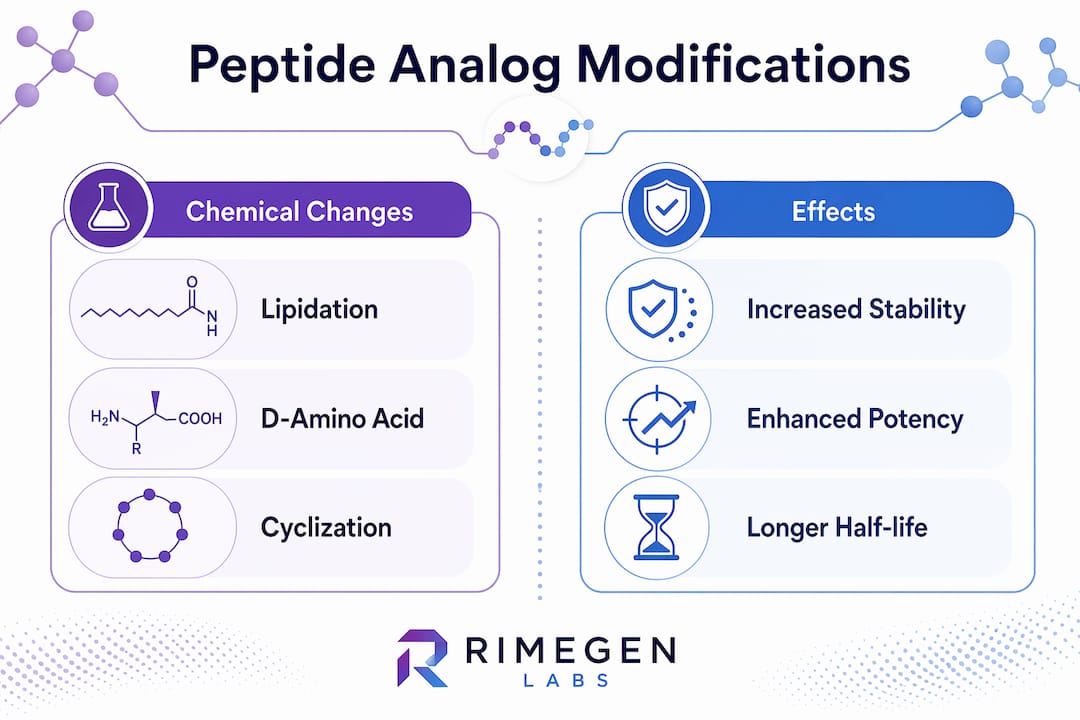
Here’s how the most common modification types compare:
| Modification type | What it does | Example effect |
|---|---|---|
| Lipidation | Attaches a fatty acid chain | Binds albumin in blood, extending half-life significantly |
| PEGylation | Adds polyethylene glycol chains | Reduces kidney clearance and enzymatic attack |
| D-amino acid substitution | Flips amino acid stereochemistry | Resists protease enzymes while preserving receptor binding |
| Cyclization | Creates a ring structure in the chain | Increases conformational stability and potency |
| Backbone modification | Alters the peptide bond itself | Changes metabolism without losing biological activity |
D-amino acid substitution is particularly interesting. Your body’s proteases (the enzymes that chew up proteins and peptides) are almost exclusively built to recognize L-amino acids, which are the natural form. Swap in a D-amino acid at a strategic position and the protease can’t grab it, but the target receptor often still can. You get dramatically extended survival time in the body without losing the signal you want to send.
Pro Tip: When evaluating any peptide analog, find out which modification strategy was used. A compound relying solely on sequence tweaks will behave very differently from one using lipidation or cyclization. The modification type tells you more about real-world performance than the name alone.
How peptide analogs work in the body
The mechanism behind a peptide analog’s function starts with receptor binding. Because an analog is structurally similar to its parent peptide, it recognizes and binds to the same receptor. That part works like a key fitting a lock. The modifications don’t usually change which lock the key fits. They change how long the key stays in your pocket before getting destroyed.
Enhanced structural stability reduces enzymatic degradation and directly improves pharmacokinetics. In plain terms: the analog stays active longer, reaches higher concentrations in tissue, and requires less frequent dosing. For performance and health applications, that difference is significant.
Here’s what happens biologically when a well-designed analog enters the system:
- The compound resists breakdown by circulating proteases, giving it more time to reach target tissue.
- It binds to the receptor with equal or greater affinity than the natural peptide.
- It activates downstream signaling pathways, such as growth hormone release, insulin secretion, or fat metabolism, depending on the target.
- Modified clearance rates mean the signal persists longer at the cellular level.
The distinction between natural peptides and analogs in a performance setting matters more than most fitness communities acknowledge. A natural peptide like GLP-1 has a half-life of under 2 minutes in circulation. An engineered analog of the same peptide can extend that to days. The underlying biology is the same. The pharmacokinetic reality is completely different. For peptides and performance applications, this distinction determines whether a compound has any real-world utility at all.
Real-world examples of peptide analogs
The clearest way to understand examples of peptide analogs is to look at compounds that have already gone through clinical trials and entered widespread use.
-
Semaglutide. This GLP-1 analog uses fatty acid conjugation to achieve a half-life of 7 days. In trials, it reduced HbA1c by 1.8% and body weight by 6.1 kg. Those results come directly from the analog’s extended activity, not just its sequence similarity to native GLP-1.
-
Liraglutide. Another lipidated GLP-1 analog with a half-life of 13 hours. Used clinically for type 2 diabetes and obesity management. The lipid chain allows it to bind albumin in the bloodstream, which shields it from renal clearance.
-
Growth hormone secretagog analogs. Compounds like modified GHRH (growth hormone releasing hormone) analogs are studied for their ability to stimulate endogenous growth hormone release. The modifications extend activity long enough to produce meaningful pulsatile signaling.
-
BPC-157 analogs. Derived from a body protection compound found in gastric juice, these analogs are studied for tissue repair and recovery. Structural modifications target stability under physiological conditions.
-
Melanotan analogs. Modified versions of alpha-MSH (melanocyte stimulating hormone), these compounds interact with melanocortin receptors. Research variants have been studied for metabolic effects and appetite modulation.
The peptide therapeutics market is projected to reach $200.9 billion by 2035, with metabolic disease indications driving much of that growth. That number reflects how seriously the pharmaceutical world takes engineered analogs as a therapeutic category. The fitness and performance world is drawing from the same scientific foundation, even if the regulatory context differs.
Choosing and using peptide analogs wisely
The benefits of peptide analogs are real, but so are the risks that come from poor sourcing, misuse, or unrealistic expectations. When you’re evaluating an analog for health or fitness purposes, a few factors separate genuinely useful compounds from noise.
Bioavailability and route of administration are the first filters. Most peptide analogs require subcutaneous injection because oral delivery still destroys most compounds before absorption. If someone is marketing an oral peptide analog with dramatic claims, that’s a reason to look closely at the evidence.
Purity and characterization matter as much as the compound itself. Regulatory approval requires confirming identity, purity, and structure. For research-grade compounds, the same standard applies. Third-party testing for sequence confirmation and purity percentage is not optional if you care about results and safety.
Here are the key questions to ask before using any peptide analog:
- Has the modification strategy been published in peer-reviewed research?
- Does the supplier provide certificates of analysis from independent labs?
- Is the proposed mechanism of action consistent with known receptor biology?
- What is the documented half-life, and does the dosing protocol reflect it?
Pro Tip: Don’t evaluate a peptide analog based on its parent peptide’s reputation alone. A poorly synthesized or low-purity analog of a well-researched compound can behave completely differently in the body. Purity and structural integrity are not marketing details. They determine what you’re actually putting in your body.
For a deeper look at selecting the right peptide for your specific goals, the criteria go well beyond ingredient name.
My honest take on peptide analogs in fitness
I’ve followed peptide research closely enough to notice a persistent problem in how analogs get discussed in fitness communities. People treat the parent peptide’s reputation as a guarantee of the analog’s performance. That’s backwards. The whole point of an analog is that the modifications change what it does. You can’t just copy the clinical data on native GLP-1 and apply it to a random modified version without checking what modifications were actually made.
What I’ve found genuinely useful is focusing on the mechanism of modification rather than the name. When a compound uses lipidation to extend half-life, I know exactly why it behaves differently from the parent. When someone just says “modified peptide” without specifying the modification type, that’s not a science-backed product. That’s marketing.
I also think the safety conversation in fitness is handled poorly. Peptide analogs are not inherently dangerous, but “are peptide analogs safe” is the wrong question to ask in a vacuum. The right question is whether this specific compound, at this specific purity level, administered correctly, has a documented safety profile. The answer varies enormously by compound. The research trends shaping peptide use in 2026 point toward more clinical clarity, not less. Use that clarity rather than relying on community anecdote.
— Yvette
Explore peptide analogs with Primegenlabs
Primegenlabs covers the compounds that matter for fitness and performance, with resources that go deeper than surface-level ingredient lists. Whether you’re looking to understand how specific analogs interact with your goals or want to compare options across metabolic health, muscle recovery, and body composition, the Primegenlabs catalog is built for people who actually read the research.
For those ready to connect the science in this article to practical application, the evidence-based performance guide is the best starting point. It covers documented benefits, realistic expectations, and safety considerations for peptide use in performance contexts. You can also explore the muscle growth and recovery guide for analog-specific applications across training goals.
FAQ
What is a peptide analog in simple terms?
A peptide analog is a chemically modified version of a natural peptide designed to work better in the body. Modifications typically improve stability, extend half-life, or sharpen receptor specificity.
How do peptide analogs differ from natural peptides?
The core sequence may be similar, but analogs include structural changes like lipidation, D-amino acid substitution, or cyclization that alter how the compound is absorbed, metabolized, and cleared.
Are peptide analogs safe to use?
Safety depends on the specific compound, purity, dosing protocol, and individual health status. Well-characterized analogs with published clinical data have established safety profiles. Poorly sourced or uncharacterized compounds carry significant unknowns.
What are the most well-known examples of peptide analogs?
Semaglutide and liraglutide are the most clinically validated examples, both GLP-1 analogs used for metabolic health. Growth hormone secretagog analogs and BPC-157 variants are among those studied for fitness and recovery applications.
Why do peptide analogs last longer than natural peptides?
Natural peptides break down rapidly in the bloodstream due to enzymatic activity. Modifications like fatty acid conjugation or PEGylation shield the compound from those enzymes, extending active time from minutes to hours or days.