
Peptide purity: how it shapes fitness and recovery

TL;DR:
- Peptide purity indicates the percentage of the target compound in a sample and affects effectiveness.
- High purity (95% or above) ensures predictable performance, better results, and reduces risks.
- Verify purity via batch-specific HPLC and mass spectrometry reports from reputable suppliers.
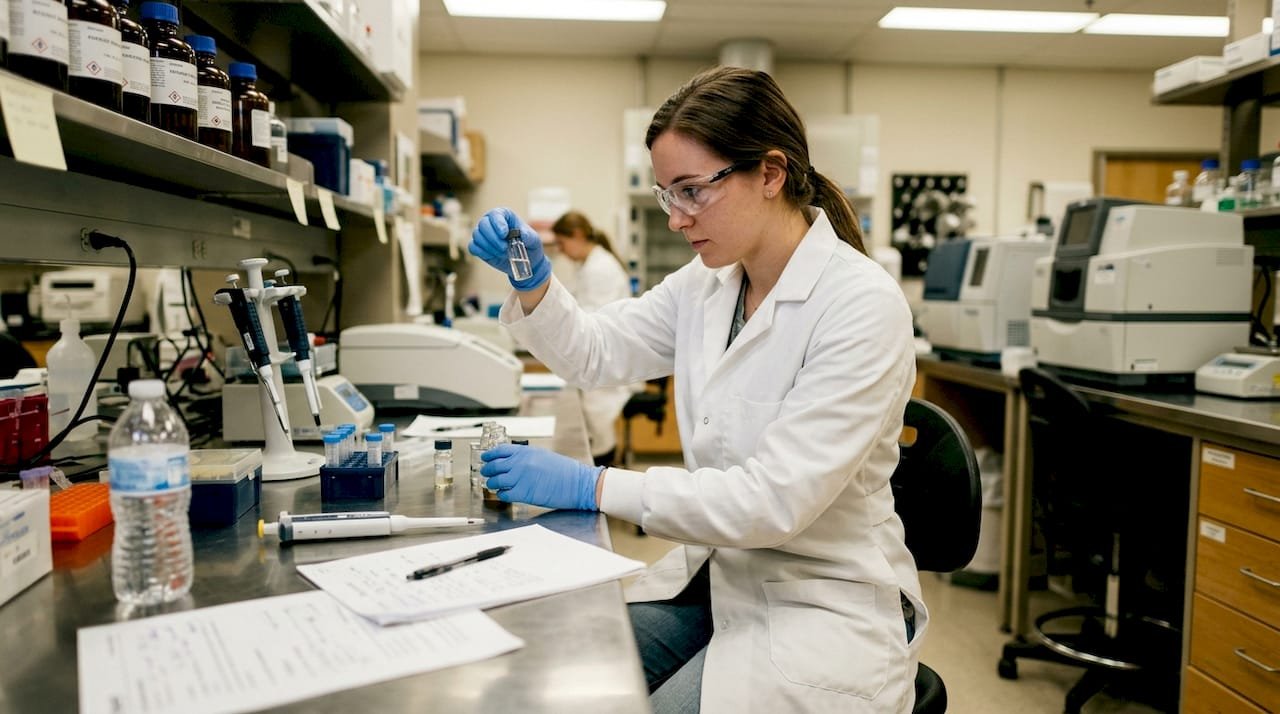
Not all peptides are created equal, and the difference often comes down to one overlooked factor: purity. While most fitness enthusiasts spend hours researching dosage protocols and stacking strategies, purity quietly determines whether a peptide actually delivers results or falls flat. A product labeled as BPC-157 or TB-500 could contain anywhere from 70% to over 99% of the intended compound, and that gap has real consequences for your performance, recovery, and safety. Understanding what peptide purity means and how to verify it is one of the most practical upgrades you can make to your peptide protocol.
Table of Contents
- What is peptide purity?
- Why purity matters for fitness performance and recovery
- How peptide purity is measured and verified
- Practical tips: Choosing and storing peptides for optimal purity
- The real-world view: Why purity is the underrated key to results
- Get high-purity peptides for your goals
- Frequently asked questions
Key Takeaways
| Point | Details |
|---|---|
| Peptide purity defined | Purity is the proportion of intended peptide in a product, impacting effectiveness and safety. |
| Higher purity, better results | Using higher-purity peptides supports stronger performance and faster recovery. |
| Verify before you buy | Always check for supplier lab reports and certifications to ensure peptide purity. |
| Proper storage preserves purity | Store peptides correctly to maintain their effectiveness and safety. |
What is peptide purity?
Peptide purity refers to the percentage of a peptide sample that is actually composed of the intended amino acid sequence. If a product is labeled “95% pure,” that means 95% of the sample is the target peptide, while the remaining 5% consists of byproducts, truncated sequences, residual solvents, or other contaminants. That leftover 5% is not inert. It can interfere with how the peptide binds to receptors, reduce the effective dose you actually receive, or introduce unwanted biological effects.
As noted in the peptide guide on muscle growth, peptide purity is essential for predictable biological performance. Without a consistent, high-purity product, you are essentially running an uncontrolled experiment on your own body.
Purity levels vary widely depending on the manufacturer, synthesis method, and quality controls in place. Here is a general breakdown:
| Purity level | Typical use case |
|---|---|
| 70% to 80% | Basic research only |
| 85% to 95% | Intermediate research applications |
| 95% to 99%+ | Fitness, clinical, and advanced research use |
Several factors influence where a product lands on that spectrum:
- Manufacturing process: Solid-phase peptide synthesis quality varies significantly between labs
- Regulatory oversight: Suppliers operating under stricter peptide regulations tend to produce more consistent purity
- Handling and storage: Even a high-purity peptide can degrade if mishandled during shipping or storage
- Raw material quality: The amino acid building blocks used in synthesis affect the final product
“A peptide’s purity is not just a number on a certificate. It is the single most reliable predictor of whether the compound will behave the way the research says it should.”
For fitness use, anything below 95% purity introduces too much variability. You want to know that when you administer a dose, you are getting what you paid for, not a diluted or contaminated version of it. Reviewing peptide safety tips before you start any protocol is a smart move to understand the full picture.
Why purity matters for fitness performance and recovery
Now that you know what peptide purity is, let’s see why it should be a top concern for anyone prioritizing fitness outcomes.
The connection between purity and effectiveness is direct. When a peptide like CJC-1295 or Ipamorelin is synthesized at 98% purity, the active compound occupies nearly all of the dose. It binds to the correct receptors, triggers the intended signaling cascade, and produces the expected result. Drop that purity to 80%, and you are working with a significantly weaker signal, plus potential interference from impurities.

High-purity peptides yield more consistent muscle gains and quicker recovery, making purity a non-negotiable variable for serious athletes. Studies on peptide bioavailability show that purity directly influences how much of a compound reaches its target tissue. Understanding your peptide bioavailability is essential for getting the most from every cycle.
Here is how low purity shows up in real-world fitness outcomes:
- Reduced strength gains: Less active compound means weaker anabolic signaling
- Slower recovery: Impurities can trigger low-grade inflammation that counters healing
- Increased fatigue: Contaminants may interfere with mitochondrial efficiency
- Unpredictable side effects: Unknown byproducts introduce risks that are hard to trace
- Inconsistent results cycle to cycle: Batch variation in low-purity products makes it impossible to dial in a protocol
On the recovery side, high-purity peptides like BPC-157 have shown meaningful reductions in healing time for soft tissue injuries. The anti-inflammatory signaling these peptides trigger depends on receptor binding precision, which only happens reliably at high purity levels.
Pro Tip: Before committing to any peptide supplier, request a certificate of analysis (COA) for the specific batch you are buying. A reputable supplier will provide this without hesitation. If they cannot, walk away.
For proper preparation that preserves purity through the reconstitution process, follow a reliable peptide reconstitution safety protocol every time.
How peptide purity is measured and verified
Understanding purity’s impact on performance, it’s crucial to know how purity is actually verified.
Two analytical techniques dominate purity testing: High-Performance Liquid Chromatography (HPLC) and Mass Spectrometry (MS). HPLC separates the components of a peptide sample and measures the proportion of each. The result is a chromatogram showing peaks for the target peptide and any impurities, giving a clear percentage. Mass Spectrometry goes further by confirming the molecular weight of the compound, verifying that the correct peptide sequence was synthesized. As confirmed in the peptide guide on real science, HPLC and Mass Spectrometry are the gold standard for purity assessment.
| Method | What it measures | Accuracy |
|---|---|---|
| HPLC | Component separation and percentage | Very high |
| Mass Spectrometry | Molecular identity and weight | Extremely high |
| UV Spectroscopy | Concentration estimate | Moderate |
| Amino acid analysis | Composition verification | High |
To verify purity before you purchase, follow these steps:
- Request a batch-specific COA: Generic certificates that apply to an entire product line are not sufficient. You want documentation tied to the exact batch you are receiving.
- Check the HPLC result: Look for a purity percentage of 95% or higher for fitness applications.
- Confirm Mass Spectrometry data: This verifies the peptide identity, not just the purity percentage.
- Review the testing lab: Third-party lab verification carries more weight than in-house testing.
- Cross-reference with known databases: Some peptide sequences have published reference data you can compare against.
Pro Tip: Buy only from sellers offering batch-specific lab reports. A supplier who tests every batch and publishes the results is demonstrating accountability that generic suppliers simply cannot match. Browse verified peptide products from sources that meet this standard.
Understanding these verification steps also connects directly to peptide safety essentials, because knowing what is in your product is the foundation of a safe protocol.
Practical tips: Choosing and storing peptides for optimal purity
Measurement is just the start; taking action means knowing how to choose wisely and keep peptides pure at home.
Selecting a reputable supplier is the single most important decision you will make in your peptide journey. Look for suppliers who are transparent about their synthesis methods, use third-party testing, and provide batch-specific COAs. A supplier who openly publishes their testing data is one who has nothing to hide. Avoid anyone offering unusually low prices without documentation, because cutting costs in peptide synthesis almost always means cutting corners on purity.
When reviewing product labels and documentation, look for these specifics:
- Stated purity percentage from HPLC analysis (95% or higher for fitness use)
- Molecular weight confirmation from Mass Spectrometry
- Batch or lot number that matches the COA
- Expiration or manufactured date to assess freshness
- Storage recommendations printed clearly on the label
Once your peptides arrive, storage becomes the next critical variable. Even a 99% pure peptide can degrade rapidly if stored incorrectly. Proper storage and handling are essential for preserving peptide purity from the moment the product arrives at your door.
Follow these storage practices to protect your investment:
- Keep lyophilized (freeze-dried) peptides refrigerated at 2 to 8 degrees Celsius until reconstitution
- Store reconstituted peptides at 4 degrees Celsius and use within 28 to 30 days
- Avoid repeated freeze-thaw cycles, which break down the peptide structure
- Keep away from direct light, as UV exposure accelerates degradation
- Use bacteriostatic water for reconstitution to extend stability
Pro Tip: Avoid temperature fluctuations and moisture exposure at all costs. Even brief exposure to heat or humidity can compromise a peptide’s integrity. If you receive a shipment that was clearly exposed to high temperatures during transit, contact the supplier before using it.
For a complete walkthrough of safe preparation, the peptide reconstitution guide covers every step in detail.
The real-world view: Why purity is the underrated key to results
Here is the uncomfortable truth most fitness communities avoid: the majority of people who feel disappointed by their peptide results are not using the wrong compound. They are using the wrong purity.
Dosage obsession is real. Athletes will spend weeks debating whether to run 250 mcg or 300 mcg of a peptide, then buy a 75% pure product because it was $20 cheaper. That logic is backwards. A lower dose of a 98% pure peptide will outperform a higher dose of a 75% pure product every single time, because you are actually delivering more active compound per microgram.
The silent risks of impurities are also routinely underestimated. Contaminants are not always inert filler. Some synthesis byproducts have their own biological activity, which means you could be triggering unintended effects without ever knowing the source. Experienced athletes who have worked with improved peptide outcomes consistently report that switching to verified high-purity sources was the turning point in their results.
Paying more for purity is not a luxury. It is the only rational approach when you are putting a compound into your body and expecting a specific outcome.
Get high-purity peptides for your goals
When purity matters, finding the right source is your next step.
At PrimeGen Labs, every peptide product comes with rigorous purity testing and full documentation so you know exactly what you are working with. Whether you are focused on muscle growth, faster recovery, or performance optimization, the foundation is always the same: verified purity from a source you can trust.
Explore the muscle growth and recovery guide to see how purity ties into your specific goals, then shop peptide products with confidence knowing each batch is tested and documented. Ready to take your protocol further? The improve peptide results resource gives you the practical framework to maximize every cycle.
Frequently asked questions
How can I check the purity of peptides before buying?
Request batch-specific lab reports showing HPLC and Mass Spectrometry results, and confirm the documentation is tied to the exact lot you are purchasing, not a generic product-level certificate.
What happens if I use peptides with low purity?
Low-purity peptides reduce the effective dose you receive and introduce contaminants that can cause unpredictable side effects, since consistent muscle gains and recovery depend directly on the active compound reaching its target.
Are there regulations for peptide purity in fitness products?
Regulations exist but enforcement is inconsistent across markets, so always prioritize certified suppliers with clear documentation, as predictable biological performance requires verified purity regardless of regulatory environment.
What are recommended storage practices for maintaining peptide purity?
Store peptides in cool, dry, and stable conditions away from light and moisture, since proper storage and handling are critical to preserving purity from delivery through use.
3 thoughts on “Peptide purity: how it shapes fitness and recovery”